


Ronak Kothari is the founder of RONKOT, a full-service digital marketing agency.
Web Design for Contractors: 7 Proven Methods
Why Web Design for Contractors is Your Most Important Business Investment
Web design for contractors is your foundation for generating quality leads and building trust in today’s digital-first world. Your website is your 24/7 sales representative, and with 94% of first impressions being design-related, a professional site is essential for survival.
Here’s a quick overview of what’s crucial for effective contractor web design:
- Partner with experts like a specialized agency or vetted freelancer.
- Prioritize mobile-first design, as over 60% of traffic is mobile.
- Integrate SEO from day one to be found by the 85% of customers who search online.
- Focus on lead generation with quote forms, click-to-call buttons, and project galleries.
- Build trust with social proof, as reviews can significantly boost sales.
Many contractors believe word-of-mouth is enough, but an outdated or neglected website can cost you valuable leads, as 48% of people judge your credibility based on your site’s design. It’s often the first thing potential clients see, even from a referral.
I’m Ronak Kothari, CEO of Ronkot Design. With over a decade of experience, I’ve seen how strategic web design for contractors can transform an online presence into a powerful lead-generation machine for trades and service businesses.
Why a Professional Website is Your 24/7 Sales Rep

Think of your website as your best salesperson—one who works 24/7, never takes a break, and is always ready when a potential client is searching for help. The reality is that 48% of people cite website design as the number one factor in deciding if a business is credible. In seconds, visitors judge your professionalism and reliability based on your site.
In an industry built on trust, your online presence must reflect the quality of your craftsmanship. While you’re on a job site or with your family, your website is busy answering questions, showcasing projects, and capturing leads. It’s your digital showroom that never closes, building trust around the clock. However, with over 60% of traffic coming from mobile devices, a site that isn’t mobile-friendly is turning away the majority of these potential clients.
The Importance of Mobile-First Design
A homeowner with an emergency won’t wait for a slow, hard-to-use website to load on their phone. They’ll simply call your competitor. This happens daily, which is why mobile responsiveness is essential. Since 74% of users are more likely to return to mobile-friendly websites, your site must work flawlessly on every device.
A mobile-first approach involves designing for smartphones first, then adapting for larger screens. This improves user experience (UX) and on-site accessibility, leading to more conversions. Key features of a mobile-friendly site include:
- Responsive design that adjusts to any screen size.
- Readable text and large, tappable buttons.
- Simple navigation and crucial click-to-call functionality.
- Fast loading speeds, as 88% of users won’t return to a site after a bad experience. Making speed a priority is a core part of any effective digital marketing strategy.
Building Trust and Credibility Online
Your website is your digital handshake. With 94% of first impressions based on web design, you have less than a second to prove your credibility. A professional site instantly communicates professionalism and attention to detail, establishing brand consistency with your logo, colors, and messaging. This polish suggests you bring the same precision to your work.
Use your site for showcasing expertise by prominently displaying licenses, certifications, and insurance information. These elements build confidence and prove you’re an established business. Conversely, a neglected website sends a negative message, suggesting your business is unprofessional or unreliable. With over 90% of home buyers using the internet to research contractors, according to the National Association of Home Builders, your website is where you build the initial trust needed to win the job.
Identifying the Essential Elements of a High-Performing Contractor Website
A successful contractor website is a lead-generation engine designed to convert visitors into paying clients. Every element should work together to build trust and encourage action. The best web design for contractors strategically guides visitors, answers their questions, and makes it easy for them to choose you.
Must-Have Pages and Features
To convert visitors, your website needs these essential tools:
- Homepage: Your digital handshake. It must immediately communicate what you do, where you serve (like Colleyville or Dallas), and what makes you unique.
- Dedicated Service Pages: Create a separate, detailed page for each service (e.g., “kitchen remodeling”). This helps clients find exactly what they need and improves SEO.
- Project Gallery: Show, don’t tell. Use high-resolution photos, especially powerful before-and-after shots, to showcase your craftsmanship.
- About Us Page: Build a personal connection by sharing your story and introducing your team. People hire contractors they trust.
- Contact Information & Forms: Make your phone number visible and clickable on every page. Use simple lead capture forms to make it easy for clients to reach out.
- Blog/Resources: Establish your authority and boost SEO with helpful content. Learn more about Designing the Perfect Website for Your Business.
- Clear Calls-to-Action (CTAs): Use buttons like “Get a Free Quote” or “Schedule a Consultation” to guide visitors toward the next step.
The Power of Social Proof and Testimonials
What others say about you is more powerful than what you say about yourself. Since displaying reviews can boost sales by up to 380%, social proof is essential for melting away client hesitation. Here’s how to use it:
- Testimonials: Feature strong client quotes with their name and location on your homepage and service pages.
- Video Reviews: These are gold for building trust, as hearing directly from a happy client is incredibly persuasive.
- Case Studies: Tell the full story of a project—the problem, your solution, and the successful result—to showcase your expertise.
- Trust Badges: Display logos from associations, certifications (like BBB), and awards to signal instant credibility.
- Google Reviews: Encourage clients to leave reviews on your Google Business Profile, as this is often the first place prospects look. Responding to all reviews shows you care.
Combining these Elements of a Winning Website Design turns your site into a trust-building machine.
A Contractor’s Guide to Finding the Right Web Design Partner
Finding the right web design for contractors solution requires a clear strategy. Whether you choose a specialized agency, a freelancer, or a DIY platform, understanding the pros and cons is crucial for making a smart investment. Our data-driven approach ensures we tailor solutions to your needs, whether you’re in Colleyville, Dallas, or across Texas.
Method 1: Evaluating Agencies Specializing in Web Design for Contractors
Partnering with a specialized agency often yields the best results because they understand the contracting world. They know how to build a site that communicates trustworthiness and professionalism to your specific clientele.
When evaluating agencies, look for:
- Industry Expertise: They should understand the nuances of your trade, whether you’re a roofer, plumber, or general contractor.
- Strong Portfolios: Look for custom-designed contractor websites with measurable results, not just cookie-cutter templates.
- Proven Track Record: Ask for case studies demonstrating how they’ve increased leads and improved search rankings for other contractors. Their expertise should include crucial services like Contractor SEO to ensure your site is visible to customers.
Method 2: Using DIY Website Builders (and Their Limitations)
For contractors on a tight budget, DIY website builders can seem like a quick, inexpensive option. However, there’s a difference between having a website and having one that generates business.
Consider these limitations:
- Cost vs. Value: A low monthly fee is appealing, but the true cost is the lost leads from a generic, unprofessional site that doesn’t stand out.
- Template-Based Design: Your business is unique, but a template can’t capture your specific brand or style. It fails to communicate the quality of your work.
- SEO Limitations: DIY platforms often lack the advanced SEO tools needed to rank high in local search results, making it hard for customers to find you.
- Time Commitment: Every hour you spend on a DIY site is an hour you’re not spending on billable work. Your time is valuable, and Designing the Perfect Website for Your Business is a job for experts.
Method 3: Asking for Referrals and Vetting Freelancers
Working with a freelancer can be a middle-ground option, offering more customization than DIY builders at a lower cost than some agencies. However, careful vetting is essential.
- Start with Referrals: Ask other business owners you trust for recommendations.
- Vet Portfolios: Look for specific experience with modern, mobile-responsive contractor websites that align with your vision.
- Assess Communication: A good freelancer should respond promptly, explain concepts clearly, and listen to your business goals.
- Check References: Speak with previous clients to confirm the freelancer’s professionalism, timeliness, and ability to deliver results. You want to hear feedback like, “They took our vision and turned it into a reality, and were always available to answer questions and offer help every step of the way.”
Method 4: Understanding Pricing Models for Web Design for Contractors
Understanding pricing helps you budget effectively. Costs for web design for contractors vary based on complexity and who builds the site. Common models include:
- Project-Based Fees: A one-time price for the entire website project, from design to launch.
- Monthly Retainers: Ongoing fees for services like maintenance, security, and SEO to keep your site running smoothly.
- Website Packages: Tiered options that bundle different levels of design and marketing services.
Focus on return on investment (ROI). A professional website is not an expense; it’s an investment that should generate leads and pay for itself over time. We believe in transparent pricing and work with you to find a solution that fits your budget and delivers measurable results for your business in Colleyville, Dallas, or across Texas.
Method 5: Integrating a Powerful SEO Strategy from Day One
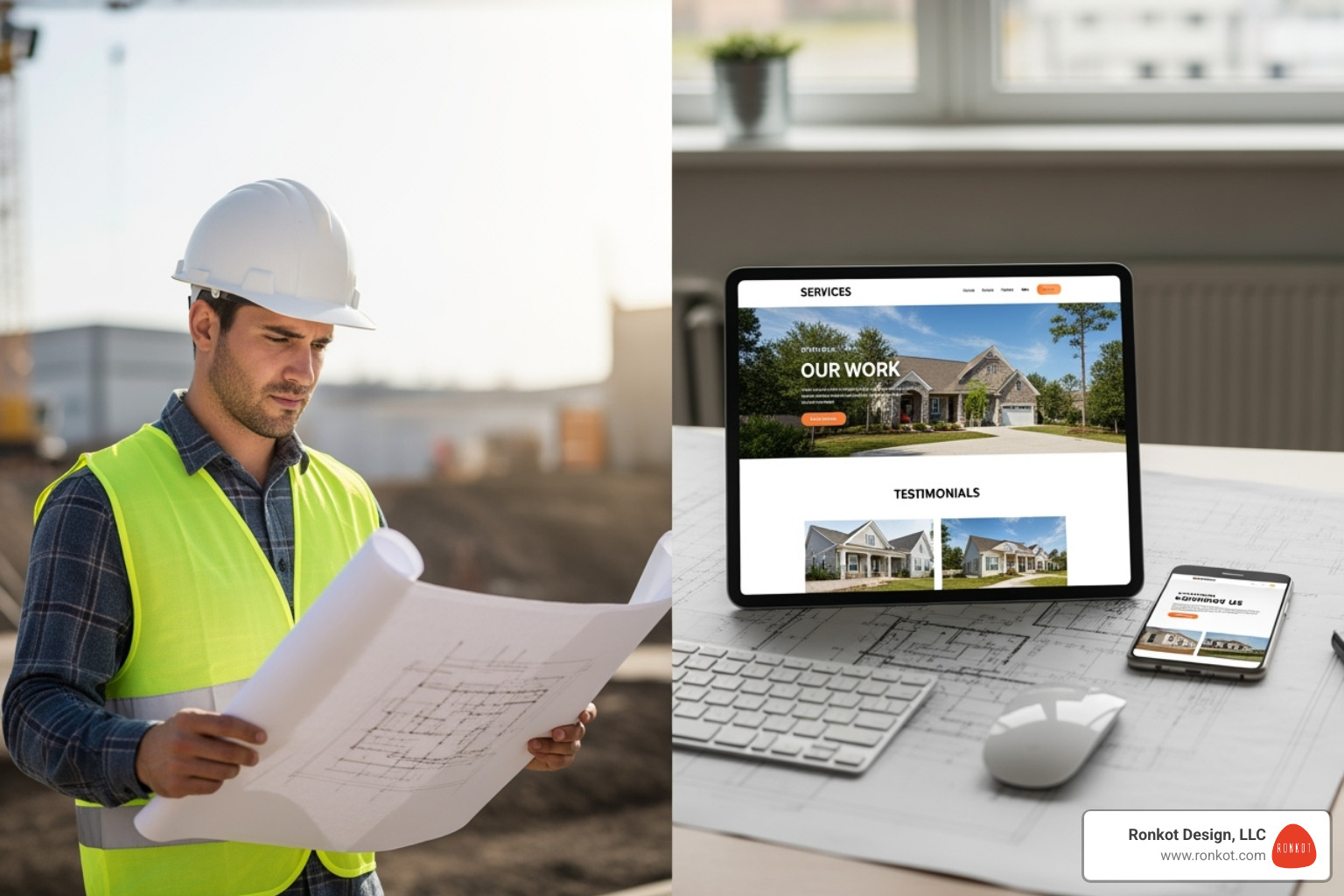
A beautiful website is useless if no one can find it. Integrating SEO from day one is critical, as 85% of customers search online before hiring a contractor. If you’re not on the first page of Google, you’re invisible.
A comprehensive SEO strategy includes:
- Keyword Research: Identifying the exact terms your customers use, like “roof repair Dallas.”
- On-Page Optimization: Strategically placing keywords in your content, headings, and meta descriptions.
- Content Strategy: Creating valuable content that answers client questions and establishes your authority.
- Technical SEO: Ensuring your site is fast, secure, mobile-friendly, and easy for search engines to crawl.
- Local SEO: This is paramount for contractors. It involves optimizing your Google Business Profile and targeting your specific service areas. Learn more in our guide to Local SEO for Contractors.
By building SEO into the design process, your website is built for visibility and growth from the start.
Method 6: Focusing on Lead Generation and Sales
Your website’s ultimate job is to generate leads. Every element should guide visitors toward becoming clients. Key lead-generation features include:
- Clear Calls-to-Action (CTAs): Use prominent buttons like “Get a Free Estimate” or “Call Now” to tell visitors what to do next.
- Simple Quote Request Forms: Keep forms short and easy to fill out. Only ask for essential information to increase completion rates.
- Visible Phone Number: Display your phone number on every page and make it clickable on mobile devices.
- Dedicated Landing Pages: Use focused pages for specific services or promotions to drive conversions without distractions.
- Live Chat/Chatbots: Capture leads in real-time by providing instant answers to visitor questions.
Focusing on these elements turns your website into an active business development tool. Find more Winning Techniques to Create a High-Performance Lead Generation Website.
Method 7: Ensuring a Seamless Website Design Process
A structured design process ensures transparency and efficiency. Our proven approach keeps you informed and eliminates surprises.
- Discovery and Planning: We start by understanding your business, goals, and target audience to form a clear strategy.
- Wireframing and Prototyping: We create a blueprint (wireframe) and then an interactive mock-up (prototype) of your site. This allows you to approve the structure and user experience before development begins.
- Content and Visual Design: We craft compelling copy and select high-quality images and videos that represent your brand and build trust.
- Development: Our developers bring the design to life with clean code, focusing on speed and security. Check out our 5 Tips for Improving Website Speeds and Optimization.
- Testing and Launch: We rigorously test every aspect of the site before a smooth, planned launch.
- Post-Launch Support: Our commitment continues after launch with ongoing support and SEO to ensure your site remains a high-performing asset.
Avoiding Common Pitfalls and Differentiating from Competitors
An effective website avoids common mistakes that drive clients away. By focusing on a unique value proposition, custom imagery, and a great user experience, you can create a site that stands out and represents your brand’s quality. Your website deserves the same attention to detail as your best jobsite.
| Underperforming Contractor Website | High-Performing Contractor Website |
|---|---|
| Stock photos, generic images | Custom project photos, before-afters |
| No mobile view, unresponsive | Responsive design, mobile-first |
| Hidden contact info, no forms | Prominent CTAs, lead capture forms |
| Outdated portfolio, few details | Detailed case studies, video tours |
| Slow loading speed, broken links | Fast, secure, easy to steer |
| No testimonials, few reviews | Integrated social proof, video reviews |
Top Mistakes Contractors Make With Their Websites
Even skilled contractors make online mistakes that hurt their business. Recognizing these pitfalls is the first step to building a better site:
- Using Only Stock Photos: This makes your business look generic and untrustworthy. Clients want to see your actual work and team.
- Poor Mobile Experience: With over 60% of traffic from mobile, a non-responsive site alienates the majority of your audience.
- No Clear CTAs: Without prominent “Get a Quote” buttons, visitors don’t know what to do next, and you lose leads.
- Outdated Portfolio: An old or empty project gallery makes clients question if you’re still in business or have quality work to show.
- Neglecting Local SEO: Failing to optimize for local search means customers in your service area, like Dallas or Colleyville, won’t find you.
- Slow Page Speed: A slow site causes visitors to leave before they even see your work.
Our guide on Website Design & Development Mistakes Small Businesses Make (With Solutions) offers more detail on these issues.
How to Make Your Contractor Website Stand Out
In a crowded market, your website needs to shine. Since most competitors make the same mistakes, doing things right will set you apart.
- Define Your Unique Value Proposition (UVP): Clearly state what makes you different—specialized skills, customer service, or guarantees—on your homepage.
- Use High-Quality, Original Photos: Invest in professional photos of your projects, team, and vehicles. Real work builds real trust. Before-and-after shots are especially powerful.
- Incorporate Video: Use video testimonials, project time-lapses, or virtual tours to engage visitors and build a stronger connection.
- Create Detailed Case Studies: Go beyond a simple gallery. Tell the story of a project from problem to solution to showcase your expertise.
- Add Interactive Tools: Engage visitors with tools like cost calculators to provide value and position yourself as a helpful resource.
- Maintain a Helpful Blog: Establish yourself as an industry expert with content that answers customer questions. This builds trust and boosts SEO.
Frequently Asked Questions about Contractor Web Design
How often should a contractor update their website content?
Websites should be reviewed quarterly and updated whenever new services, certifications, projects, or service areas are added. Regular updates such as new case studies or blog posts also signal freshness to search engines, which can positively impact rankings.
Should contractors include pricing information on their website?
While exact project pricing may vary, including starting price ranges or cost guide articles can increase trust and filter serious inquiries. Educational pricing content positions you as transparent and reduces time spent on unqualified leads.
How can my website help attract and retain employees?
Your website is a powerful recruiting tool. A professional site showcasing your company culture, values, and projects makes your business look stable and desirable to potential hires. A dedicated “Careers” page with open positions, benefits, team photos, and employee testimonials helps attract top talent by showing you’re a forward-thinking company that invests in its people.
How long does it take to build a contractor website?
A standard, custom web design for contractors typically takes 4-8 weeks from discovery to launch. This includes planning, design, content creation, development, testing, and revisions. The exact timeline depends on the site’s complexity and the speed of feedback, but a streamlined process ensures your site is ready to generate leads efficiently.
How can I effectively incorporate testimonials and social proof?
Since reviews can boost sales by up to 380%, incorporating social proof is crucial. Here’s how:
- Place Testimonials Strategically: Feature strong written quotes on your homepage and service pages.
- Use Video: Video testimonials add a powerful layer of authenticity.
- Create a Dedicated Reviews Page: Have one central place for all your positive feedback.
- Display Trust Badges: Show logos for certifications, licenses, and awards to build instant credibility.
- Integrate Google Reviews: Encourage reviews on your Google Business Profile and feature them on your site.
Making social proof a core part of your web design for contractors lets your happy customers do the selling for you.
Conclusion
Your website is the foundation of your modern contracting business. In an industry where web design for contractors directly impacts credibility and lead generation, a professional online presence is no longer optional—it’s essential.
Your site must reflect the same quality and dedication you bring to every job. It should be your hardest-working employee, building trust and generating leads 24/7. The right website, built with a mobile-first approach, strong SEO, and clear calls-to-action, doesn’t just pay for itself; it becomes your most valuable business asset.
At Ronkot Design, we understand the unique challenges contractors face. Serving areas like Colleyville and Dallas, we use a data-driven, customer-centric approach to build websites that deliver measurable results. We don’t use cookie-cutter solutions because your business isn’t cookie-cutter.
Ready to transform your online presence into a lead-generating powerhouse? To start building a website that drives real growth for your contracting business, explore our web design and development services. Let’s create a site that truly represents the quality you bring to every job.
Beyond design and SEO, high-performing contractor websites are built around conversion psychology. Homeowners are not just comparing prices. They are evaluating risk. Large renovation or construction projects involve significant financial and emotional investment, so your website must systematically remove doubt. This means clearly outlining your process from consultation to completion, showcasing timelines, explaining warranties, and highlighting communication standards. When visitors understand exactly what working with you looks like, uncertainty decreases and inquiries increase. A well-structured website does not just attract traffic. It builds confidence strong enough to trigger action.
Ronak Kothari is the founder of RONKOT, a full-service digital marketing agency.