


Ronak Kothari is the founder of RONKOT, a full-service digital marketing agency.
SEO for Beauty Industry: The Digital Foundation for Success
SEO for beauty industry is the process of optimizing beauty websites and online content to rank higher in search engine results, increasing visibility to potential customers searching for beauty products and services.
Here’s a quick overview of beauty industry SEO essentials:
| SEO Element | Beauty Industry Application |
|---|---|
| Keywords | Target terms like “organic anti-aging serum” or “best salon in [city]” |
| Content | Create tutorials, product guides, before/after galleries, ingredient education |
| Technical | Ensure mobile-friendly, fast-loading pages with product schema markup |
| Local SEO | Optimize Google Business Profile for salons and spas with service areas |
| Backlinks | Partner with beauty influencers, industry publications, and local businesses |
In the fiercely competitive $445 billion global beauty market, standing out online requires more than just great products—it demands strategic visibility. With Google’s first page receiving almost 95% of web traffic, beauty brands without solid SEO strategies remain essentially invisible to potential customers.
The beauty industry presents unique SEO challenges and opportunities. Your customers research extensively before purchasing, often using mobile devices to search for specific concerns like “red skin solutions” or “cruelty-free mascara.” They’re influenced by social proof, with 63% more likely to purchase from sites displaying user reviews.
“If you don’t seize control of the narrative through SEO, the beauty community will form its own conclusions about your brand,” notes one industry expert.
For beauty businesses, effective SEO means aligning with how consumers actually search—moving beyond generic terms to address specific skin concerns, ingredients, application techniques, and local service offerings.
I’m Ronak Kothari, CEO of Ronkot Design, and I’ve helped numerous beauty brands implement custom SEO for beauty industry strategies that transform online visibility into tangible business growth.
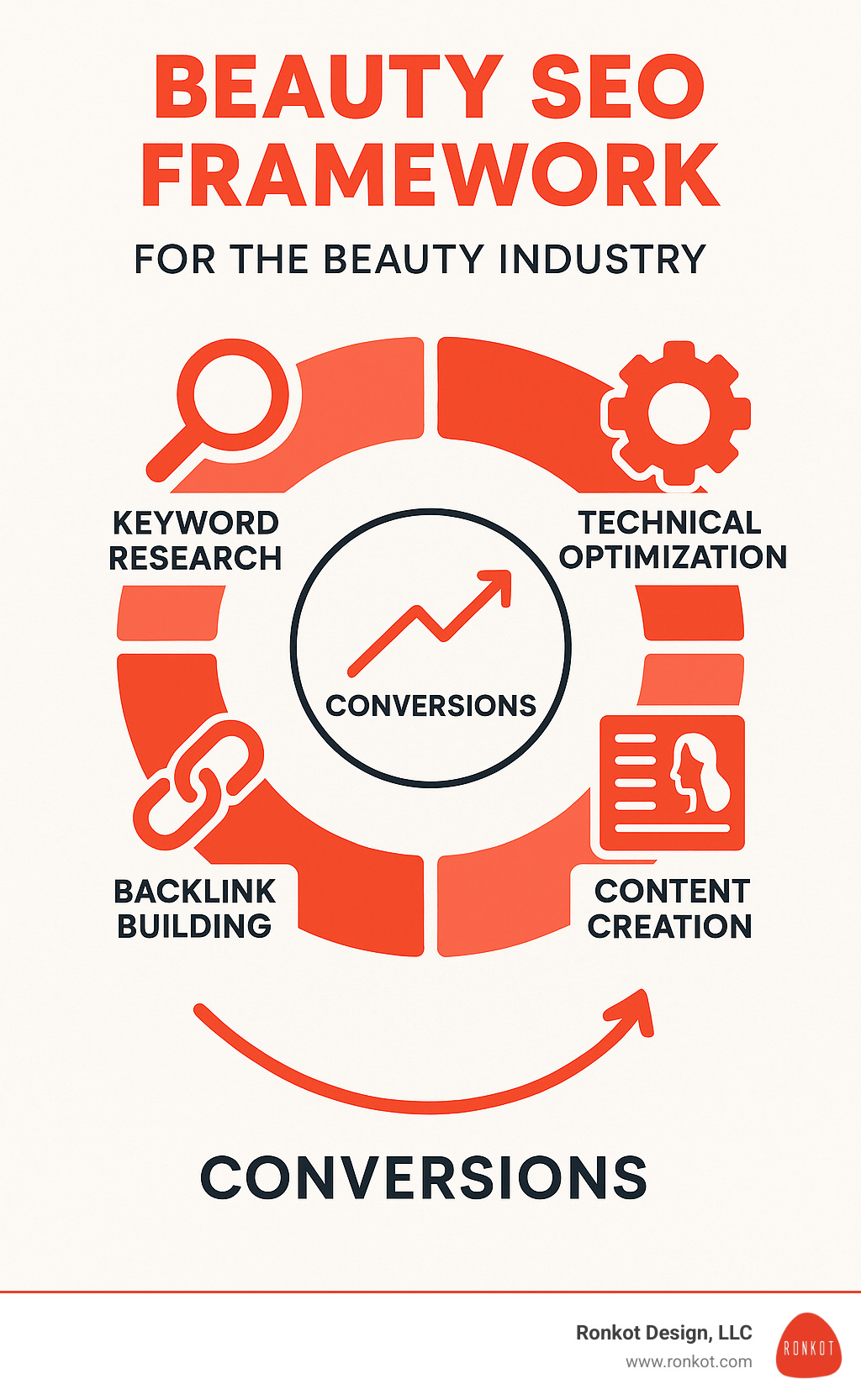
Seo for beauty industry terms to know:
– affordable seo services for salons
– how to improve salon seo ranking
– seo for hair salon
SEO for Beauty Industry: Foundations & Impact
The beauty industry’s digital landscape has evolved dramatically in recent years. With mobile devices now accounting for the majority of beauty-related searches, brands must prioritize mobile-first design and fast-loading pages. When potential customers search for beauty products or services, they expect immediate, visually appealing, and informative results.
Let’s face it—in today’s $445 billion global beauty market, being invisible online is like having the world’s best lipstick locked in a drawer nobody can open. With 95% of web traffic going to Google’s first page results, beauty brands need strategic visibility to thrive. The modern beauty consumer doesn’t just walk into a store anymore—they research extensively on their phones, comparing ingredients, reading reviews, and watching application tutorials before making a decision.
This complex decision journey means your brand needs to shine across multiple touchpoints. SEO for beauty industry isn’t just a nice-to-have—it’s essential oxygen for your brand’s digital life.
Buyer personas and seo for beauty industry
Understanding your audience is like having a beauty consultation before applying makeup—you need to know what you’re working with! Rather than focusing solely on demographics, successful beauty brands develop detailed buyer personas based on real search behaviors and motivations.
In our work with beauty clients, we’ve consistently found five key personas that shape effective SEO strategies:
Social-Media Meg lives for the latest trends and takes her beauty cues from Instagram and TikTok. She’s searching “trending makeup looks 2023” and “how to recreate celebrity makeup.” She makes decisions quickly but changes preferences just as fast.
Price-Sensitive Sally compares every product before purchasing. Her browser history shows searches like “best affordable moisturizer for dry skin” and “drugstore dupes for luxury skincare.” She values detailed comparison content and ingredient breakdowns.
Natural Natalie scrutinizes every ingredient label. Her search history includes “paraben-free foundation for sensitive skin” and “cruelty-free beauty brands.” She spends more time in the consideration phase and values transparent, educational content.
High-End Heather believes in investment pieces for her beauty routine. She searches for “best anti-aging serum for mature skin” and “luxury spa treatments near me.” She responds to content that emphasizes quality, science, and exclusivity.
Youthful Yuli is just beginning her beauty journey. Her searches include “acne-friendly makeup” and “quick everyday makeup routine for teens.” She’s experimental and responds well to educational content and step-by-step guides.
Each persona moves through their decision journey differently—from first recognizing a beauty concern, to researching options, to finally selecting your product. When you map your SEO for beauty industry strategy to these real human journeys, your content becomes a helpful guide rather than just another sales pitch.
Why algorithms love great skin-care sites
Think of search engines as extremely picky beauty critics—they’re looking for signals of quality, expertise, and trustworthiness before recommending your site to their audience.
Beauty falls into what Google considers a “Your Money or Your Life” (YMYL) category because products directly impact users’ wellbeing. This means the bar is even higher for beauty brands to demonstrate E-E-A-T: Experience, Expertise, Authoritativeness, and Trustworthiness.
What does this look like in practice? Google wants to see real people with genuine experience using your products and sharing results. It values expertise from qualified professionals contributing to your content. It rewards authoritativeness shown through industry recognition and credentials. And it prioritizes trustworthiness demonstrated through transparent information about ingredients, pricing, and realistic results.
Beauty sites that consistently publish helpful, accurate content tend to rank higher. This isn’t just about keyword stuffing—it’s about creating resources that actually solve problems. Detailed product descriptions that go beyond marketing fluff, educational blog posts about common skincare concerns, video tutorials showing proper application techniques—these all signal quality to both users and algorithms.
Freshness matters too, especially in the fast-moving beauty world. When you regularly update your website with current trends, new ingredient information, and seasonal content, you signal to search engines that your brand is active and engaged with the industry.
As one of our beauty clients recently told us, “The best marketing is the kind that feels like a trusted friend giving advice.” That human-centered approach isn’t just good for customers—it’s exactly what today’s search algorithms are designed to reward.
Building Your Beauty SEO Strategy: Personas, Keywords & Content
Ready to transform your beauty brand’s online presence? Let’s build a strategy that actually connects with your ideal customers.
Creating an effective SEO for beauty industry strategy starts with something surprisingly simple: understanding how real people search for beauty solutions. This means mapping your buyer personas to specific keywords and content types that match their needs.
Think about the questions your potential customers ask at each stage of their journey:
When they first notice a problem: “Why is my skin so dry in winter?”
When they’re exploring solutions: “Best moisturizers for extremely dry skin”
When they’re ready to buy: “Brand X intensive moisture cream reviews”
Tools like Google Keyword Planner, Ahrefs, and SEMrush are your best friends here. They’ll help you find what beauty terms people are actually searching for and how competitive those terms might be.
The beauty industry gives you a wonderful opportunity to target specific long-tail keywords. While “lipstick” might be impossibly competitive, “long-lasting matte lipstick for dry lips” speaks directly to a specific need—and likely has buyers with stronger purchase intent.
When developing your content, think about the full beauty experience. Your customers don’t just want product specs—they want solutions, education, and inspiration. Consider creating:
Product pages with detailed descriptions that address specific concerns. How-to guides that walk through application techniques step-by-step. Ingredient education that explains why your formula works. Trend reports that position your brand as current and relevant. Problem-solution content that directly addresses pain points. Video tutorials showing real results and application methods. Before-and-after galleries that build trust through visual proof.
Don’t forget YouTube! As the second-largest search engine, beauty tutorials and product demos thrive there. A single well-produced video can drive traffic for years.
For salon businesses specifically, having a well-designed, SEO-optimized website is non-negotiable. Learn more about how to Build a Salon Website that turns curious browsers into loyal clients.
Content clusters & seo for beauty industry
Content clustering is like creating a beautiful makeup palette—everything works together while serving a specific purpose. This approach helps search engines understand your expertise depth while giving customers multiple entry points to find your brand.
Start with pillar pages—comprehensive guides on broad topics like “Complete Guide to Anti-Aging Skincare.” Then create cluster content—more specific articles that link back to the pillar, such as “How Retinol Works to Reduce Wrinkles” or “Best Anti-Aging Ingredients for Sensitive Skin.”
This structure creates a clear topical hierarchy that signals your authority to search engines. A skincare brand might build clusters around acne treatment, sun protection, or ingredient education—with each cluster addressing specific questions your target personas have.
The beauty of this approach (pun intended) is that it allows you to cover topics thoroughly while creating natural internal linking opportunities. As customers explore your content, they find more of your expertise—and ultimately, your products.
Keyword mapping & conversion funnels
Effective SEO for beauty industry requires understanding the difference between browsing and buying intent. Different keywords signal different mindsets:
Informational keywords catch people seeking education—”how to layer skincare products” or “what does vitamin C do for skin.” Commercial investigation keywords attract those researching options—”best moisturizers for combination skin” or “retinol vs. bakuchiol.” Transactional keywords connect with people ready to purchase—”buy Brand X facial serum” or “salon appointment near me.”
By mapping these keywords to specific pages and aligning them with stages in the customer journey, you create clear paths through your site. For example, someone searching for “how to reduce dark circles” might find your educational blog post. Within that post, they click to your guide on “best eye creams for dark circles,” which leads them to your targeted eye treatment product page.
This strategic internal linking creates a journey that feels helpful rather than pushy. As one beauty marketing expert puts it: “Content is not only king; it’s the online presence personal stylist for your business.”
When you create valuable, keyword-optimized content that genuinely helps solve beauty problems, you build both search visibility and customer trust. And in the beauty industry, trust translates directly to sales.
Technical & On-Page Optimisation Essentials
Behind every stunning beauty website is a solid technical foundation. Think of technical SEO as the primer before your makeup – invisible but absolutely essential for a flawless finish. For beauty brands, getting this right is particularly important because of your visual products and the high expectations of your audience.
Your beauty website needs several key technical elements working perfectly:
HTTPS security isn’t optional anymore – it’s a must-have, especially when you’re collecting customer information for orders or newsletters. Mobile responsiveness is equally critical since most beauty searches now happen on smartphones (just think about how often you’ve looked up products while standing in a store aisle!).
Your site architecture should feel as intuitive as a well-organized makeup drawer – with logical categories that make perfect sense to both humans and search engines. According to Google’s speed update, your pages need to load quickly or you’ll lose rankings – and impatient customers.
Schema markup might sound technical, but it’s actually quite magical for beauty sites. This structured data helps search engines understand your product information, reviews, and FAQs. When implemented correctly, your search listings can display rich results with star ratings, prices, and availability information. Research shows that 63% of beauty customers are more likely to purchase when they can see those review stars right in the search results!
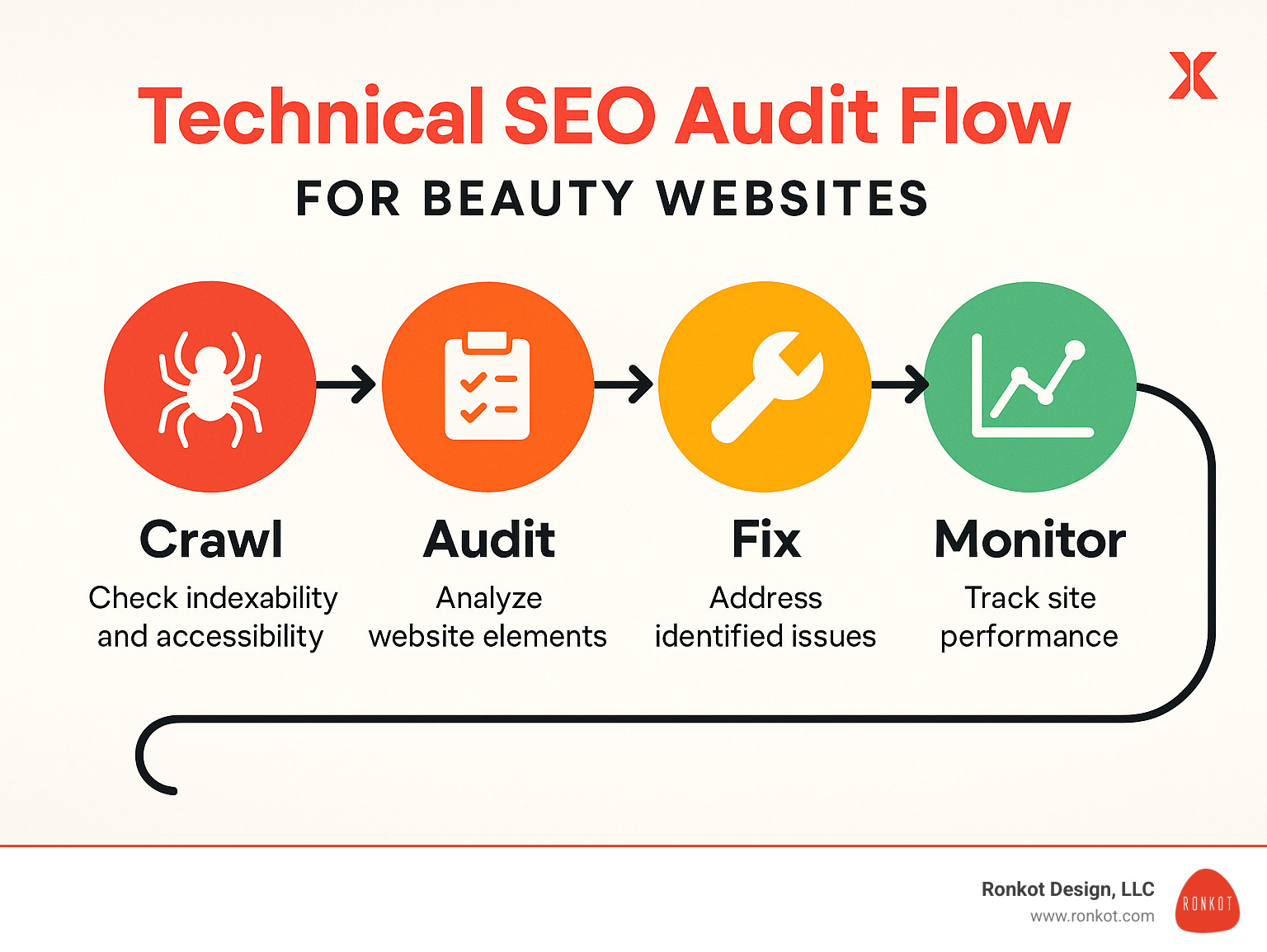
According to Google’s ranking algorithm, these technical elements significantly impact your ability to rank well. The beauty brands we’ve worked with at Ronkot that implement proper technical SEO for beauty industry see measurable traffic and conversion increases – sometimes dramatically so.
Speed, stability & beauty
Let’s talk about speed – because in the beauty world, nobody has time for slow websites. Those gorgeous high-resolution product images and tutorial videos that sell your products can also slow down your site if not properly optimized.
Beauty consumers are particularly impatient. When they’re searching for the perfect shade of lipstick or researching ingredients, they expect instant results. A one-second delay in page loading can increase bounce rates by 20% – that’s a lot of potential customers clicking away before they even see your beautiful products!
To keep your beauty site running as smoothly as your favorite foundation:
Compress those product images without sacrificing quality – your customers still need to see the exact shade differences. Implement lazy loading so images appear as visitors scroll down the page. Consider using a Content Delivery Network (CDN) to distribute your content across multiple servers, especially if you sell internationally. And regularly audit your site for unnecessary scripts and plugins that might be slowing things down.
Google’s Core Web Vitals give us specific targets: your main content should load within 2.5 seconds (LCP), pages should be interactive within 100 milliseconds (FID), and elements shouldn’t jump around as the page loads (CLS). These aren’t just technical requirements – they directly impact how customers experience your brand.
We recently worked with a beauty retailer who improved their page speed by just one second and saw conversions jump 7% with bounce rates dropping 9%. That’s real revenue from a technical improvement!
Perfect-finish on-page makeup
On-page optimization is where technical elements meet creative content – it’s like applying the perfect makeup after your skincare routine. For beauty websites, this attention to detail makes all the difference.
Your title tags should include your primary keywords and brand name – “10 Best Moisturizers for Dry Skin | Your Beauty Brand” tells both Google and customers exactly what to expect. Meta descriptions are your 160-character opportunity to entice clicks – make them compelling with a touch of your brand personality.
Header hierarchy (H1, H2, H3) isn’t just for organization – it helps search engines understand the importance of different sections on your page. Think of it like contouring – creating structure and highlighting what matters most.
Strategic keyword placement matters, especially in the first paragraph, headers, and throughout your content. But please, don’t stuff keywords like it’s 2005! Natural language that genuinely helps your customers will always perform better.
Beauty websites need special attention to image alt text – “model applying red matte lipstick in shade Ruby Romance” is much better than “lipstick image.” This helps with accessibility and gives search engines more context about your visual content.
Product descriptions deserve special mention for beauty brands. Rather than using the same manufacturer descriptions that hundreds of other sites have, create unique content that highlights benefits, ingredients, and usage instructions. Your customers want to know how that serum will make their skin feel, not just what’s in it.
Internal links create pathways through your site – connecting your skincare guide to your product pages creates a logical journey for both search engines and customers. And don’t forget canonical tags to avoid duplicate content issues, especially if you have similar products in different colors or sizes.
As one of our beauty clients once said, “On-page SEO is like applying the perfect makeup: it needs precision to make a stellar first impression.” At Ronkot, we couldn’t agree more – SEO for beauty industry requires both technical expertise and an understanding of what makes beauty customers click.
Off-Page Authority, Local & Performance Tracking
Building your beauty brand’s online authority goes beyond your website—it’s about how the entire digital ecosystem perceives and promotes your business. Backlinks remain one of the most powerful ranking signals, with Backlinko’s research confirming that the number of domains linking to a page correlates with rankings more than almost any other factor.
For beauty brands wanting to shine in search results, your off-page strategy should be as carefully crafted as your product formulations:
Digital PR creates valuable exposure through beauty publications and mainstream media mentions. These high-authority backlinks signal to Google that your brand is trustworthy and noteworthy.
Influencer collaborations have transformed the beauty marketing landscape. With authentic partnerships, beauty influencers generate natural backlinks, social signals, and trusted content that resonates with their followers. This sector is booming—projected to reach $10 billion by 2021—because it works so effectively in the visually-driven beauty space.
Guest blogging positions your brand experts as industry authorities while securing valuable backlinks. Sharing your skincare science knowledge or makeup expertise on established platforms expands your reach while building your SEO foundation.
User-generated content turns satisfied customers into brand advocates. When clients share their glowing skin results or perfect makeup looks, they create authentic touchpoints that both search engines and potential customers value.
While social media signals aren’t direct ranking factors, a vibrant social presence supports your overall digital footprint and drives traffic that can lead to other ranking signals like engagement and backlinks.
For salons, spas, and local beauty businesses, local SEO for beauty industry requires specialized attention:
Your Google Business Profile serves as your digital storefront—complete it with accurate services, hours, appealing photos, and regular updates about promotions or new treatments.
NAP consistency might sound technical, but it’s simply ensuring your Name, Address, and Phone number appear identically across all online listings. This consistency builds Google’s trust in your business information.
Incorporating local keywords like “hair salon in Dallas TX” or “med spa treatments Colleyville” helps you appear in neighborhood searches when potential clients need your services most.
Local schema markup provides search engines with structured data about your beauty business, enhancing how your information appears in search results with rich features like service areas and business categories.
Reviews have become essential trust signals for beauty businesses. Actively encourage satisfied clients to share their experiences, and always respond thoughtfully to feedback—both positive and negative.
Want to dive deeper into local strategies? Learn more about Local SEO for Hair Salons and how to Optimize Salon Google Business Profile for Leads.
Measuring your SEO for beauty industry performance isn’t just about collecting data—it’s about understanding what’s working and why. The key metrics we track for our beauty clients include:
Organic traffic growth shows how many visitors find you through search engines. Keyword rankings track your visibility for specific search terms. Conversion rates reveal how effectively your site turns visitors into clients or customers. Engagement metrics like time on site and bounce rate indicate how compelling your content is. And ultimately, ROI measurements connect your SEO investment to actual revenue.
Tools like Google Analytics 4, Google Search Console, and specialized SEO platforms provide the insights needed to continuously refine your strategy and maximize results.
Local results & reporting in seo for beauty industry
For beauty businesses with physical locations, local visibility requires specific strategies that bridge the digital and physical worlds.
Creating dedicated service-area pages for each location helps you rank for neighborhood-specific searches. Each page should showcase the unique offerings and personality of that location while incorporating relevant local keywords.
Citation consistency builds search engines’ confidence in your business information. When your salon or spa details appear identically across directories like Yelp, Yellow Pages, and industry-specific platforms, Google recognizes your business as established and trustworthy.
Effective review management involves both soliciting feedback and responding thoughtfully. For beauty businesses, where personal experiences matter tremendously, a thoughtful response to a critical review can actually improve your reputation rather than harm it.
Developing local content about community events, seasonal beauty trends, or partnerships with nearby businesses strengthens your local relevance. A salon that creates content about “Summer Hair Trends for Dallas Humidity” signals local expertise to both readers and search engines.
Local backlinks from community organizations, chambers of commerce, and local media create powerful neighborhood authority signals. Sponsoring a local charity event or participating in community initiatives can generate valuable links while building genuine community goodwill.
The results can be transformative. One Dallas salon we worked with implemented these local strategies and saw organic leads increase by 150% in just six months. Their Google Business Profile became their primary source of new client inquiries—a powerful testament to effective SEO for beauty industry at the local level.
At Ronkot Design, we believe reporting should be as clear as your beauty brand’s messaging. We create custom dashboards tracking monthly organic growth, keyword position improvements, local visibility metrics, and conversion data that ties directly to revenue. This clarity helps beauty brands understand exactly how their SEO investment translates to business growth.
Establishing a regular monthly reporting cadence creates accountability and allows for data-driven strategy refinements. This ongoing optimization process ensures your beauty brand continuously improves its digital presence—just as your customers expect continuous improvement in their skincare results.
Frequently Asked Questions about SEO for Beauty Industry
What is SEO and why is it critical for beauty brands?
Let’s face it – the beauty world is crowded! SEO for beauty industry is simply the art of making your brand visible when potential customers search online. Think of it as your digital storefront window display, but instead of catching eyes on Main Street, you’re catching attention on Google.
Beauty brands can’t afford to ignore SEO because it’s the difference between being finded or remaining invisible in a $445 billion market. When someone types “best moisturizer for sensitive skin” or “hair salon near me,” you want your brand to appear, not your competitors.
Most beauty shoppers today start their journey with research – reading reviews, comparing ingredients, and looking at before/after results. Without solid SEO, you miss connecting with these customers during these crucial decision moments.
What makes SEO particularly valuable is its staying power. Unlike paid ads that disappear when you stop funding them, organic rankings continue working for you 24/7, building trust with potential customers who see your consistent presence.
As one of our clients beautifully put it: “SEO isn’t just about rankings – it’s about building bridges to the exact customers who are already looking for what we offer.”
How do beauty companies measure SEO success?
Beauty brands often ask us how they’ll know if their SEO investment is paying off. The answer isn’t just about rankings – it’s about meaningful business impact.
Start by tracking organic traffic growth – are more people finding you through search engines? This fundamental metric shows if your visibility is improving. But traffic alone doesn’t pay the bills.
What really matters is what those visitors do. Are they booking appointments, purchasing products, or signing up for your email list? These conversion metrics directly connect SEO to revenue.
We help our beauty clients look deeper at engagement signals like how long visitors stay on their site and whether they explore multiple pages. Someone who spends five minutes reading about your skincare philosophy is showing genuine interest.
For salons and product companies alike, customer lifetime value has become the gold standard for measuring SEO success. A client who finds your salon through organic search and returns monthly for services represents significant long-term revenue from a single SEO conversion.
At Ronkot Design, we provide our beauty clients with custom monthly reporting that shows clear connections between SEO efforts and business growth, making it easy to understand your return on investment.
What common SEO mistakes should beauty sites avoid?
Even gorgeous beauty websites can have hidden SEO flaws that prevent them from reaching their potential. Here are the mistakes we most commonly fix:
Keyword stuffing is the equivalent of wearing too much makeup – it looks unnatural and turns people off. Modern SEO requires naturally written content that flows beautifully while incorporating relevant terms.
Thin content happens when beauty brands use minimal product descriptions or generic salon service listings. Search engines (and customers) crave depth and detail – like ingredient benefits, application techniques, and what makes your services special.
Slow page speed is a major issue for beauty sites filled with stunning images and videos. We often see conversion rates jump dramatically after optimizing image sizes and implementing faster loading techniques.
Mobile experience neglect remains surprisingly common despite most beauty searches happening on phones. Your site needs to look as flawless on mobile as your makeup applications.
One salon client came to us frustrated after spending thousands on a beautiful website that generated almost no leads. We finded they had no schema markup (the code that helps search engines understand your business) and were missing crucial local SEO elements like proper Google Business Profile optimization. After fixing these issues, their bookings increased by 64% within three months.
The beauty of good SEO is that fixing these common mistakes often leads to quick wins – letting your brand’s true beauty shine through in search results where your ideal customers can find you.
Conclusion
In the beauty industry, where competition is fierce and attention spans are short, mastering SEO for beauty industry isn’t just nice to have—it’s essential for survival and growth. While paid ads might deliver quick hits of traffic, they disappear the moment you stop funding them. Organic search, on the other hand, builds a foundation that continues delivering qualified visitors month after month.
The beauty brands that truly shine online don’t view SEO as a separate marketing channel. Instead, they weave it into everything they do—from how they structure their websites to the stories they tell through content. They understand that Sally searching for “fragrance-free moisturizer for sensitive skin” and Heather looking for “luxury anti-aging treatments near Dallas” represent real people with specific needs, not just keywords to target.
For local businesses like your neighborhood salon or day spa, the magic happens when traditional SEO merges with local optimization strategies. Your Google Business Profile becomes your digital storefront, while your website serves as the welcoming consultation room where relationships begin. For e-commerce beauty brands, technical excellence and rich, detailed product pages transform browsers into believers and, ultimately, buyers.
The search landscape never stands still. Google’s algorithms continue evolving, placing greater emphasis on genuine expertise, lightning-fast page speeds, and content that truly helps rather than just sells. This means beauty brands can’t approach SEO as a “set it and forget it” task—it requires ongoing care and attention, much like a good skincare routine.
At Ronkot Design, we’ve helped beauty businesses of all sizes transform their digital presence through thoughtful, data-informed SEO for beauty industry strategies. We don’t believe in cookie-cutter approaches because every brand has its unique audience, voice, and goals. Whether you’re a salon in Dallas looking to fill your appointment book, a spa in Colleyville wanting to promote new treatments, or a beauty brand serving customers across Texas and beyond, we tailor our approach to your specific needs.
What makes our approach different? We blend technical expertise (the “behind the scenes” optimizations that search engines love) with creative storytelling that resonates with your ideal customers. Then we track everything carefully, so you can see exactly how your investment translates into real business growth.
Ready to make your beauty brand more visible to the people who matter most? Learn more about our comprehensive SEO services or reach out today for a conversation about your unique challenges and opportunities. Let’s create a strategy that makes your beauty business impossible to ignore.
Ronak Kothari is the founder of RONKOT, a full-service digital marketing agency.