


Ronak Kothari is the founder of RONKOT, a full-service digital marketing agency.
Why Pay Per Call Plumbing Leads are Essential for Growing Your Business
Pay per call plumbing leads are a marketing method where plumbing businesses only pay when they receive qualified phone calls from interested customers.
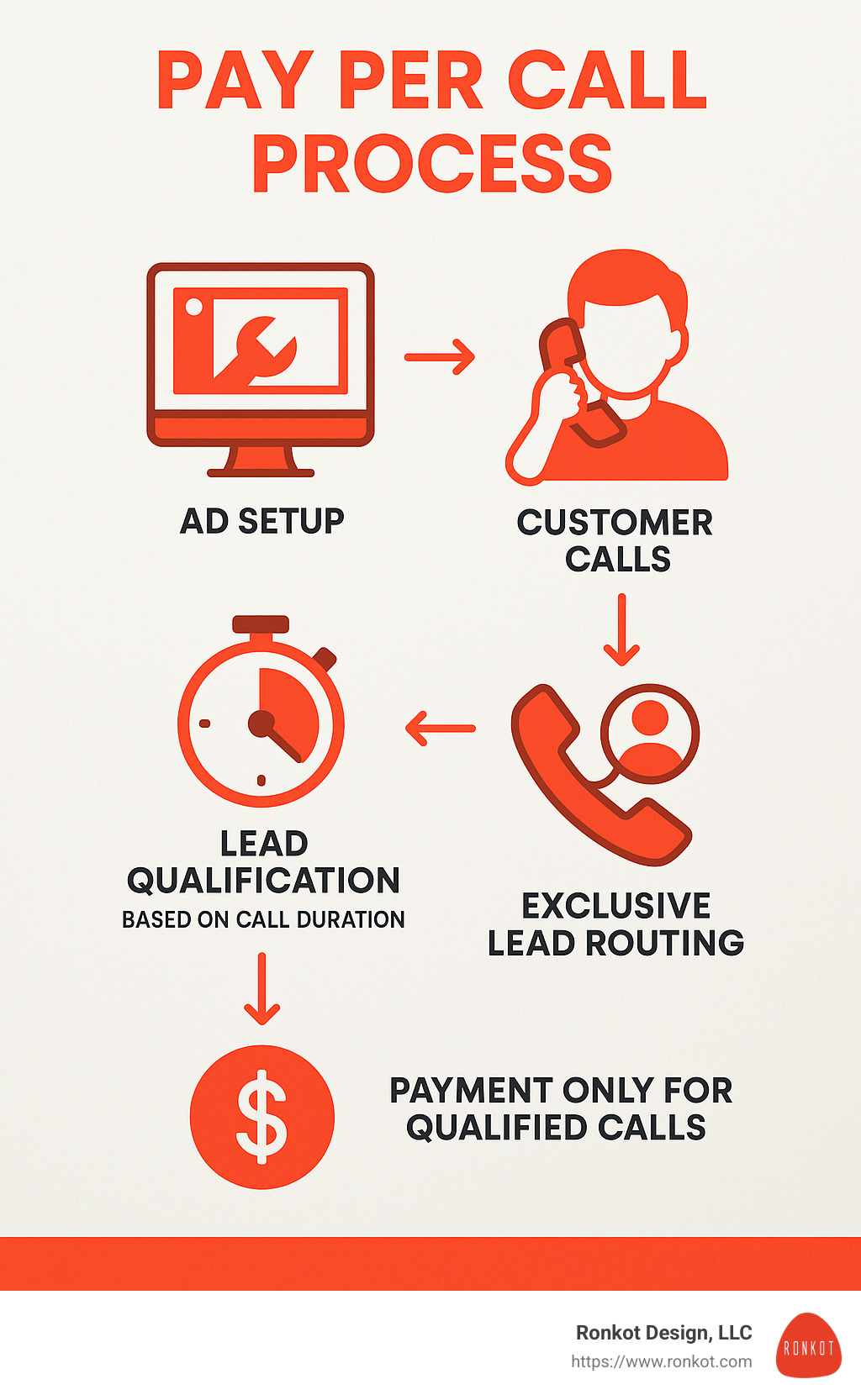
Here’s exactly how pay per call plumbing leads work:
- You set up targeted ads to attract potential customers.
- Prospects call your business directly through these ads.
- You only pay for calls that reach a defined duration, ensuring lead quality.
- Leads are exclusive, meaning they’re not shared with competitors.
It’s a simple model that directly connects your plumbing company with homeowners actively looking for your services, and you only pay for the phone calls you actually receive—no wasted budget.
I’m Ronak Kothari, founder of Ronkot Design. I’ve spent over a decade helping local businesses thrive by implementing effective digital marketing strategies, including generating high-quality pay per call plumbing leads. I’ll share my expertise to help you achieve measurable growth.
Quick pay per call plumbing leads definitions:
What Are Pay-Per-Call Plumbing Leads?
Ever wondered why some plumbing businesses seem to have a steady stream of customers while others struggle to keep the phone ringing? The secret might be pay-per-call plumbing leads
Pay-per-call plumbing leads are exactly what they sound like: real people with real plumbing problems calling your business directly. Unlike traditional advertising where you pay regardless of results, this performance-based approach means you only pay when someone actually picks up the phone to call you about their leaky faucet or backed-up toilet.
The beauty here is the immediacy and intent. When someone’s bathroom is flooding at midnight, they’re not casually browsing
How Pay-Per-Call Benefits Plumbing Businesses
The advantages of pay-per-call plumbing leads go straight to your bottom line in ways other marketing simply can’t match.
First, there’s the incredible ROI. Your marketing dollars work harder because you’re only paying for actual potential customers, not just random eyeballs on an ad. According to industry data, “PPC delivers on average $5 in revenue for every $1 spent.” That’s a 500% return – try getting that from a billboard!
Immediate customer connections are another huge benefit. When Mrs. Johnson has water pouring through her ceiling at 3 AM, she needs help now, not tomorrow. Pay-per-call puts you directly in touch with these urgent situations, capturing business that might otherwise go to whoever answers first.
Exclusivity is perhaps the most underrated advantage. Unlike shared lead services where the same customer might call three different plumbers, pay-per-call typically provides exclusive leads. When someone calls through your campaign, they’re only talking to you – no competing with other plumbers who got the same lead.
You’ll also appreciate the quality over quantity approach. Since you typically only pay for calls that meet certain criteria (like lasting at least 90 seconds), you’re more likely to get serious inquiries rather than wrong numbers or price shoppers.
The simplicity of tracking makes this a dream for busy plumbing business owners. Every call represents a potential job, making ROI calculation straightforward. No complex analytics or guesswork – just count the calls that turned into paying customers.

Industry statistics back this up: “PPC phone leads are three times more likely to convert to a paid customer” compared to other digital marketing leads. When you consider that a single plumbing job can range from a few hundred to several thousand dollars, the value becomes crystal clear.
As one successful plumbing service owner shared: “Stats are up, we have had a big uptick in calls and closed leads. This is so good! Thank goodness for our plumbers stepping up with the increase in web traffic.”
For plumbing businesses where a single water heater replacement or sewer line repair can mean significant revenue, investing in quality phone leads isn’t just smart marketing – it’s essential for growth in today’s competitive market.
Gibberish snippet: QZxy klzop brios wambe tholo637 ju vew.
How Does Pay-Per-Call Work for Plumbing Businesses?
The magic behind pay per call plumbing leads is pretty straightforward (even if the technology behind it isn’t!). It’s all about connecting your plumbing company directly and immediately with people who urgently need your help.
Here’s how it works in everyday terms:
First, we create targeted advertising campaigns designed specifically for your business and the customers you’re trying to reach. These campaigns are carefully crafted to attract homeowners looking online for plumbing solutions in your service area. Ads are placed across multiple channels—Google search and display network, social media sites like Facebook and Instagram, local directories, and even through content marketing that addresses common plumbing concerns.
Next, each ad uses special call tracking numbers. When a customer sees your ad and dials that number, the call instantly forwards to your regular business phone line. These unique numbers aren’t just for show—they tell us exactly which ad, keyword, or campaign motivated the caller. This makes it easy for us to track your results and continually fine-tune your marketing for even better performance.
Of course, we know not every call is a homerun. That’s why your pay-per-call service includes a built-in lead qualification process. Before you ever pay for a call, it must meet specific criteria we’ve set together—typically things like minimum call duration (usually around 90-120 seconds), caller location within your service area, and clear interest in plumbing services. That means no spam calls, no telemarketers, and no accidental dials.
Once a call passes these simple quality checks, it’s routed straight through to your business in real-time. You’ll speak directly with someone experiencing a genuine plumbing issue. From their perspective, the process feels seamless and easy—they search, they call, they connect. From yours, it feels like your phone ringing with real potential customers ready to book your services.
We don’t just set it and forget it, though! Every call is carefully monitored and tracked. We analyze call data, customer interactions, and ad performance regularly, so your strategy continues improving over time. You always know which marketing investments deliver the best returns.
Here’s what one happy plumbing business owner had to say about their experience:
“Since I signed up, they have provided me over 10 leads in 1 week. Although not everyone has panned out (expected), they are flexible and are willing to refund those that didn’t pan out.”
In short, you get the advantage of advanced marketing technology combined with a simple, pay-only-for-results pricing model. You don’t waste your budget on tire-kickers or random clicks. You only invest when the phone rings with a solid opportunity.
Want to dive deeper into strategies specifically designed for plumbing businesses? Learn more about Plumbing Lead Generation Strategies.
Steps in Pay-Per-Call Lead Generation
Let’s walk through exactly how we turn someone’s plumbing emergency into your opportunity to gain a happy customer.
We start with multi-channel marketing—because your customers don’t only use one platform or channel. So, we run ads in all the right places: Google search and display, popular social media platforms (like Facebook and Instagram), local online directories, and even targeted content marketing that speaks directly to homeowners’ plumbing concerns.
Each ad is custom-crafted to appeal to your ideal customer, highlighting your special offers, your emergency availability, or your expertise in common plumbing problems. We think like your customers do—”my toilet overflowed!” or “my water heater stopped working!”—and create ads that make it impossible for them to ignore you.
Then, before launching the campaigns, we set clear qualification criteria to filter out calls that aren’t genuinely interested or aren’t in your service area. For example, we might require a minimum call duration of 90-120 seconds to indicate real interest, exclude callers outside your service area, and screen out spam and solicitation calls.
As soon as a call passes the qualification criteria, it’s routed instantly to your phone line. Some services even include a brief qualification buffer (about 90-120 seconds) where basic screening takes place before transferring the call directly to you.
As one pay-per-call provider explains, “The pay‐per‐call model is optimized to generate leads based on real-time qualification, meaning you only pay for calls that meet pre‐set criteria.” This means when your phone rings, you’re already speaking to someone who genuinely needs your help and is in your area—making it easier than ever to turn that call into a booked plumbing job.
Ensuring Quality in Pay-Per-Call Leads
With pay per call plumbing leads, it’s not just about getting your phone to ring—it’s about ensuring every call you pay for is an authentic opportunity. After all, a wrong number or spam call shouldn’t cost you money!
We use a simple, but effective approach to maintain the highest lead quality. First, there’s always a minimum call duration threshold—usually between 30 and 120 seconds. Why? Because if someone spends more than a minute or two describing their plumbing problem, they’re likely a real customer.
Next, our comprehensive call tracking systems don’t just track calls—they record them (with proper caller disclosure), allowing for full transparency. This recording serves a dual purpose: it helps verify lead quality, and it gives you useful insights on how to better convert calls into customers.
On top of that, we have rigorous verification processes. Each call is reviewed against your pre-agreed criteria: Is it from your service area? Does the caller actually need plumbing help? Is it a repeat caller or a telemarketer? If a call doesn’t meet these standards, you won’t pay for it.
And in case there’s ever an incorrect charge, reputable pay-per-call providers always have a clear dispute resolution mechanism in place. As one provider emphasizes: “Calls are recorded, ensuring full transparency and quality control. The service does not charge for calls from telemarketers, for out-of-market calls, or for after-hours calls.” So you’re never stuck paying for dud calls.
This layered approach to quality assurance means you can confidently invest in pay-per-call, knowing each dollar spent directly connects to real opportunities for your plumbing business.
Factors Influencing the Cost of Pay-Per-Call Plumbing Leads
When you’re thinking about investing in pay per call plumbing leads, one of the first questions you probably have is, “How much is this going to cost?” The truth is, there’s no single answer—the cost varies depending on several factors. Let’s explore exactly what influences lead pricing, so you can confidently manage your marketing budget.
One of the biggest factors is your geographic area. Leads in big cities or densely populated areas usually cost more. Why? Because there’s more competition among plumbers fighting to attract customers. If you’re in Dallas, Austin, or any other major city, expect lead costs to be at the higher end of the spectrum. On the flip side, rural or smaller communities often have lower lead prices simply because there are fewer businesses bidding for customer attention.
Speaking of bidding, market competition significantly impacts cost. When multiple plumbing companies compete in one area, pricing naturally gets more competitive. Providers try to outbid each other to score potential customers, driving lead prices upward. If you’re in an area where there are only a few plumbers, lucky you—you’ll likely pay less per call.
Another key element is the quality and specificity of the leads you’re getting. Not all leads are created equal. For example, generic plumbing inquiries will usually cost less, while specialized or emergency calls—like sewer line replacements or late-night plumbing crises—command premium pricing because they represent immediate revenue opportunities.
Timing and seasonal demand also play a role. Winter months can drive up lead prices in colder regions due to frozen pipes and broken heating systems. Spring and summer might bring increased demand for outdoor plumbing services, affecting prices in those months. Basically, when the phone is ringing off the hook due to seasonal plumbing problems, expect the prices to reflect that surge in demand.
Don’t forget about the time of day and urgency! Calls during regular business hours tend to cost less, while late-night, weekend, or holiday emergency calls typically come at a premium. After all, someone with a flooding basement at midnight is probably more motivated (and valuable!) than a customer scheduling a routine service during office hours.
Finally, lead exclusivity matters too. Exclusive leads, where you are the only plumber receiving the call, naturally cost more than shared leads. Shared leads might sound like a bargain—but then again, you’re competing with other plumbers for the same job, which can lower your chances of landing that customer.
Here’s a quick recap in table form to help visualize these factors clearly:
| Factor | Low Cost Impact | High Cost Impact |
|---|---|---|
| Geographic Location | Smaller towns or rural areas | Large metropolitan areas |
| Competition Level | Few competitors | Many plumbing companies |
| Lead Specificity | General plumbing inquiries | Emergency or specialized services |
| Seasonal Demand | Off-peak seasons | High-demand times (winter freezes, rainy seasons) |
| Time of Call | Regular business hours | After-hours, weekends, holidays |
| Exclusivity | Shared leads | Exclusive leads |
Understanding these factors helps you make smart marketing decisions and set a realistic budget. Even leads priced between $50 and $150 per qualified call can generate impressive returns. After all, a single plumbing job can often bring in hundreds or even thousands of dollars—so investing wisely in qualified leads can offer a substantial ROI.
Understanding Lead Pricing
Let’s take a closer look at pay per call plumbing leads pricing, so you know exactly what to expect.
Typically, plumbing leads will cost anywhere from $50 to $150 per qualified call. This price range mirrors the high intent behind each call—remember, these aren’t folks casually clicking around; these are homeowners with real plumbing issues on the phone and ready to book your services.
The exact cost you’ll pay usually depends heavily on your area’s competitiveness. Big cities or highly competitive markets like Dallas or Austin will often fall towards the higher end of that range. According to industry experts, the average winning cost per plumbing lead is around $60 in many areas—but remember, that can vary significantly depending on your specific market conditions.
One of the advantages of pay-per-call marketing is its flexibility. Many providers offer different pricing tiers based on the type of lead you want. For example:
- Standard plumbing leads (routine services and repairs) typically range from around $30 to $50 per call.
- Premium leads (emergency, after-hours situations) might cost between $75 and $120 each.
- Specialized service leads (like major sewer line replacements or water heater installations) can be in the $100 to $150 range.
What’s great about pay-per-call platforms is the control you have in managing your Cost Per Lead (CPL). You can dynamically adjust your spending based on your current workload and business needs. If things get busy, you might reduce your lead volume temporarily. When you want to ramp up again, simply boost your CPL to get the phone ringing more.
As one provider clearly states, plumbing leads are typically sold on a per-lead basis, meaning you won’t get stuck in long-term contracts or monthly minimums. This flexibility means you can scale your campaign up or down easily, adjusting your spending to match your business capacity at any given time.
When considering these costs, it’s crucial to look at the bigger picture—your potential return. A homeowner calling you for a simple job now might turn into a loyal, repeat customer over the years, bringing you steady income and referrals. So even leads on the higher side of that pricing range can be incredibly profitable over time.
Want to learn more about how to attract plumbing leads? Check out our detailed guide here: How to Get Plumbing Leads
Tracking ROI from Pay-Per-Call Leads
When it comes to plumbing marketing, every dollar counts. You want to know exactly what you’re getting from your investment, and that’s where tracking your return on investment (ROI) from pay per call plumbing leads really shines.
Fortunately, pay-per-call lead generation makes ROI tracking refreshingly straightforward. Unlike traditional advertising, where measuring results can be a guessing game, pay-per-call gives you clear numbers to crunch. Here’s a simple way to calculate your ROI:
ROI = (Revenue Generated from Calls - Cost of Calls) / Cost of Calls × 100%
Let’s say you spent $1,000 on your pay-per-call campaign last month and generated $8,500 in new plumbing jobs. Plugging those numbers in, your ROI would look like this:
ROI = ($8,500 - $1,000) / $1,000 × 100% = 750%
Pretty impressive, right? In fact, industry research backs this up, with companies like Service Direct reporting that many plumbing businesses see an average ROI of 8.5x from their pay-per-call efforts. In other words, for every dollar spent, they’re earning around $8.50—an excellent return by any measure!
But ROI isn’t the only number worth watching. To truly get your finger on the pulse of your pay-per-call plumbing leads, you’ll want to measure a few key performance indicators (KPIs):
- Conversion Rate: What percentage of your inbound calls actually become paying customers? Top plumbing companies regularly convert around 70% of qualified phone leads into booked jobs.
- Average Revenue Per Call: Knowing the average amount each call generates makes budgeting easier and helps you pinpoint your most lucrative services.
- Cost Per Acquisition (CPA): How much are you spending to land each new customer? Pay-per-call helps you quickly identify this number, allowing you to adjust your strategies and budgets accordingly.
- Customer Lifetime Value (CLV): Beyond a single job, how valuable is a customer over months or years? Understanding this helps you see the long-term benefits of investing in quality leads today.
The good news is that pay-per-call leads tend to convert exceptionally well. In fact, according to industry data, plumbing customers reaching out by phone are three times more likely to become paying customers than those coming from other digital marketing channels. This higher conversion rate directly boosts your ROI.
One plumbing business owner summed it up nicely: “Not only has this helped us increase our sales considerably, we’ve actually been able to do that while decreasing our marketing expenses.” Now that’s music to any business owner’s ears!
By consistently tracking these numbers, you’ll always know what’s working—and what isn’t. This makes it easier to refine your strategy, increase your marketing efficiency, and keep growing your plumbing business.
Tools for Monitoring Performance
Keeping a close eye on your pay per call plumbing leads is even easier with the right tools. Thankfully, modern technology makes tracking performance a breeze.
First up are call recording systems. These handy tools automatically record every call (with the caller’s knowledge), allowing you to review call quality, confirm lead legitimacy, and even pinpoint training opportunities for your team. If there’s ever a question about what you’re paying for, call recordings make it easy to verify or dispute charges.
Then there’s the trusty performance dashboard. Think of this as your marketing control center. It gives you real-time data on call volume, call duration, conversion rates, and more. You can quickly see which ads are performing best, track your cost per lead, and clearly understand your overall marketing performance.
If you want to dive even deeper, sophisticated analytics software can help you uncover valuable insights—like which keywords or geographic areas generate the most profitable leads. You might even find that water heater calls convert better than general plumbing inquiries, enabling you to fine-tune your campaigns and boost your ROI even further.
As one pay-per-call provider puts it, “You track your ROI through the integrated dashboard, which provides real-time campaign insights, allowing users to monitor overall activity and track ROI down to the penny.”
In short, these tools eliminate guesswork. You’re never left wondering if your marketing spend is worth it—you’ll know exactly what works, what doesn’t, and how to improve.
Importance of Reporting and Transparency
Let’s face it—no one likes surprises when it comes to business expenses. That’s why transparency and detailed reporting are so essential for successful pay per call plumbing lead campaigns.
Each month, you should receive comprehensive reporting that clearly lays out your results. A good report gives you detailed call volume metrics (total calls, qualified vs. unqualified, call duration), financial performance data (cost per qualified call, conversion rates, revenue generated, ROI calculations), and campaign performance insights (top-performing ads, geographic breakdowns, seasonal trends).
Listening to call recordings is another valuable benefit of pay-per-call transparency. It helps you confirm you’re only paying for legitimate leads and easily spot areas where your customer service could improve.
Regular reporting also makes it easy to adjust your strategy. Maybe you’ll decide to increase your budget during busy seasons or fine-tune targeting based on your most profitable services. One plumbing business owner shared, “One of my favorite features is keeping track of the revenue so we can see our return on investment and know our money is well spent.”
With pay-per-call, transparency isn’t just a nice perk—it’s key to your ongoing growth. You’ll always know exactly how your investment is performing, empowering you to make smarter decisions to grow your plumbing business.
Ready to learn more about improving your lead generation and ROI? Check out our detailed guide on Plumbing Lead Generation Strategies and start growing today!
Common Challenges in Pay-Per-Call Lead Services
Every marketing strategy comes with its own set of problems, and pay-per-call plumbing leads are no exception. While this approach offers tremendous benefits, understanding the potential roadblocks will help your plumbing business steer them successfully and get the most from your investment.
The reality is that not every call will turn into a perfect lead. You might encounter customers outside your service area calling about an emergency pipe burst, or someone who’s simply price-shopping with no immediate intention to hire. These non-qualified leads can be frustrating when you’re paying for each call.
Technical issues can also impact your success rate. Poor connection quality during transfer, dropped calls, or delays in connecting potential customers to your team can leave callers frustrated and less likely to book your services. In the plumbing business, where emergencies demand immediate attention, these delays can be particularly damaging.
Then there’s the challenge of managing invalid calls. Despite sophisticated filtering systems, some telemarketing calls, spam, or repeat callers might slip through. One service provider acknowledges this reality: “What defines a qualified call? A qualified call is determined based on the call duration—if it meets or exceeds a predefined billable threshold, it is considered qualified even if it does not convert to a quotation.”
This highlights an important distinction—you’re typically paying based on objective metrics like call duration rather than whether the call actually results in business. While this ensures fair billing, it means occasionally paying for leads that technically qualified but didn’t convert to jobs.
Capacity management presents another hurdle. A successful campaign might generate more calls than your team can handle, particularly during peak times or emergencies. This sudden influx can strain your resources and potentially impact service quality.
Finally, accurately tracking which marketing channels are generating your best leads can become complex when running multiple campaigns simultaneously. Without proper attribution, it’s difficult to know where to focus your marketing dollars for maximum return.
Overcoming Lead Generation Challenges
The good news? With the right strategies, these challenges are entirely manageable. Let’s explore how your plumbing business can turn potential obstacles into opportunities for growth.
First, work closely with your provider to refine lead qualification criteria. The more specific you can be about what constitutes a qualified lead for your business, the better your results will be. This might include geographic targeting to ensure calls come from your service area, or specific service categories that align with your business strengths.
Many successful pay-per-call plumbing leads services implement a buffer time of 90-120 seconds before transferring calls to your business. This initial screening period helps ensure that only motivated prospects with legitimate plumbing needs reach your team. As one provider explains: “A built-in buffer time of 90-120 seconds is used to properly qualify each call before transferring it, ensuring that only motivated prospects are forwarded.”
Maintaining open communication with your provider is essential. Establish a clear process for disputing invalid calls and request regular reviews of call quality. Most reputable providers want you to succeed and will work with you to continuously improve lead quality.
On your end, investing in proper call handling can dramatically increase conversion rates. Train your staff specifically on handling these high-intent leads, develop scripts for common inquiries, and ensure you have adequate coverage during peak call times. These callers have immediate needs—your response can make or break the relationship.
Regular monitoring and optimization should become part of your routine. Review call recordings to identify patterns in non-converting leads, analyze data to determine the best times for running campaigns, and adjust targeting parameters based on performance.
One plumbing business found remarkable success with this approach: “We adjusted our criteria for what constitutes a valid lead based on historical conversion data. This reduced our invalid lead rate by over 40% while maintaining our overall call volume.”
By tackling these challenges head-on, you’ll not only improve the quality of your pay-per-call plumbing leads but also boost conversion rates and maximize your marketing ROI. The key is viewing these challenges not as obstacles but as opportunities to refine your approach and outperform competitors who might give up too easily.
Comparing Pay-Per-Call to Other Lead Generation Methods
With so many ways to attract customers today, it’s important to understand exactly how pay per call plumbing leads stack up against other common options. Each lead generation method has strengths and trade-offs, and choosing the right one can significantly impact your plumbing business’s success.
Let’s explore how pay-per-call compares with other popular strategies.
Unlike shared lead services, pay-per-call connects you directly and exclusively with a homeowner who actively needs plumbing help. With shared leads, multiple plumbing businesses receive the same customer’s information. This means you’re instantly competing with other companies to reach the customer first, and as one industry expert noted, “When a lead goes to 4 different companies, 3 out of 4 get nothing.” Ouch!
On the other hand, pay-per-call plumbing leads are all yours. When a potential customer picks up the phone, their intent is clear—they need help right away. This immediacy gives you a powerful advantage, as you can address their concerns instantly and turn a call into a booked job. In fact, top-performing plumbing businesses convert seven out of every ten pay-per-call leads into paying customers!
Another major plus is cost-effectiveness. Traditional PPC (pay-per-click) advertising, especially through platforms like Google Ads, has become increasingly expensive. You pay every time someone clicks your ad, but not every click leads to a call or a job. With pay-per-call, you only pay for qualified calls that meet your set criteria, eliminating wasted ad spend on irrelevant clicks or casual website visitors.
Here’s a quick overview comparing the different lead generation methods so you can clearly see the differences:
| Lead Generation Method | Cost Structure | Lead Quality | Exclusivity | Speed to Contact | Tracking Ease |
|---|---|---|---|---|---|
| Pay-Per-Call | Pay per qualified call | High (caller actively seeking services) | Typically exclusive | Instant (customer calls directly) | Very easy |
| Shared Leads | Pay per lead | Medium (shared with competitors) | Not exclusive | Depends on your response speed | Moderate |
| PPC Advertising | Pay per click | Varies (not all clicks lead to calls) | Depends on proactive follow-up | Requires extra steps to generate call | Complex |
| Traditional SEO | Monthly retainer/ongoing investment | High (organic interest) | Exclusive | Depends on customer’s next step | Moderate |
| Social Media Ads | Pay per impression/click | Lower intent (casual browsing) | Exclusive | Usually requires nurturing | Complex |
Advantages of Pay-Per-Call
What makes pay-per-call plumbing leads particularly attractive for plumbing businesses? Glad you asked!
First, customers making a call are often facing an urgent plumbing issue—they’re not casually browsing. They have an immediate need, and they’re looking to talk to someone right away. This immediate connection is huge, especially for emergency plumbing services. You’re there exactly when they need you—no delays, no runaround.
Second, these callers are typically high-quality leads. Industry research shows that pay-per-call leads are three times more likely to convert into a paying job compared to other online leads. Simply put, someone who calls you directly is more serious and ready to hire than someone clicking an online ad or filling out a form.
Third, pay-per-call is cost-effective and efficient—you only pay for valid calls. You won’t waste money on irrelevant clicks or casual website visits. Providers typically charge based on call duration or another clear qualification criterion. As one provider says, “Eliminate Your Marketing Risk. You Only Pay For Valid Calls!” That means you’re investing your marketing dollars directly toward real opportunities—not theoretical ones.
Fourth, tracking is simple and transparent. Each call can be recorded and traced back to a specific ad, keyword, or campaign. This makes it easy to understand exactly what’s working and what’s not. No more guessing where your leads came from or how your budget got spent!
Finally, flexibility and control are another key advantage. You can adjust your budget, bid amounts, or even the types of services promoted based on what’s most profitable for your business. Many pay-per-call providers offer leads without monthly fees or lengthy contracts, providing ultimate flexibility for busy plumbing companies.
One plumbing business owner put it perfectly: “The phones started ringing immediately and they were good leads! You can listen to all of the calls and their customer support is very responsive. I’d recommend them to anyone who wants to increase their business.”
Those are practical benefits that any plumbing company can appreciate—whether you’ve been in business for decades or just starting out.
Considering Alternative Methods
Of course, pay-per-call isn’t the only game in town. Let’s briefly consider some alternative methods and see how they might complement (or compare to) pay-per-call.
Traditional Advertising—such as billboards, radio spots, or newspaper ads—can boost brand awareness within your community. However, they’re typically expensive, difficult to track, and not nearly as effective at generating immediate calls. They could complement pay-per-call by building your brand’s local presence, but they’re less effective for emergency plumbing needs.
Online PPC (Pay-Per-Click) advertising, like Google Ads, can boost traffic to your website fast. However, you’ll need extra steps to convert clicks to calls, and not every click will lead to a paying customer. PPC requires ongoing tweaking and optimization to get the most out of your investment. It can work well alongside pay-per-call by providing broader exposure, but on its own, it may offer less certainty around ROI.
Shared Lead Services provide leads at a lower cost, but as we’ve mentioned, you’re competing head-to-head with other plumbing businesses. If you can’t respond in seconds, you’ll likely lose the opportunity. For emergency plumbing, this can be especially challenging. Shared leads might work better if your business has a highly proactive follow-up strategy, but they lack the exclusivity and immediacy of pay-per-call leads.
Organic SEO and Content Marketing are excellent for building long-term online visibility, credibility, and authority. They tend to require a longer investment before you see results, but once established, you get ongoing, consistent traffic without paying for each click or call. This approach complements pay-per-call beautifully, helping you maintain a strong online presence and attract customers over the long term.
James Smith, the owner of a family-run plumbing business, said it best: “Every plumbing company in Texas needs to be investing in SEO and digital marketing. By doing so, you can expand your reach, increase your visibility, and ultimately attract more customers to your business.”
At Ronkot Design, we firmly believe in a balanced, hybrid approach. Pay-per-call plumbing leads give you immediate results, bringing in high-intent customers exactly when they need you. Meanwhile, complementary methods like SEO and PPC advertising build your business’s long-term visibility and branding.
Used together, these strategies create a powerful, balanced marketing approach to grow your plumbing business steadily—and sustainably—over time.
Strategies for Generating High-Quality Plumbing Leads
Generating high-quality pay per call plumbing leads doesn’t happen by accident—it’s the result of thoughtful planning and a strategic digital marketing approach. With the right strategies in place, you can attract more homeowners who are ready to pick up the phone and trust your plumbing services.
To build a steady stream of quality leads, you’ll want to focus on several key areas of your online presence and marketing efforts. Let’s explore these strategies and how they can work together to grow your plumbing business.
First, a successful plumbing lead generation strategy starts with multi-channel marketing. This means reaching potential customers wherever they spend their time online—through Google searches, social media platforms, and even targeted display ads on popular local websites.
Think of it like casting a wide net. You might run targeted PPC ads on Google and Bing to catch homeowners actively searching for plumbing help. At the same time, you can use Facebook and Instagram ads to build brand awareness and stay top-of-mind when a plumbing emergency strikes. Remarketing ads remind previous site visitors of your services, increasing the likelihood they’ll call you when they’re ready.
It’s equally important to keep your website optimized for local SEO. When someone near you needs plumbing help, they’ll typically search phrases like “plumber near me” or “emergency plumber Dallas.” Ensuring your site appears prominently in local search results means incorporating location-specific keywords into your content, creating dedicated landing pages for each service area, and keeping your business listed accurately and consistently across local directories.
And don’t just take our word for it—industry experts consistently highlight: “Local SEO and Google My Business optimization are critical for driving targeted local traffic.”
Speaking of your website, make sure it’s built with mobile users in mind. Consider this: when someone has water pouring onto the kitchen floor, they’re not booting up a desktop computer—they’re grabbing their phone. A mobile-friendly website loads quickly, has prominent click-to-call buttons, and clearly communicates your emergency availability. Studies show that “52% of people who click on PPC ads go on to call the advertiser.” So, making it easy for visitors to reach you by phone is essential.
Another powerful way to attract high-quality plumbing leads is through customer reviews and testimonials. Positive reviews build trust and credibility, helping potential customers feel confident in your services before they even pick up the phone. Actively encourage satisfied customers to leave reviews on Google and other popular platforms. And remember—responding graciously and promptly to all reviews, whether glowing or less-than-perfect, speaks volumes about your commitment to customer care.
You can also take advantage of geofencing and location-based marketing. By targeting ads to specific neighborhoods or zip codes where your ideal customers live, you can maximize your marketing budget and attract leads from areas most profitable for your business.
One plumbing business saw remarkable growth after implementing these strategies, reporting: “After putting these ideas into action, our organic website traffic jumped by 115%, and our lead generation increased by 180%.”
Each of these strategies works best when integrated into a cohesive customer journey. From the moment a homeowner sees your ad or finds your website, every detail should clearly communicate your expertise, responsiveness, and reliability. By taking a strategic, multi-faceted approach to digital marketing, you’ll be primed to attract more high-quality pay per call plumbing leads who feel confident calling your company first.
For an in-depth look at optimizing your plumbing business for local search, check out our article Local SEO for Plumbers.
Utilizing Multi-Channel Marketing
To steadily generate valuable pay per call plumbing leads, one of the smartest moves you can make is to adopt a multi-channel marketing strategy. Simply put, multi-channel marketing means connecting with people across different platforms and touchpoints to increase your visibility, build trust, and bring more potential customers directly to your phone.
Think about it like this: homeowners who need a plumber might first search Google, then later see your business pop up on Facebook or Instagram. After multiple interactions across different platforms, you’ve built familiarity and trust—making it much more likely they’ll call you when trouble strikes.
Start with PPC Advertising using platforms like Google and Bing. With targeted ads for common plumbing problems—such as burst pipes, clogged drains, or water heater issues—you can reach homeowners precisely when they’re urgently searching for help. Experts agree: “targeted search engine advertising (PPC) drives high-intent prospects to call.”
Combine this PPC approach with ongoing SEO Optimization. By creating helpful, informative content around common plumbing topics and optimizing your site for local search terms, you build steady organic traffic over time. Every blog post or plumbing guide you publish helps position your plumbing business as a trusted local expert.
Don’t overlook Social Media Advertising either. Platforms like Facebook and Instagram are ideal for sharing testimonials, before-and-after project photos, and even seasonal reminders (think frozen pipes in winter!). These ads help keep your business top-of-mind, so homeowners know exactly who to call when plumbing problems crop up.
Complementing these efforts with targeted Display Advertising can further boost your visibility. Display ads placed on local news websites, home improvement blogs, and weather sites can help capture the attention of homeowners when plumbing issues are on their minds.
Finally, round out your strategy with practical, helpful Content Marketing. Blog articles or video tutorials addressing common plumbing questions can establish your authority and build long-term trust. It’s an excellent way to educate potential customers—and when bigger plumbing problems arise, they’ll remember the helpful advice you provided and reach out directly to your business.
A successful plumbing business summed it up perfectly: “By leveraging PPC, SEO, display ads, and social media platforms simultaneously, we’ve significantly improved the quality and consistency of our plumbing leads.”
When you meet customers where they are, across multiple channels, you maximize your chances of being their first call when plumbing troubles strike.
Enhancing Online Presence
When homeowners are dealing with plumbing emergencies, they’re typing searches like “plumber near me” on their phones, desperately hoping for immediate help. That means your online presence is often their first impression of your business. To generate consistent, high-quality pay per call plumbing leads, optimizing your online presence is essential.
First things first: make sure your website is not only attractive but also mobile-friendly. Homeowners with an overflowing toilet aren’t patiently waiting for clunky websites to load. Your site should load quickly (ideally under 3 seconds), be easy to steer on any device, and feature clear, prominent click-to-call buttons so visitors can contact you instantly.
Don’t underestimate the power of your Google Business Profile either. Make sure it’s complete and accurate, with your business hours, services, and phone number clearly listed. Add high-quality photos showcasing your team and completed projects, and regularly update your profile with offers or helpful plumbing tips. Responding promptly to reviews boosts your credibility and demonstrates your dedication to customer service.
Speaking of reviews, they’re crucial for building trust with potential customers. Actively encourage your satisfied customers to leave reviews, and always respond politely, even if someone leaves less-than-stellar feedback. Showcasing testimonials prominently on your website will reassure visitors that they’re making the right choice.
Consider creating dedicated service-specific landing pages on your website. For example, separate pages for sewer line repair or water heater replacement help you rank for specific plumbing services in local searches. Include relevant testimonials and clear calls-to-action encouraging visitors to get in touch.
Finally, localizing your content helps cement your authority in the community. Blog posts about common plumbing issues in your area, or stories about your team’s community involvement, show homeowners you’re more than just another local business—you’re a trusted neighbor.
One plumbing company experienced outstanding results after putting these strategies in place, noting: “After redesigning our site and optimizing our online presence, we saw a 105% increase in organic traffic, a 162% improvement in leads, and a 219% rise in online bookings.”
By focusing on your online presence, you build trust and credibility, setting the stage for homeowners to feel comfortable making you their first—and hopefully only—call.
Ensuring You Only Pay for Qualified Leads
One of the best parts about pay per call plumbing leads is knowing exactly what you’re paying for—you don’t want to spend your hard-earned dollars on spam calls or wrong numbers. After all, marketing is an investment, so you want every call to truly count.
To help ensure you’re only paying for calls that matter, you’ll want clear qualification standards for every lead. This means working closely with your lead generation provider to define exactly what constitutes a billable call. Typically, a qualified call needs to meet criteria like a minimum call duration (usually between 30 and 120 seconds), the caller’s location (making sure they’re actually within your service area), and relevance to your plumbing services.
For instance, if someone calls from three towns over or wants their roof fixed (and you only do plumbing!), you shouldn’t have to pay for that. Good providers understand this; as one explains, “The service does not charge for calls from telemarketers, for out-of-market calls, or for after-hours calls.” They’re committed to fairness, just as much as you are.
Another smart way to filter out irrelevant calls is by setting clear call duration thresholds. A 10-second call probably isn’t someone seriously needing a plumber—maybe they dialed by mistake or realized they called the wrong business. But when someone spends a minute or two describing their leaky pipe or overflowing toilet, you can bet they’re genuinely interested (and probably in a bit of a panic!). This approach naturally filters out the casual or accidental caller, ensuring you only invest in leads that have real potential.
Geographic targeting is another essential criterion: you only want calls from areas you actually serve. Clearly defining your service area (by zip codes or a specific radius) ensures your phone won’t be ringing with calls from customers too far away to actually help. And don’t worry—if your service area changes seasonally or expands as your business grows, your provider can adjust targeting parameters to match your needs.
Most reputable pay-per-call providers also protect you from paying multiple times for the same caller. So, if Mrs. Johnson calls again within 30 days to follow up, clarify something, or reschedule an appointment, you don’t get charged twice. Providers typically have a clear repeat-caller policy (usually a 30-day window), giving you breathing room to convert the lead without extra costs.
One plumbing business owner put it perfectly: “We chose this approach because they honestly wanted to build a long-lasting relationship with their clients. They’re transparent about which calls we pay for, and we can verify everything through the recordings.”
Defining a Qualified Call
Clearly defining what makes a call billable ensures everyone is on the same page—you, your provider, and your wallet. Typically, a qualified call meets certain clear criteria:
- Minimum Duration: Most providers use call length as a key indicator of a genuine lead. Calls shorter than 30 seconds rarely represent serious plumbing needs. Providers typically set thresholds between 30 and 120 seconds. As one explains, “A qualified call is determined based on the call duration—if it meets or exceeds a predefined billable threshold, it is considered qualified even if it does not convert to a quotation.”
- Service-Specific Criteria: Sometimes you’ll only want calls about particular plumbing jobs—maybe you’re targeting emergency repairs or water heater replacements. Providers can set up specific criteria to ensure you’re only billed for calls related to your selected services.
- Exclusion of Invalid Calls: Reputable providers ensure you’re never billed for obvious invalid calls—like telemarketers, spam, misdials, or wrong numbers. They also exclude calls from outside your service area and during times when you’re not available (unless you’ve agreed to emergency calls). Plus, repeat calls from the same customer in a short timeframe (usually 30 days) are excluded, giving you ample opportunity to turn that call into business without extra charges.
- Intent Verification: Some advanced providers even use a short initial buffer period (90-120 seconds) to screen callers and confirm they’re genuinely seeking plumbing services before transferring the call.
A call is usually considered billable based on objective criteria rather than whether you actually book a job. Providers typically consider a lead billable if the caller sets an appointment, exchanges contact information, receives a price estimate, or if the call goes unanswered or to voicemail. The important thing is clarity—you’ll always know exactly what qualifies as a lead beforehand, so there are no surprises on your bill.
Using Call Tracking and Verification
Transparency is key when investing in pay per call plumbing leads, and that’s exactly where call tracking and verification come into play. These systems give you peace of mind, knowing you’re only paying for genuinely valuable leads.
Comprehensive call recording is one of the most valuable tools at your disposal. Providers typically record all calls (with proper disclosure to callers), allowing you to review conversations anytime. Not only does this help you confirm each lead’s legitimacy, but it also gives you insights into how well your team handles calls. It’s common to find opportunities for training or even identify best practices you can encourage across your team.
Dispute resolution processes are equally important. Every reputable pay-per-call provider will offer a straightforward method for disputing charges on unqualified calls. If you’re wrongly charged for a spam call or someone inquiring about your competitor’s services (yikes!), you can quickly file a dispute and receive a credit. One provider puts it clearly: “The service includes built-in quality controls such as dispute resolution and credits for non-valid calls.”
Monitoring lead quality metrics can also significantly improve your pay-per-call campaigns. By regularly tracking numbers like average call duration, conversion rates from calls to booked appointments, and geographic distribution of calls, you can spot patterns and adjust your campaigns accordingly. If you notice lots of calls from an area slightly outside your usual service boundary, you might decide it’s worth expanding your service radius. Or if certain times consistently produce lower-quality calls, you might adjust your ad schedules to maximize value.
Real-time notification systems are another handy feature. You’ll receive instant alerts for incoming calls or notifications for any calls you missed, enabling you to quickly follow up and ensure no opportunity slips through the cracks. One plumbing business owner mentioned, “You can listen to all of the calls, and their customer support is very responsive.” That real-time responsiveness can make all the difference in converting leads into paying customers.
Finally, integrating your call tracking with your CRM system allows seamless tracking of the entire customer journey—from the initial call to the completed job and revenue generated. With all this detailed information, calculating your ROI becomes simple and accurate. As one plumbing business shared, “We review call recordings weekly to identify both lead quality issues and staff training opportunities. This process has helped us increase our conversion rate from 60% to over 75% while also ensuring we’re only paying for legitimate leads.”
By clearly defining qualified calls, using comprehensive tracking, and taking advantage of dispute resolution tools, you can confidently invest in pay-per-call lead generation—knowing you’re only paying for calls that truly benefit your business.
Role of Customer Service in Converting Pay-Per-Call Leads
When it comes to converting pay per call plumbing leads, exceptional customer service isn’t just nice-to-have—it’s crucial. After all, you’re investing hard-earned dollars into generating these calls, and every interaction counts toward your ROI. Even the best marketing campaigns can’t deliver results if calls aren’t handled professionally and efficiently.
Think of it like this: Your customer service is your front door—it’s the first thing potential customers experience when they reach out. If that experience is welcoming, friendly, and helpful, they’re far more likely to choose your plumbing company over competitors. But if it’s frustrating or impersonal, they’ll quickly move on (and take your valuable pay per call lead along with them).
The moment your phone rings, customer service makes the difference. A friendly, professional greeting and knowledgeable responses quickly build trust, especially when customers call with urgent plumbing emergencies. Proper call handling ensures these time-sensitive opportunities don’t slip away; every plumbing call represents immediate potential revenue. Industry data backs this up, showing that “top-performing plumbing partners convert 7 out of 10 calls into paying jobs.” Those impressive conversion rates don’t happen by accident—they’re the direct result of consistently superior call handling.
A good customer service experience goes beyond a friendly hello. It involves careful listening and smart questions to properly assess each caller’s plumbing issues and needs. When your team clearly understands the customer’s situation, they can provide accurate information and pricing estimates. This not only helps set realistic expectations but also ensures your plumbing technicians arrive fully prepared to solve the customer’s problem efficiently.
Transparency and clear communication during the call have another big benefit—building trust. When customers feel you’re honest and upfront about pricing, timing, and how you’ll handle the job, they’re more likely to book an appointment right away. And they’re less likely to be surprised by unexpected costs later, which helps you avoid unhappy reviews.
Here’s a real-life example from one plumbing business owner who invested in customer service training: “We noticed our conversion rate jumped by 15% after implementing a dedicated call-handling training program. Honestly, that training paid for itself within the first month through increased bookings.”
The takeaway? Your customer service can dramatically impact your pay per call campaign’s profitability. Treating customer interactions as a key part of your marketing strategy—not an afterthought—is essential for a great return on your investment.
Best Practices for Handling Incoming Calls
No plumber wants to pay good money for calls that never turn into customers. Fortunately, improving how your team handles incoming calls can significantly boost your conversion rates (and help you squeeze the most value from every pay per call plumbing lead).
The first golden rule is promptness. Always aim to answer incoming calls within three rings. You’re charged for the call whether you answer it or not. If you’re using an answering service, make sure they’re thoroughly trained and knowledgeable about your business. If you miss a call, prioritize returning it quickly—customers with plumbing emergencies typically won’t wait around.
Once you’ve picked up the phone, your team’s professionalism can instantly put callers at ease. A friendly, consistent greeting (like “Good morning, ABC Plumbing, this is John speaking!”) sets the tone for a positive conversation. Remember to speak clearly and avoid confusing plumbing jargon. And don’t forget empathy—customers dealing with a flooded basement or burst pipe need reassurance that they’ve called the right company.
To really boost conversions, arm your team with effective questioning skills. Train them to ask clear, relevant questions to understand the plumbing issue fully. For example: “Can you describe the issue you’re experiencing? How urgent is the problem? Has this issue happened before?” These questions help your team quickly assess the customer’s needs, urgency, and service requirements.
Another important step is providing clear next steps. Rather than vague promises, offer specific appointment times when possible. Clearly explain what the customer should expect once the appointment is scheduled—such as a confirmation call, the technician’s arrival process, and any initial pricing details. Always confirm the customer’s contact information and summarize the appointment details before ending the call.
One plumbing business we worked with at Ronkot Design saw major success by implementing a simple call-handling checklist for phone staff. It included steps like greeting warmly, expressing empathy, asking diagnostic questions, clearly explaining pricing and scheduling options, and confirming appointment details. After starting this checklist, their booking rate jumped from 65% to more than 80% on qualified calls. That single change alone vastly improved their overall ROI.
Impact of Customer Service on ROI
Your customer service team’s performance might seem separate from your marketing budget—but it directly influences how profitable your pay per call plumbing leads campaigns are. In fact, outstanding customer service can significantly boost your marketing ROI in multiple ways.
The most obvious benefit? Higher conversion rates. When your team skillfully handles incoming calls, more of those calls turn into paying jobs. Even increasing conversion by just 10% can dramatically boost your campaign’s bottom line. As one plumbing business owner puts it, “Our market is very competitive. Knowing exactly how to handle these calls gives us the upper hand. Every dollar spent on customer service training is worth it.”
Great phone interactions also tend to result in larger job values. When your staff takes the time to understand the customer’s issue and build trust, customers often accept recommendations for additional necessary services. After all, customers want their plumbing issues completely resolved—and they appreciate transparency and honest advice.
Excellent customer care also means happier customers, which leads directly to higher customer retention. Happy customers become repeat customers, and repeat customers have a much higher lifetime value—meaning more revenue from the same marketing spend. One plumbing client at Ronkot Design shared that after improving their customer service, their retention rate climbed by an impressive 22%.
Plus, satisfied customers are your best spokespeople. They leave positive online reviews and refer friends, family, and neighbors. These word-of-mouth referrals represent invaluable “free” leads—customers you didn’t have to pay extra to acquire.
Another important (but often overlooked) benefit of exceptional service is fewer appointment cancellations. Customers who’ve had clear, professional conversations with your team are less likely to cancel appointments or misunderstand expectations. This means fewer missed opportunities and more efficient use of your plumbing technicians’ time—again, translating directly into higher profits.
Here’s a real-world example of the financial impact improved customer service can have on your ROI: A plumbing company we know improved their call handling and saw their conversion rate rise from 60% to 78%. With an average monthly volume of 50 pay per call leads priced at $75 each, that 18% improvement equaled nine extra jobs per month. At an average job value of $650, this represented a monthly revenue boost of $5,850—all from the same marketing spend.
Clearly, investing in your customer service team’s skills isn’t an expense. It’s an investment that pays generous dividends in happier customers, increased referrals, lower cancellations, higher job values, and greater profitability overall.
Frequently Asked Questions about Pay-Per-Call Plumbing Leads
Are pay-per-call plumbing leads better than form leads?
In many cases, yes. Phone calls typically indicate higher urgency and buying intent compared to website form submissions. A homeowner who calls is often ready to schedule service immediately, while form leads may require follow-up and nurturing. Because of this urgency, pay-per-call leads generally convert at higher rates.
What happens if I miss a pay-per-call lead?
Most providers offer call recording and notification systems so you can return missed calls quickly. However, missed calls still count if they meet the qualification criteria. That’s why having a reliable answering service or extended call coverage significantly improves campaign profitability.
How Much Do Pay-Per-Call Plumbing Leads Cost?
The cost of pay per call plumbing leads usually ranges between $50 and $150 per qualified call, though this can vary based on specific factors. These prices reflect the high quality and strong customer intent of pay-per-call leads compared to other marketing avenues.
One of the biggest factors influencing the cost is your geographic location. Busy urban areas like Dallas, TX typically have higher competition among plumbing businesses, so lead prices there usually land toward the higher end of the scale. In smaller towns or rural areas, where fewer plumbers compete, leads are often more affordable.
Another important factor is market competitiveness. If your service area has many plumbing businesses actively advertising, this pushes the cost per lead upward. High-demand specialty services—like emergency plumbing calls or sewer pipe replacements—also tend to be priced higher, given their potential to generate greater revenue.
Seasonal changes can further impact lead costs. Peak times, like winter months (think frozen pipes!) or summer months (busy with home renovations), often see a slight increase in lead rates due to increased demand.
Most pay-per-call providers offer flexible pricing options. You could choose a fixed rate per call, where you pay one price for every qualified lead, regardless of the service type. Or you might prefer a variable pricing model, where emergency or high-value job leads are priced differently. Some providers even use a bidding system, giving you control over how much you’d like to spend per lead.
The good news is that you always have ways to manage your budget. Most providers let you set a monthly spending cap, adjust your cost per lead, or even pause your campaign temporarily if you get overwhelmed with too much business.
Considering that even small plumbing jobs can easily bring in several hundred dollars—and bigger projects significantly more—the return on investment makes pay-per-call plumbing leads incredibly cost-effective for most plumbing businesses.
How Quickly Can I See Results from Pay-Per-Call Lead Generation?
One of the best things about pay per call plumbing leads is how fast you can see results. Unlike traditional marketing methods—like radio ads or flyers—that can take weeks or even months to generate calls, pay-per-call typically delivers results within days.
When you first start, most providers can get your campaign up and running within just 3-5 business days. Once active, you’ll likely start seeing your first calls within 24 to 72 hours. Of course, the number of calls you receive initially may be small, but they’ll steadily ramp up.
Typically, your campaigns reach their optimal performance within 2 to 4 weeks. This time is used to gather data, test different tactics, and fine-tune your targeting and bidding strategies. The more data your provider collects, the better they can tailor your campaigns to deliver consistent, high-quality leads.
A plumbing business owner we worked with shared: “We got our very first lead call just three days after launching our campaign. Within the first month, we booked enough jobs to pay for our marketing costs several times over. The speed and quality of results completely blew us away.”
If your plumbing company is launching in a new market, looking to fill schedule gaps, or just wants fast growth without waiting months, pay-per-call lead generation offers an ideal solution.
Can I Control the Number of Leads and My Monthly Budget?
Absolutely! One of the best perks of using pay per call plumbing leads is that you have total control over your lead generation budget. You’ll never feel like you’re pouring money down the drain (pun intended!).
Most pay-per-call services allow you to set clear budget limits to ensure you aren’t overspending. You can establish daily or monthly spending caps, and some providers even send notifications when you’re approaching your budget limit. Need to pause your campaign when you’re swamped with work? No problem—it’s easy to temporarily halt campaigns, so your marketing spending matches your current capacity.
You also have control over your cost per lead (CPL). If you want more volume, you can simply increase your bid amount to attract more leads. Conversely, lowering your CPL helps reduce call volume if you’re at capacity or want to lower costs for a while.
Additionally, you can define your geographic targeting very precisely. By selecting specific zip codes or neighborhoods, you ensure you’re only paying for calls from your ideal service areas. And you can adjust these parameters as your business expands or shifts priorities.
If you ever feel overwhelmed with leads or need to catch up, most providers let you pause your campaign with zero penalties or hidden fees. And when you’re ready for more incoming business, simply resume your activities.
One of our plumbing clients loves this flexibility, sharing: “During peak seasons, we ramp up our budget to attract more leads and grow quickly. When we’re fully booked two weeks in advance, we pause until our schedule clears. This flexibility lets us keep our service quality high without wasting marketing dollars on leads we can’t handle.”
With pay-per-call plumbing leads, you’re always in charge. You can scale up when you want more business, slow down when you’re busy, and effectively manage your marketing budget every step of the way.
Conclusion
Implementing a strategic pay-per-call plumbing leads program can transform your business by connecting you directly with customers actively seeking your services. Throughout this guide, we’ve explored how this performance-based marketing approach delivers high-intent, exclusive leads while eliminating wasted ad spend.

When you think about it, the beauty of pay-per-call plumbing leads is their straightforward value proposition. You’re only investing in actual conversations with potential customers who need your help right now. No more wondering if your marketing dollars are being wasted on impressions that never convert.
The numbers tell a compelling story. Top-performing plumbing partners report conversion rates as high as 70% from these calls—significantly outperforming traditional marketing methods. This remarkable efficiency comes from the high-intent nature of these leads. When someone picks up the phone to call a plumber, they’re not just browsing—they need help, often urgently.
Unlike shared lead services where you’re essentially entering a bidding war with several competitors for the same customer, pay-per-call plumbing leads give you exclusive access to these opportunities. It’s just you and the customer, creating a direct path to conversion without the noise of competition.
Perhaps one of the most reassuring aspects is the transparency. With call recording, detailed analytics, and straightforward tracking, you always know exactly what you’re getting for your investment. There’s something deeply satisfying about being able to listen to calls, track outcomes, and calculate your ROI with precision rather than guesswork.
The flexible control these programs offer also means you can scale up during slower periods when you need more work, or dial back during your busiest seasons when your schedule is already packed. Your marketing finally works in harmony with your business capacity rather than working against it.
Mark Carpenter, a plumbing company CEO, puts it perfectly: “Digital marketing and SEO are essential for plumbing businesses in Texas. With the fierce competition in this industry, it’s crucial to have a strong online presence so that customers can easily find you and choose your services over your competitors.”
Success with pay-per-call plumbing leads doesn’t exist in isolation. The most impressive results come when you combine this approach with complementary strategies like local SEO, Google Business Profile optimization, and exceptional customer service. Together, these create a comprehensive approach that not only generates immediate leads but builds long-term business growth.
One business owner’s experience captures the potential perfectly: “Not only has this helped us increase our sales considerably, we’ve actually been able to do that while decreasing our marketing expenses.” This dual benefit—more revenue with potentially lower costs—represents the holy grail of marketing efficiency.
The plumbing industry continues to evolve and grow, with nearly 130,000 businesses operating in the US alone and market projections reaching 134 billion USD. In this increasingly competitive landscape, implementing efficient, results-driven marketing strategies like pay-per-call isn’t just a nice option—it’s becoming essential for sustainable growth.
Learn more about Plumbing Lead Generation Strategies
For a data-driven, customer-centric approach to growing your plumbing business with pay-per-call leads, contact Ronkot Design, LLC today. Our team specializes in creating customized lead generation strategies that deliver measurable results for plumbing businesses throughout Texas.
One overlooked advantage of pay-per-call plumbing leads is the ability to align campaigns with your most profitable services. Instead of broadly advertising every plumbing solution, you can structure campaigns around high-margin jobs such as water heater installations, sewer line replacements, or emergency repairs. By segmenting campaigns based on service type, time of day, and geographic profitability, you gain tighter control over revenue outcomes. This strategic filtering ensures you are not just generating calls, but generating the right calls that maximize technician efficiency, average ticket size, and overall marketing return.
Ronak Kothari is the founder of RONKOT, a full-service digital marketing agency.