


Ronak Kothari is the founder of RONKOT, a full-service digital marketing agency.
Local SEO Strategy: Master 3 Pillars
Why Local Businesses Must Master Local SEO to Survive
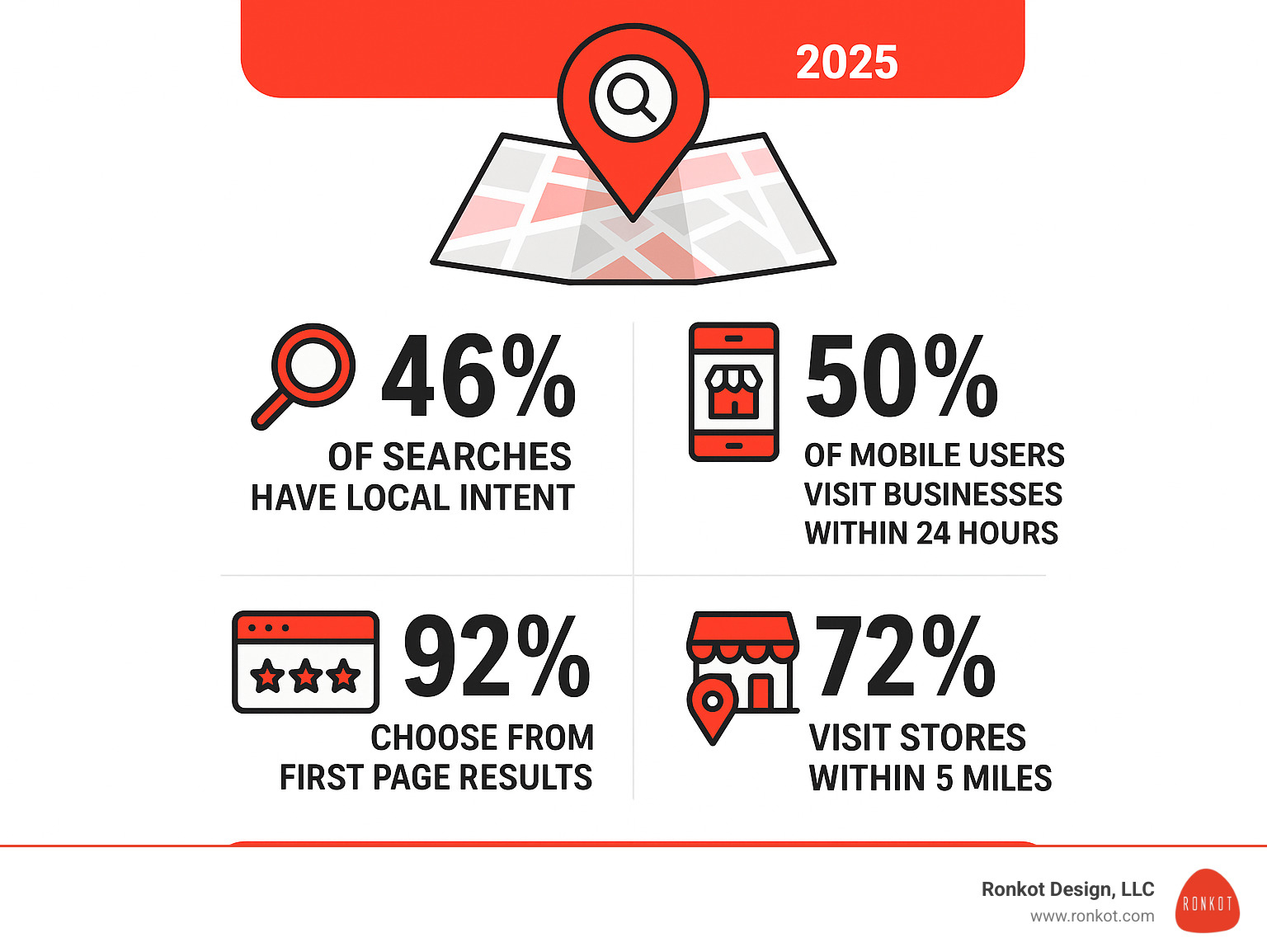
A local seo strategy is your roadmap to connecting with customers in your neighborhood who are already searching for what you sell. Consider the numbers:
- 46% of all Google searches have local intent.
- 50% of smartphone users visit a business within a day of a local search.
- 92% of searchers pick a business from page one results.
If your company doesn’t appear in those results, you’re effectively invisible.
Core Elements of a Winning Local SEO Strategy
- Google Business Profile optimization
- Local keyword research
- NAP consistency (Name, Address, Phone)
- Online review management
- Local citations/directories
- Localized content
I’m Ronak Kothari, CEO of Ronkot Design. After more than a decade helping brands boost their digital visibility, one truth stands out: local search drives real-world revenue faster than any other online channel.
Easy local seo strategy word list:
- google maps optimization
- local business review sites
- seo checklist for local small business websites
The Foundation: Mastering Your Digital Storefront
Your Google Business Profile (GBP) and website are the online equivalent of a well-lit, welcoming shop window. Perfect these first.
Optimizing Your Google Business Profile (GBP)
- Claim and verify your listing.
- Keep NAP details identical everywhere (even “St.” vs. “Street” matters).
- Select the most specific primary category (e.g., wedding photographer vs. photographer).
- Add high-quality photos—businesses with photos get 35% more clicks.
- Post updates, offers, and events via Google Posts.
- Monitor and answer Q&A.
Get started here: Claim your free Google Business Profile and dive deeper with our Google My Business Optimization Guide.
Conducting Effective Local Keyword Research
People search the way they speak: “plumber near me,” “best tacos Colleyville.” Use tools like Google Keyword Planner to uncover:
- “Near me” and voice-style questions
- Service + city phrases (“roof repair Dallas”)
- Long-tail, high-intent keywords
Match their language in your content and your GBP.
On-Page SEO and Localized Content
- Include city names in title tags and meta descriptions (keep titles < 60 characters, descriptions < 160).
- Build unique location pages for each city you serve—no copy-and-paste.
- Tell your story on the About page: local history, community ties, charities.
- Add Local Business schema for clearer search engine understanding.
- Ensure your site is fast and mobile-friendly; 61% of searches happen on phones.
Need multi-location tactics? See Local SEO for Multiple Location Business.
Building Trust and Authority in Your Community
Google looks at signals beyond your own site to decide whether you’re truly part of the local fabric.
The Power of Online Reviews
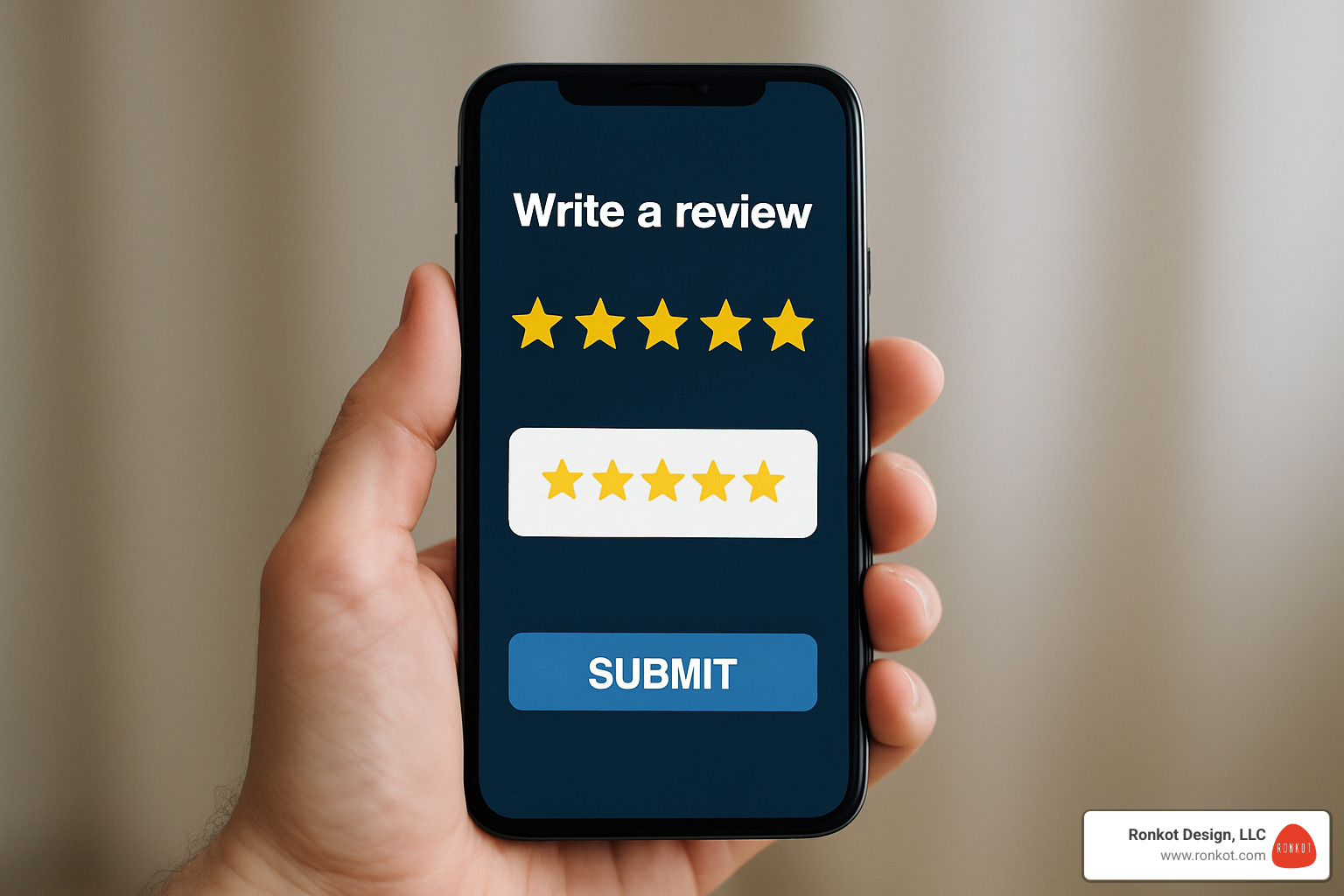
95% of shoppers read reviews, and Google states that positive, recent reviews improve visibility. Ask happy customers right after a great experience, send a direct link, and always respond—especially to negatives. Need help? See How to Respond to Negative Google Reviews (Templates Included).
Local Citations and Directory Listings
Citations are mentions of your NAP on other sites. Consistency is critical.
- Submit to core data aggregators (Foursquare, Data Axle, etc.).
- Add industry-specific directories (e.g., OpenTable for restaurants).
- Don’t overlook local Chamber of Commerce or city business lists.
Run a simple citation check with any reputable citation-tracking tool, then correct mismatches. Our Simple Local SEO Checklist walks you through it.
Effective Strategies for Local Link Building
Links from community sites signal prominence.
- Sponsor youth sports, charity runs, or festivals (event pages often link back).
- Join the Chamber of Commerce for an automatic directory link.
- Partner with complementary local businesses (e.g., photographer + florist).
- Host or speak at community events; publish recap posts and share photos.
- Offer insights to local journalists and bloggers.
For service businesses, see our focused guide: Local SEO for Contractors.
Executing Your Winning Local SEO Strategy
How Local SEO Works: Key Ranking Factors
Google relies on three primary local signals:
| Factor | What It Means |
|---|---|
| Relevance | How well your profile matches the search |
| Distance | How close you are to the searcher |
| Prominence | Your online/offline reputation (reviews, links, citations) |
Unlike national SEO, proximity often outweighs brand size—giving small businesses a real shot at outranking chains. Traditional on-page factors (quality content, site speed) still apply; they simply support the local signals. Explore details in our Local SEO Ranking Factors.
Developing a Content & Social Media Plan
Act like the neighborhood expert:
- Publish posts about local events, seasonal tips, and customer success stories.
- Use geo-specific hashtags on Facebook and Instagram.
- Share user-generated photos to build social proof.
- Consistency beats volume; a helpful weekly post trumps daily fluff.
Choosing the Right Tools
Start free with Google Search Console and Analytics for performance data. Add rank-tracking software that lets you set search locations, plus review-monitoring and citation-management tools as you grow. Focus on metrics that produce revenue—calls, form fills, and store visits—rather than vanity traffic numbers.
Measuring Success and Setting Expectations
Key Metrics to Watch
- Local pack & organic rankings for priority keywords
- Google Business Profile actions: phone calls, direction requests, website clicks
- Website conversions: calls, forms, online bookings
- Review volume, rating, and response rate
- Citation consistency across directories
Set up tracking with Google Analytics, Search Console, and your GBP dashboard. For a deeper checklist, see Local SEO KPIs.
How Long Until You See Results?
- 0–3 months: Build the foundation—optimize GBP, fix citations, and collect initial reviews. Expect modest visibility bumps.
- 3–6 months: Noticeable growth—more local pack appearances, rising traffic, and increased calls.
- 6–12 months: Significant gains—stable top-three rankings for key terms and steady lead flow.
- 12 months+: Market leadership—focus shifts from climbing to maintaining and expanding.
Local SEO is cumulative; consistent action beats bursts of activity. Avoid common pitfalls with our guide on Local SEO Mistakes and How to Avoid Them.
Frequently Asked Questions about Local SEO
What is the difference between Local SEO and general SEO?
The biggest difference comes down to geography. General SEO is like casting a wide net – you’re trying to reach customers anywhere in the world. Local SEO is more like fishing in your neighborhood pond – you’re focusing on people right in your backyard.
When you’re working on a local seo strategy, you’re dealing with completely different ranking signals. Things like how close you are to the person searching, whether your business address is consistent across the web, and how well you’ve optimized your Google Business Profile become incredibly important. These factors barely matter for general SEO.
The intent behind searches is different too. Someone searching “how to fix a leaky faucet” might just want information. But someone searching “plumber near me” is ready to pick up the phone and hire someone today. Local SEO targets that “ready to buy right now” mindset.
Your content strategy changes as well. Instead of writing broad, informational articles, you’re creating content that speaks directly to your community. You’re talking about local events, neighborhood concerns, and area-specific services.
What are the most important ranking factors for the Local Pack?
Google keeps it simple with three main pillars for Local Pack rankings, but there’s more to the story than meets the eye.
Relevance is about how well your business matches what someone is searching for. If you’re a pizza restaurant and someone searches “pizza delivery,” Google wants to know you actually deliver pizza, not just that you exist.
Distance is straightforward – how far are you from the person searching? You can’t change your location, but you can make sure Google knows exactly where you are and what areas you serve.
Prominence is where things get interesting. Google looks at how well-known your business is both online and offline. This includes your reviews, how many websites mention you, local news coverage, and even how many people search for your business by name.
But our experience shows other factors play huge roles too. Google Business Profile completeness can make or break your visibility. Businesses with complete profiles consistently outrank those with sparse information.
Reviews are incredibly powerful – not just having them, but getting fresh ones regularly and responding to them professionally. We’ve seen businesses jump several positions just by improving their review management.
NAP consistency (Name, Address, Phone) across the web tells Google you’re a legitimate, established business. Even small inconsistencies can hurt your rankings.
Can I rank in a city where I don’t have a physical address?
Yes, but it requires a thoughtful approach and realistic expectations. Many service-based businesses successfully rank in cities where they don’t have storefronts.
Service-area businesses like contractors, cleaners, and consultants can define their service areas in Google Business Profile. This tells Google you serve those areas even without a physical location there.
The real challenge is proving you’re truly relevant to those areas. You need to show Google – and potential customers – that you have genuine connections to those communities.
Creating location-specific landing pages is essential, but they need to be genuinely useful, not just copies of your main page with the city name swapped out. Include local testimonials, area-specific services, local market insights, and community involvement.
Building local authority in each target area takes time. You need customer reviews from those locations, local citations, and ideally some local links or mentions. The more you can prove you’re actively serving and engaging with each community, the better your chances.
Service consistency matters too. If you claim to serve an area, you need to actually provide excellent service there. Poor experiences in distant locations can hurt your overall reputation and rankings.
Ranking without a physical presence is more challenging and takes longer. Focus on areas where you can genuinely provide great service and build real community connections.
Conclusion: Start Winning in Your Local Market
Your journey through this guide has shown you something powerful: a well-crafted local seo strategy isn’t just another marketing tactic—it’s your lifeline to the customers who need you most. While your competitors are still figuring out why their phones aren’t ringing, you now have the blueprint to dominate your local market.
Think about it this way: every day, thousands of people in your community are searching for exactly what you offer. They’re typing “near me” into their phones, asking Google for directions, and making purchase decisions based on what they find online. The question isn’t whether local SEO works—it’s whether you’re ready to claim your share of those searches.
The beauty of local SEO lies in its democratic nature. Unlike trying to compete nationally against corporations with million-dollar marketing budgets, local SEO gives small businesses a real fighting chance. A well-optimized local plumber can outrank a national chain in their hometown. A family restaurant can dominate local search results over major franchises. It’s not about who has the biggest budget—it’s about who serves their community best.
Your roadmap to success starts with action. Begin by claiming and optimizing your Google Business Profile—it’s free, it’s powerful, and it’s often the first impression customers have of your business. Make sure your website speaks to your local community, not just to search engines. Build genuine relationships that naturally lead to positive reviews and local citations.
Local SEO is a marathon, not a sprint. The businesses that win are those that stay consistent, keep improving, and never stop caring about their customers’ experience. You might not see dramatic changes overnight, but stick with it for three to six months, and you’ll start seeing real results. After a year of consistent effort, you’ll likely be wondering why you waited so long to get started.
The most successful local businesses understand something crucial: local SEO isn’t about gaming the system—it’s about genuinely serving your community better than anyone else. When you focus on providing exceptional service, asking satisfied customers for reviews, and staying connected to your local area, the rankings often take care of themselves.
At Ronkot Design, we’ve seen this change happen countless times. We’ve watched small businesses in Dallas, Colleyville, and throughout Texas go from invisible to indispensable in their local markets. Our data-driven approach doesn’t just chase rankings—we focus on the metrics that actually matter to your bottom line: more calls, more customers, and more revenue.
Your local customers are searching for you right now. They’re comparing options, reading reviews, and making decisions about where to spend their money. The businesses that invest in a solid local seo strategy are the ones that get found, get chosen, and get ahead.
Don’t let another month go by watching your competitors capture the customers that should be yours. Start with the fundamentals we’ve outlined here, stay consistent with your efforts, and watch as your local visibility transforms your business.
Ready to take your local presence to the next level? Explore our comprehensive Local SEO Strategy guide to find how we can help you dominate your local market and turn searchers into customers.
Your community needs what you offer. Make sure they can find you.
Ronak Kothari is the founder of RONKOT, a full-service digital marketing agency.