


Ronak Kothari is the founder of RONKOT, a full-service digital marketing agency.
Corporate Identity Design 101: Essential
Why Corporate Identity Design Matters for Your Business
Corporate identity design is the strategic framework defining how your company presents itself to the world. It’s more than a logo; it’s the complete system of visuals, communication, and values that makes your business recognizable and trustworthy.
Corporate identity design includes:
- Visual Elements: Logo, color palette, typography, and imagery.
- Communication: Brand voice, messaging, and tone.
- Culture: Company values, mission, and vision.
- Application: Consistent use across all marketing materials, products, and digital or physical spaces.
Why it matters: Companies with consistent branding see 10-20% revenue growth, and 76% of consumers prefer buying from brands they feel connected to. A strong corporate identity builds that connection, helping customers recognize, trust, and remember you.
The problem is that while most companies have brand guidelines, only one in four enforce them. Without consistency, your brand becomes forgettable and customers get confused about who you are.
A well-crafted corporate identity does three critical things:
- Differentiates you from competitors.
- Builds trust through a professional presentation.
- Creates an emotional connection by reflecting shared values.
Think of Apple or Nike. You recognize their entire presence, not just their logos. That’s the power of effective corporate identity design. This guide will show you how to build one that drives growth.

Key Components of Corporate Identity: Visuals (logo, colors, typography), Messaging (voice, taglines, communication), and Culture (values, behavior, mission)
I’m Ronak Kothari, CEO of Ronkot Design. With over a decade of experience, I’ve seen how a strategic corporate identity transforms business growth. Let’s explore how you can use it to stand out.
What is Corporate Identity and Why is it Crucial?
Corporate identity design is the complete picture of your company—its personality and DNA. It encompasses your values, communication style, behavior, and appearance. In a crowded marketplace, a clear identity is more important than ever.
A strong corporate identity creates instant brand recognition. When people see your colors or logo, they know it’s you. This recognition builds trust, which turns browsers into buyers. Consistency across every touchpoint—from your website to customer service—signals reliability and professionalism.
Your identity is also what differentiates you from the competition. It communicates your unique value and why customers should choose you. Without it, you blend into the background.
Beyond attracting customers, identity helps you connect with them emotionally. People buy from brands they feel a connection with—in fact, 76% of consumers prefer it. An authentic identity that reflects your audience’s values creates a bond that transcends transactions.
Internally, a clear identity unites your team around a shared purpose, strengthening company culture and turning employees into brand ambassadors. The financial impact is real: studies show that consistent branding can increase revenue by 10-20%, with some reports suggesting it could be as high as 33%. Your digital presence is a cornerstone of this, which is why we create web design experiences that authentically reflect your brand.
Corporate Identity vs. Brand Identity vs. Corporate Design
These terms are often confused, but they represent different parts of the same puzzle.
- Corporate Identity: The big picture—the “who.” It’s your company’s core mission, values, and culture. It’s the internal foundation.
- Brand Identity: The external expression—the “how.” It’s how you communicate your value to your target audience and shape their perception.
- Corporate Design: The visual toolkit—the “look and feel.” It includes your logo, colors, and typography that make your brand recognizable.
Think of it this way: corporate identity is your personality, brand identity is how you express it, and corporate design is the outfit you wear.
| Attribute | Corporate Identity | Brand Identity | Corporate Design |
|---|---|---|---|
| Scope | Holistic image of the entire company | Perception of a specific product, service, or company | Visual representation of corporate identity |
| Primary Focus | Who the company is (values, culture, behavior) | How the company/product is perceived by target audience | How the company looks (visual elements) |
| Key Elements | Culture, values, mission, behavior, communication, design | Logo, messaging, tone, visuals, customer experience | Logo, colors, typography, imagery, design systems |
| Audience | All stakeholders (employees, investors, customers) | Target customers, consumers | All who see the company’s visual communications |
The Business Impact of a Strong Identity
A strategic corporate identity directly impacts business performance by improving:
- Customer Loyalty: Consistent, positive experiences build trust and turn customers into advocates.
- Market Positioning: A differentiated identity carves out a unique space in the market, allowing you to attract ideal customers.
- Talent Attraction: A strong identity and positive culture attract top professionals and improve employee retention.
- Perceived Value: A professional presentation signals quality and reliability, justifying premium pricing.
- The Bottom Line: As mentioned, consistent branding is proven to drive significant revenue growth.
The Core Elements of a Strong Corporate Identity
A strong corporate identity design is like a symphony where every element works in harmony. Your visuals, words, and colors combine to create a memorable experience that builds recognition and trust.
Logo and Visual Symbols
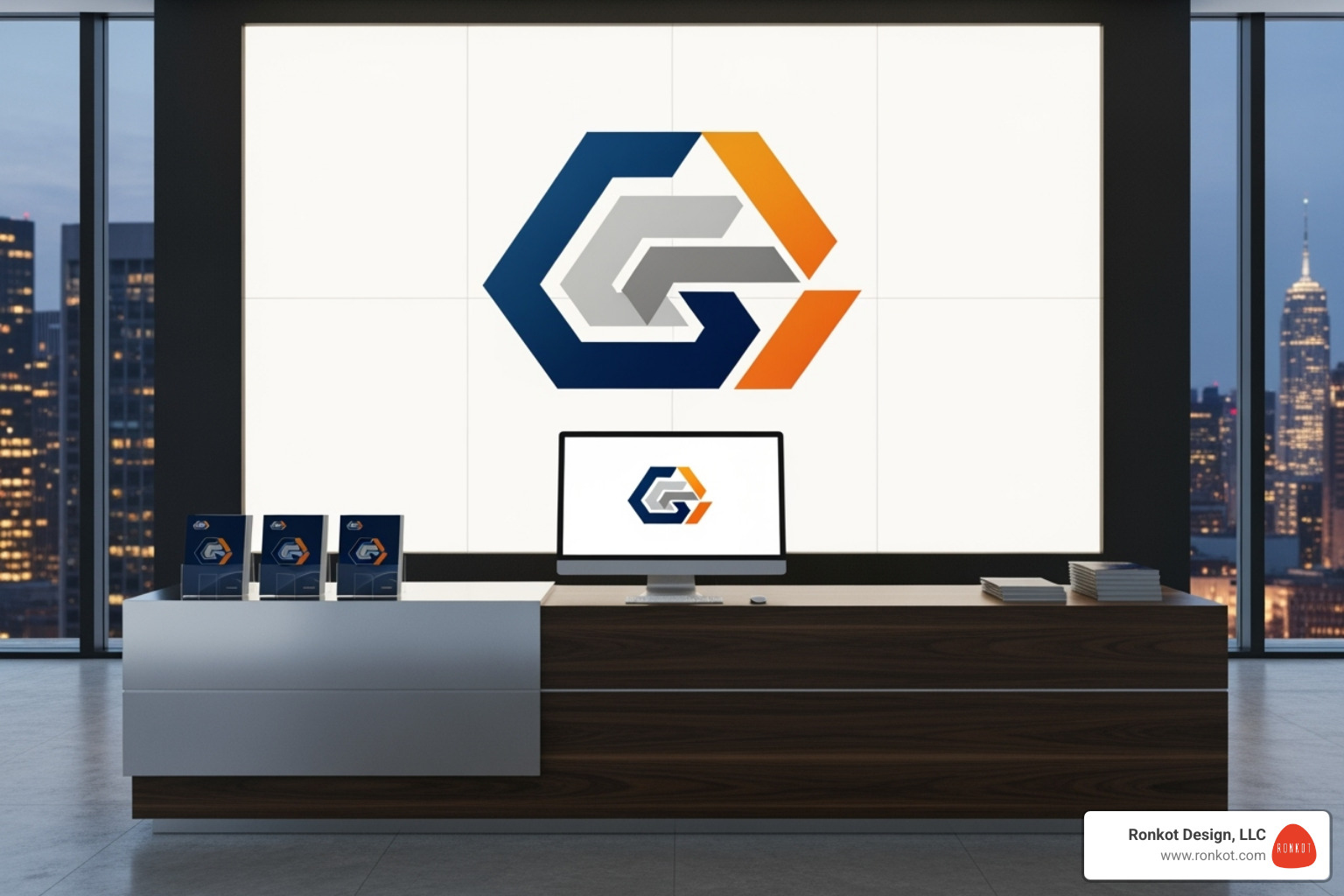
Your logo is your company’s visual handshake. Think of the Nike swoosh or the Amazon smile—they are instantly recognizable. The most effective logos are simple, memorable, and versatile. A great logo must be versatile, scaling perfectly from a tiny favicon to a large billboard while reflecting your core identity. Supporting visual symbols like icons and patterns create a unique visual language that reinforces your brand. These elements are critical for making a strong first impression, a topic we cover in our guide on the Elements of a Winning Website Design.
Typography and Fonts
Fonts have personalities. A sleek sans-serif can feel modern, while a classic serif may seem traditional and trustworthy. The typography you choose becomes part of your brand’s voice before a single word is read.
Readability is paramount across all mediums, from mobile screens to print. Within that, your typefaces should express your brand’s character—be it bold, friendly, or professional. Using font weights and sizes to create visual hierarchy guides the reader’s eye. Consistency in your typography across all touchpoints is key to reinforcing your identity. We help businesses integrate typography into their digital presence, as discussed in Designing the Perfect Website for Your Business.
Color Palette and Imagery
Up to 90% of snap judgments about products are based on color alone. Color creates immediate emotional connections. Blue often builds trust, red conveys energy, and green suggests growth or nature. Your color palette should be chosen based on the feelings you want to evoke. It’s also crucial to manage color modes (CMYK for print, RGB for screens) to ensure consistency everywhere.
Your imagery style, whether photography or illustration, tells a visual story. A brand might use candid, human-centric photos or clean, modern illustrations. Whichever you choose, a consistent style makes your visual content instantly recognizable and reinforces your identity.
Tone of Voice and Messaging
How your brand speaks is where its personality truly shines. Your brand voice is your consistent personality—perhaps witty, authoritative, or reassuring. Your tone, however, should adapt to the situation, whether you’re handling a customer complaint or announcing a new product.
Your core messaging pillars are the key themes that reflect your unique value proposition. A memorable tagline can distill these ideas into a few powerful words. When your communication style is consistent across your website, social media, and ads, you build familiarity and trust. This connection makes customers feel like they know you.
The Process of Effective Corporate Identity Design
Building a powerful corporate identity design is a strategic journey, not a weekend project. It requires a structured process to create an identity that is not just beautiful but also sustainable. At Ronkot Design, we follow four distinct phases.

Step 1: Findy and Research
Before any design work begins, we immerse ourselves in your business. This findy phase is about uncovering what makes you unique.
- Mission, Vision, and Values: We start with your company’s purpose—your “why.” This is the foundation for all creative decisions.
- Target Audience Analysis: We identify exactly who you’re speaking to by creating detailed buyer personas that outline their needs, pain points, and preferences.
- Competitor Analysis: We examine your competitors to find gaps in the market and opportunities for your brand to stand out.
- Market Positioning: Based on our research, we define your unique place in the competitive landscape.
Step 2: Strategy and Concept Development
With research complete, we translate insights into a creative strategy.
- Brand Personality and Values: We define the traits that will guide your visual style and communication—are you innovative, playful, or serious?
- Conceptual Exploration: Using mood boards and creative exercises, we explore different visual and thematic directions that align with your strategy. This step establishes the creative territory for your identity.
Step 3: Design and Implementation
Here, strategy becomes tangible. Our design team creates the assets that will represent your brand.
- Logo and Visual System: We design a unique, versatile logo and develop a complete visual system, including a color palette, typography, and imagery style. Every choice is intentional and reflects your brand’s personality.
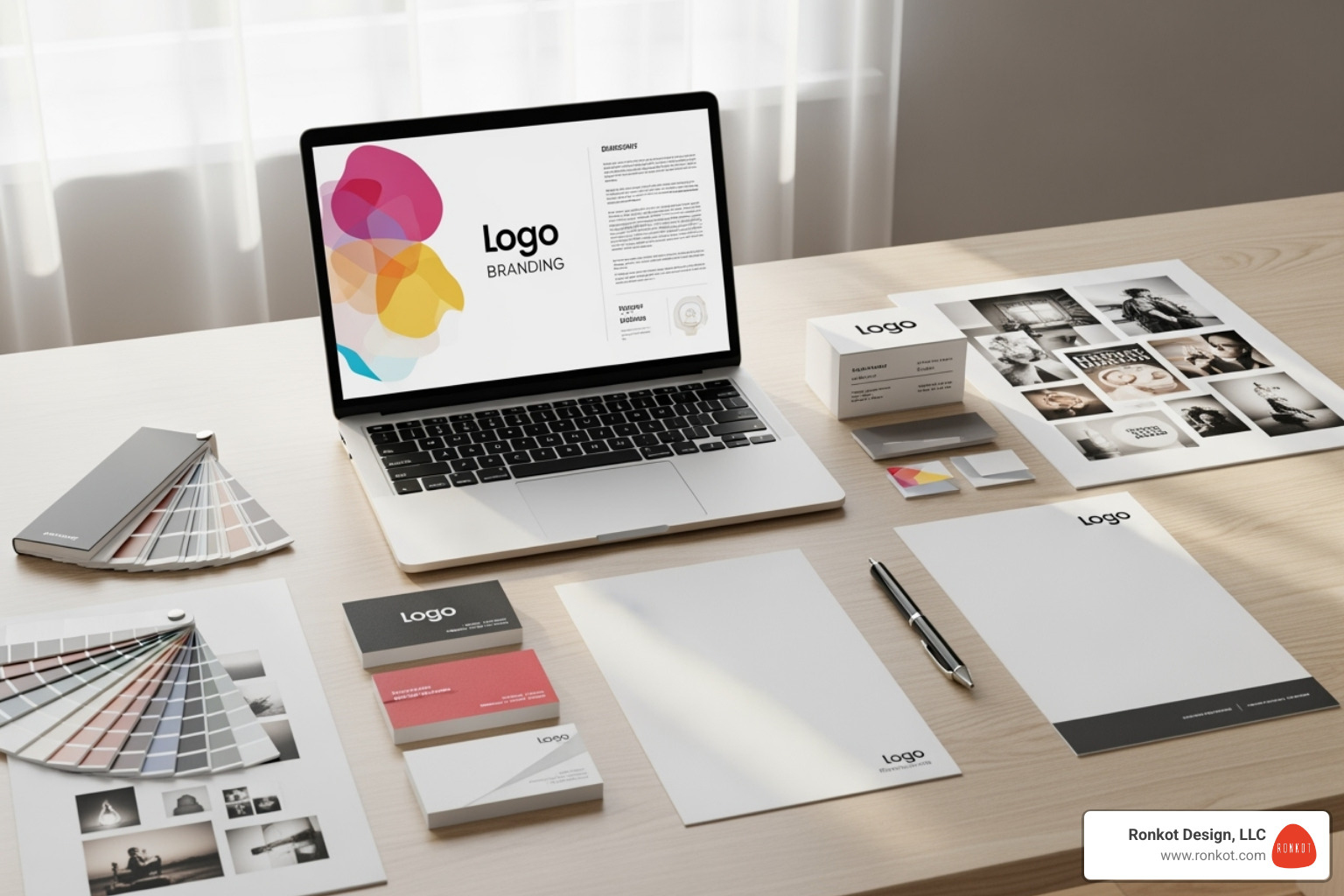
- Brand Style Guide: This comprehensive document is your brand’s bible. It outlines rules for logo usage, color codes, typography, and tone of voice, ensuring consistency.
- Templates: We create templates for business cards, presentations, and social media graphics to make it easy for your team to produce on-brand materials. A strong digital home is crucial, but many businesses make mistakes, which we outline in our guide to Website Design Development Mistakes Small Businesses Make With Solutions.
Step 4: Governance and Consistency
While most companies have brand guidelines, only one in four enforce them. This final phase is about maintaining your identity over time.
- Brand Management: This involves ongoing oversight to ensure your brand is used correctly as your company evolves.
- Technology: Digital Asset Management (DAM) systems and brand portals help centralize assets and guidelines, making compliance easier.
- Enforcement: The goal is consistency across all touchpoints. By building compliance into daily workflows, you empower your team to strengthen your identity with everything they create.
Best Practices and Future-Proofing Your Identity
A great corporate identity design is an investment in your company’s future. The goal is to build an identity that not only resonates today but also adapts as your business, market, and technology evolve.
Key Considerations for a New or Refreshed Corporate Identity Design
Whether launching a new brand or refreshing an existing one, these principles are key:
- Authenticity: Your identity must genuinely reflect your company’s values, culture, and mission. An inauthentic brand erodes trust.
- Scalability: Design an identity that can grow with your business, whether you’re expanding into new markets or adding product lines.
- Digital-First Approach: Your identity must excel on screens. Ensure your logo, colors, and typography are optimized for websites, social media, and mobile devices.
Consider a rebrand if your current identity feels outdated, your target market has shifted, or your company has undergone a major change like a new mission. However, rebranding without a clear strategic reason often fails. A new look must be anchored in strategy and authenticity, not just aesthetics. Before you commit, ensure you have the resources to update all assets consistently. To align your brand with your outreach, learn about The Importance of Having a Digital Marketing Strategy. A powerful brand doesn’t have to be expensive; for tips, see our guide on Building Your Brand Without Blowing Your Budget.
Career Paths and Essential Skills
For those passionate about this field, corporate identity design offers several exciting career paths, including Brand Designer, Brand Strategist, and Creative Director. Success in these roles requires a blend of art and business.
Essential skills include:
- Strategic Thinking: Understanding business goals, market dynamics, and audience needs.
- Creativity: A keen eye for aesthetics and the ability to generate innovative visual solutions.
- Communication: The ability to present ideas, collaborate with teams, and articulate design rationale.
- Technical Proficiency: Mastery of design tools like the Adobe Creative Cloud (Photoshop, Illustrator, InDesign).
- Attention to Detail: The meticulousness to ensure consistency across all brand touchpoints.
This field is fulfilling because you’re not just making things look good—you’re solving business problems and driving results.
Frequently Asked Questions about Corporate Identity Design
How is corporate identity different from brand identity?
This is a common and important question. In short:
- Corporate identity is the internal reality—who your company is at its core, including its mission, values, and culture.
- Brand identity is the external expression—how you present your company to the world to shape public perception, using visuals and messaging.
Think of corporate identity as your authentic self and brand identity as how you introduce yourself to make the right impression.
How much does it cost to develop a corporate identity?
The cost of developing a corporate identity design varies widely. It can range from a few hundred dollars for a basic logo to tens or hundreds of thousands for a comprehensive strategy from a large agency. The final investment depends on the project’s scope, research depth, deliverables, and the team’s expertise.
A simple logo refresh will cost less than a full overhaul that includes research, strategy, a new visual system, and a brand style guide. The key is to match your investment to your business goals. You don’t need a massive budget to start, just a strategic approach. For guidance on managing costs, see our guide on Building Your Brand Without Blowing Your Budget.
How do you measure the ROI of a strong corporate identity?
Measuring the ROI of a corporate identity design involves tracking both qualitative and quantitative metrics over time. While benefits like trust are long-term, the impact is measurable.
We track ROI through key indicators like:
- Increased brand recognition (measured in surveys, social mentions, direct web traffic).
- Improved customer loyalty (repeat purchases, higher customer lifetime value).
- Higher conversion rates (more leads and customers from website visitors).
- Stronger market positioning (ability to command premium pricing).
- Talent attraction and retention (improved quality of applicants and lower turnover).
The numbers prove the value. Studies consistently show that strong, consistent branding leads to significant revenue growth, with some reports indicating an increase of 10-33%. A strong identity is a profitable investment.
Conclusion
Your corporate identity design is not just a creative exercise; it’s the strategic foundation of your brand. It’s what transforms your business from a collection of services into a cohesive, recognizable presence that people trust and remember.
We’ve covered the core elements, the strategic process, and the critical importance of consistency. As the data shows, companies with consistent branding see 10-20% revenue growth, and some reports indicate gains as high as 33%. These numbers represent real customers choosing you because they recognize and trust your brand.
Building a strong corporate identity requires strategic thinking, creative expertise, and a deep understanding of your business and audience. It demands a data-driven approach, not guesswork.
At Ronkot Design, LLC, we specialize in developing corporate identities that don’t just look good—they deliver results. Our approach combines strategic insight with creative excellence to ensure your brand presence drives measurable growth. An investment in a professional corporate identity is a strategic asset that appreciates over time.
Ready to build an identity that resonates with your audience and drives growth? Explore our Corporate Identity Graphic Design Services and let’s create a brand story worth remembering.
Ronak Kothari is the founder of RONKOT, a full-service digital marketing agency.