


Ronak Kothari is the founder of RONKOT, a full-service digital marketing agency.
What Is Contractor SEO and Why Does It Matter?
Contractor SEO is the process of optimizing a contractor business’s online presence to rank higher in search engines, particularly for local searches. When done correctly, it connects your services with homeowners actively looking for them.
Quick Answer: What is Contractor SEO?
* A specialized form of search engine optimization custom for contractors
* Focuses on local visibility and service-specific keywords
* Includes optimizing Google Business Profile, website content, and online reputation
* Drives qualified leads with higher conversion rates than traditional advertising
* Provides long-term ROI compared to pay-per-click advertising
When a storm damages a roof or a pipe bursts at midnight, homeowners don’t flip through the Yellow Pages anymore—they grab their phones and search Google. As a contractor, your business needs to be visible exactly when these potential customers are searching. That’s where contractor SEO comes in.
The contractor industry is projected to exceed $100 billion next year, with thousands of daily searches for services. Yet remarkably, only 5% of contractor websites reach Level 10 SEO—the comprehensive optimization required to consistently rank at the top of search results and generate high volumes of leads.
Consider this: 72% of consumers use search engines to find information about local businesses, and the top organic position on Google captures nearly 40% of all clicks. Without proper SEO, you’re essentially invisible to these potential customers.
I’m Ronak Kothari, CEO of Ronkot Design, and over the past decade, I’ve helped countless contractors transform their digital presence through specialized contractor SEO strategies that turn online visibility into booked jobs and revenue growth.
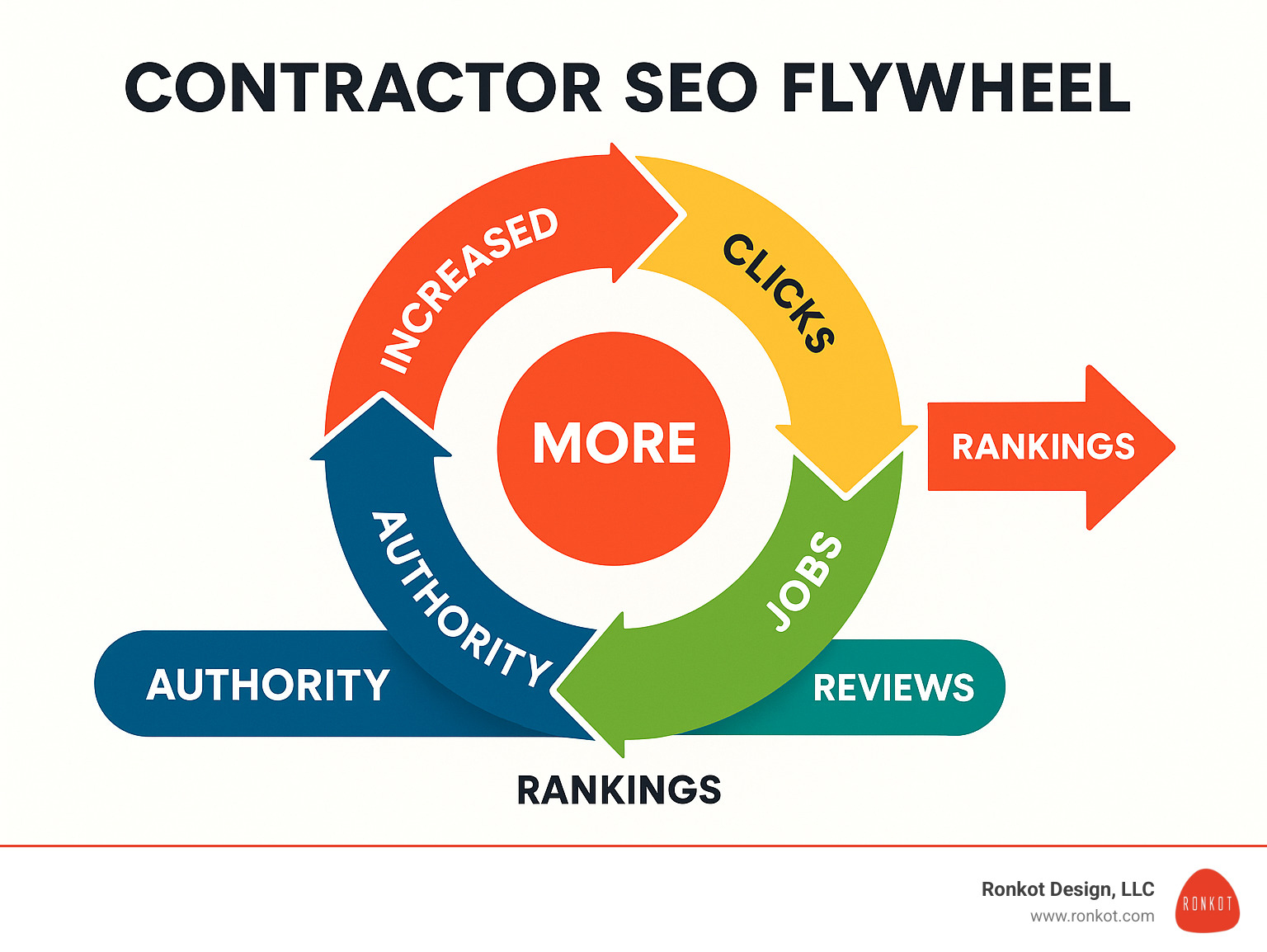
Contractor seo terms simplified:
– keywords for contractors
– construction seo company
– local seo for general contractors
Contractor SEO 101: Why It Pays to Rank
Let’s talk about contractor SEO – not just as another marketing term to learn, but as your ticket to sustainable growth in today’s digital world. When homeowners need a contractor, they’re not flipping through phone books anymore – they’re pulling out their smartphones and searching online.
At its heart, contractor SEO is about making sure your business shows up when those potential customers are actively searching for the exact services you provide. And trust me, the position where you appear matters tremendously.
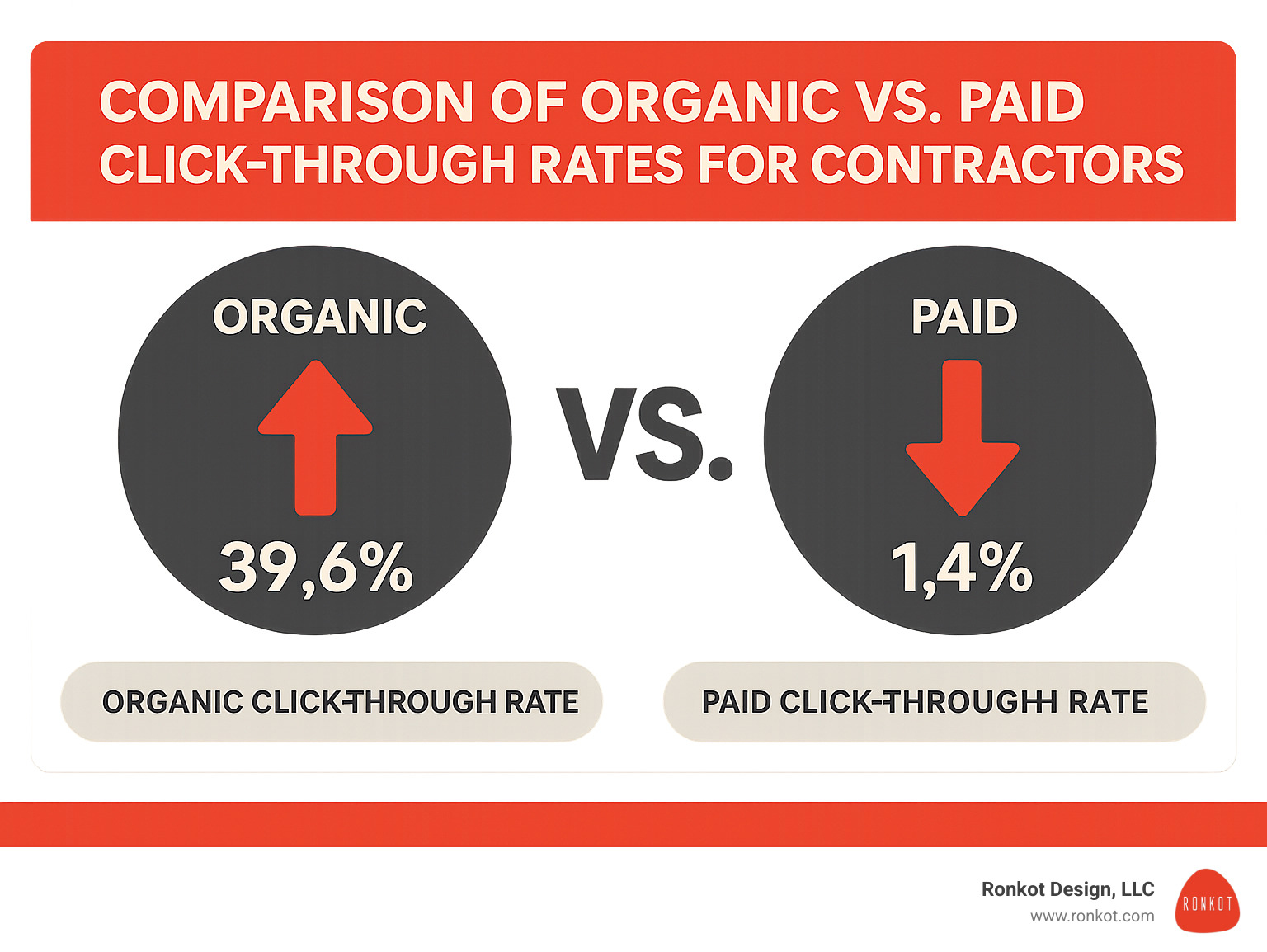
The numbers tell quite a story: that coveted first position on Google? It grabs nearly 39.6% of all clicks. Drop to second place, and your click rate plummets to 18.4%. By the time you’re at position 10, you’re scraping by with just 2.2% of clicks. Compare that to paid ads, which typically only see 1.4-2.1% click-through rates, and you’ll quickly understand why organic ranking is digital gold.
What makes contractor SEO particularly valuable today is its mobile-first nature. When a homeowner’s pipe bursts at midnight or their AC quits during a heatwave, they’re reaching for their phone, not sitting down at a computer. With 64% of users searching for contractor services from mobile devices, having a mobile-friendly presence isn’t just nice to have – it’s absolutely essential.
Here’s where contractor SEO really shines compared to other marketing channels:
| Marketing Channel | Initial Cost | Cost Per Lead (Year 1) | Cost Per Lead (Year 3) |
|---|---|---|---|
| SEO | $2,000-4,000/mo | $200-300 | $50-75 |
| PPC/Google Ads | $1,500-3,000/mo | $150-250 | $150-250 |
| Social Media Ads | $1,000-2,500/mo | $175-300 | $175-300 |
| Traditional Ads | $2,500-5,000/mo | $300-500 | $300-500 |
Notice something interesting? While SEO might start with a similar investment to other channels, it’s the only one where your cost per lead dramatically decreases over time. That’s because contractor SEO works like a financial investment that compounds – the work you do today continues paying dividends months and even years later.
How Contractor SEO Attracts Ready-to-Buy Homeowners
The real magic of contractor SEO is connecting with customers at exactly the right moment – when they’re actively looking for you. This is worlds apart from interruption marketing like billboards or TV ads.
When someone searches “emergency roof repair near me” or “licensed plumber in Dallas,” they’re not casually browsing – they need help now. These high-intent searches translate directly into action: inbound phone calls from people with urgent needs, detailed form fills from prospects comparing options, direction requests from folks looking to visit your showroom, and even referral boosts as your visibility grows.
I’ve seen this change at Ronkot Design. One of our roofing clients in Colleyville saw their qualified leads jump by 120% after we implemented a comprehensive contractor SEO strategy. That’s not just more website traffic – that’s more actual jobs and revenue.
The Four Pillars of Contractor SEO Success
Success with contractor SEO isn’t about one magic tactic – it’s about building a solid foundation across four essential pillars:
Local SEO forms your neighborhood presence, ensuring you show up when nearby homeowners search. This includes optimizing your Google Business Profile and building local citations.
On-Page SEO focuses on your website itself – the content, structure, and how well it communicates your services to both visitors and search engines.
Off-Page SEO builds your reputation and authority through backlinks from other websites and positive mentions across the web.
Technical SEO ensures your website meets Google’s standards for speed, mobile-friendliness, and proper coding structure.
These pillars work together like a well-built house – neglect the foundation (technical SEO), and the beautiful kitchen (your content) won’t matter much when the house is sinking!
For example, you might have fantastic service pages (on-page), but if your Google Business Profile isn’t optimized (local), you’ll miss out on those valuable map pack listings that appear at the top of local searches. Similarly, a technically perfect website won’t rank well without the trust signals that come from quality backlinks (off-page).
The contractors who see the best results implement a balanced approach across all four pillars, creating a strong foundation for sustainable growth rather than chasing quick fixes. At Ronkot Design, we’ve seen time and again that this holistic approach is what turns contractor SEO from a marketing expense into a genuine business asset.
Local SEO Blueprint for Contractors
When you’re a contractor, local SEO isn’t just another marketing checkbox—it’s the lifeblood of your digital presence. Why? Because your business serves specific neighborhoods, towns, and counties, and your future customers are searching specifically within those areas.
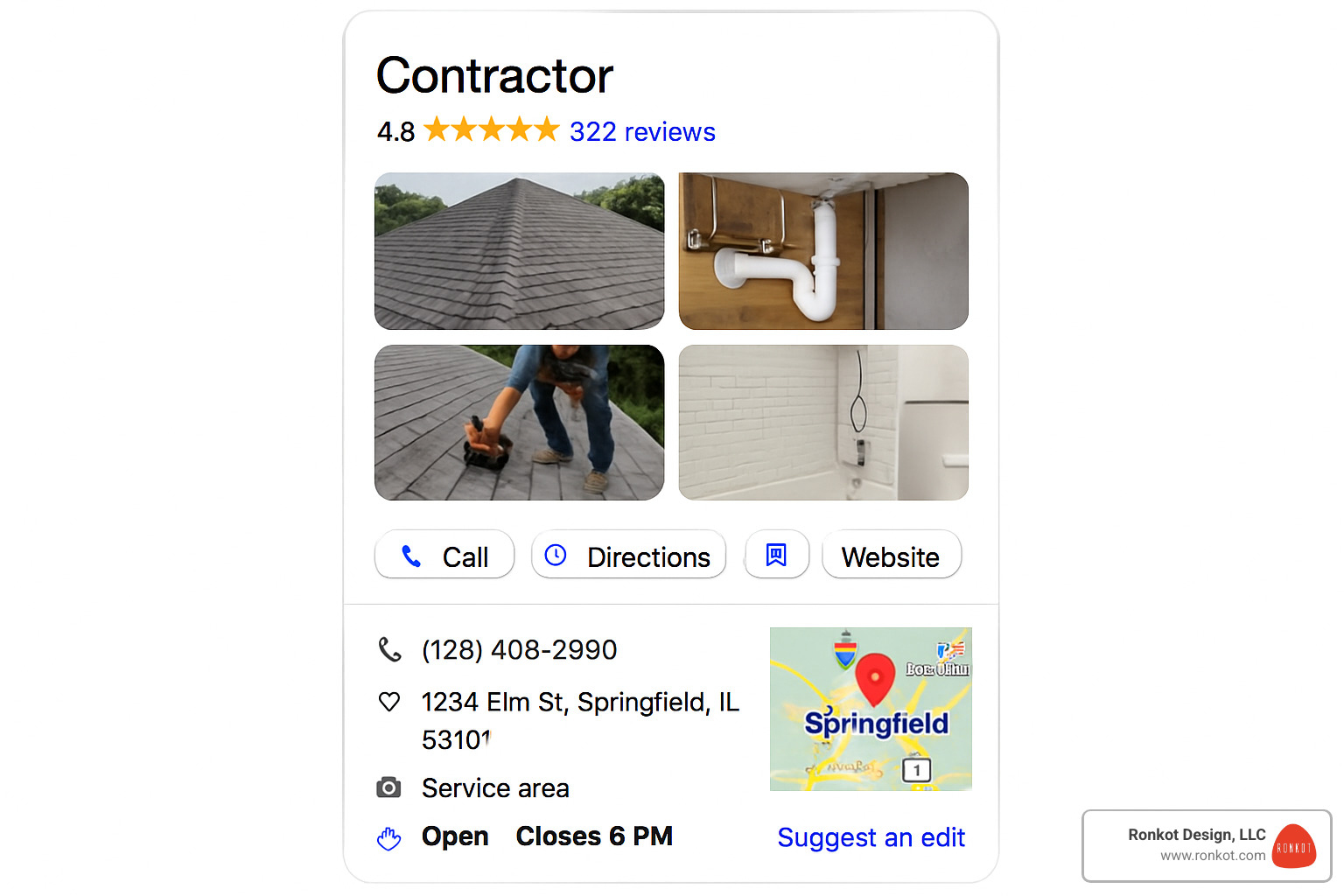
At the heart of your local contractor SEO strategy sits your Google Business Profile (GBP). This free listing is often your business’s first impression in Google Maps and local search results—frequently appearing even before organic website listings. The “local pack” (that map with three business listings underneath) shows up in a whopping 93% of searches with local intent. Miss out on this, and you’re invisible to nearly all local searchers.
To really shine in your local area, you’ll need to focus on five key elements: a verified Google Business Profile, consistent NAP information everywhere online, strategic directory listings, genuine customer reviews, and proper technical implementation. These aren’t just good practices—they’re essential for visibility.
I remember working with a general contractor in Dallas who was struggling to get noticed. After implementing these local SEO tactics, his visibility jumped by 85%, and his phone started ringing with quality project inquiries almost immediately.
Watch how to set up your Google Business Profile
Optimizing Your Google Business Profile
Your Google Business Profile works like a digital storefront—it’s often the first impression potential customers have of your business. Making it shine requires attention to detail:
Be specific with your primary category—”Roofing Contractor” tells Google much more than just “Contractor.” Define your service areas with precision by adding all the neighborhoods, cities, and zip codes you serve. This helps you appear in those crucial “near me” searches.
High-quality photos matter tremendously. Upload images of your team in action, your branded vehicles, office space, and (most importantly) your completed projects. These visual elements build trust before a customer ever calls you.
Keep your profile active with regular Google Posts—sharing recent projects, special offers, or helpful seasonal tips at least twice monthly. Google rewards this activity with better visibility. And don’t forget to list all your specific services with descriptions and maintain accurate business hours.
One of my favorite pro tips? Set up notifications so you can respond to all reviews within 24 hours. This responsiveness signals to both Google and potential customers that you’re attentive and care about client feedback.
NAP & Citation Hygiene
NAP consistency might sound like technical jargon, but it’s actually quite simple: your Name, Address, and Phone number need to be identical everywhere they appear online. This consistency is critical for contractor SEO success.
Think of it this way—if Google sees “ABC Contractors LLC” on your website, “ABC Contractors” on Yelp, and “A.B.C. Contracting” on HomeAdvisor, it can’t confidently connect these listings to the same business. This confusion dilutes your ranking power and can even push you down in search results.
Common inconsistencies I see with contractors include:
– Business name variations (with or without “LLC”)
– Different suite number formats (Suite 100 vs. #100)
– Varied phone number formatting (555-555-5555 vs (555) 555-5555)
– Street name abbreviations (St. vs Street)
The solution is straightforward but requires diligence. Create a master NAP document with your exact preferred format. Then audit your existing citations using tools like Whitespark or Moz Local. Correct any discrepancies systematically, starting with the most important directories. For contractors in Texas, we’ve found that the Better Business Bureau, Angi, and HomeAdvisor carry significant ranking weight.
Set a quarterly reminder to check for new inconsistencies—this ongoing maintenance keeps your digital presence clean and authoritative.
Reviews & Reputation Signals
In today’s digital marketplace, your online reputation is perhaps your most valuable asset. The numbers tell the story: 93% of consumers say online reviews directly impact their hiring decisions, and businesses with 4.5+ star ratings receive nearly 28% more clicks than those with lower ratings.
What many contractors don’t realize is that Google actually uses review signals as ranking factors. The quantity, velocity (how frequently you get new reviews), and diversity of your reviews all influence where you appear in local search results.
Building a strong review profile requires intention and systems. Create a simple process where every completed job automatically triggers a review request. We’ve had great success creating QR codes that link directly to your Google review page—include these on invoices, follow-up emails, and even on your crew’s business cards.
The timing of your request matters too. The best moment to ask for a review is right after you’ve solved a problem or completed a beautiful installation—when customer satisfaction is at its peak. One particularly effective tactic we’ve implemented is a simple text message template that technicians can send immediately after completing a job.
Remember to respond thoughtfully to every review—positive or negative. These responses aren’t just for the original reviewer; they show every potential customer how you communicate and handle feedback.
More info about Local SEO for Contractors
On-Site & Content Mastery
While local SEO gets your business on the map, your website is where the magic happens – converting curious visitors into solid leads. Think of a well-optimized contractor website as your hardest-working employee, showcasing your expertise and connecting with potential customers 24/7, even while you sleep.

The heart of effective on-site contractor SEO isn’t complicated, but it does require attention to detail:
- Thoughtful keyword research that targets what your customers actually search for
- Clearly structured service and location pages that answer specific needs
- Technical optimization that ensures your site loads quickly on any device
- Content that demonstrates your expertise and builds genuine trust
Here’s something that might surprise you: when your page load time increases from just 1 to 3 seconds, you lose about 32% of potential visitors. For contractors, that could mean watching a $20,000 kitchen remodel job slip away to a competitor whose website simply loaded faster.
Keyword Research Blueprint for Contractors
Finding the right keywords isn’t about stuffing your website with industry jargon – it’s about understanding what your potential customers are actually typing into Google when they need your services.
For contractors, your keywords typically fall into four natural categories:
Commercial keywords signal someone ready to hire right now – like “emergency roof repair Dallas” or “hire plumber Colleyville.” These are your bread and butter.
Informational keywords show someone doing research – like “cost of kitchen remodel” or “types of roofing materials.” These folks aren’t ready to hire yet, but they’re getting there.
Navigational keywords are when someone searches specifically for your company name – they’ve heard of you and want to find you.
Local keywords combine services with geography – “contractors near me” or “Dallas TX bathroom remodelers.” These are golden opportunities.
When we work with contractors on keyword research, we start simple:
- Grab a coffee and brainstorm all the services you offer
- Use tools like Google Keyword Planner or Semrush to expand your list
- Look at both search volume (how many people search for this) and competition (how hard it is to rank)
- Organize everything by intent and create a plan for your content
I always tell contractors to focus first on commercial and local keywords – they’re your direct path to new business. But don’t completely ignore informational keywords. They help you connect with homeowners earlier in their journey, building trust before they’re ready to hire.
A strategy that works beautifully is creating topic clusters around your main services. For instance, a roofing contractor might create a comprehensive “Roof Replacement” page, supported by related content about materials, costs, the replacement process, and maintenance tips.
Crafting Service & Location Pages That Rank
Your service and location pages do the heavy lifting in contractor SEO. They target exactly what your customers want (specific services) where they want it (specific locations).
To create pages that both rank well and convert visitors:
Create individual service pages for each major service you offer. A remodeling contractor should have separate pages for bathroom remodeling, kitchen remodeling, and basement finishing – not just one generic “remodeling” page.
Develop location-specific pages for each area you serve. “Bathroom Remodeling in Dallas” and “Bathroom Remodeling in Colleyville” should be different pages with unique content about each community.
Connect related pages through thoughtful internal linking. This helps both visitors and search engines steer your site logically.
Include clear calls-to-action throughout each page. Make it ridiculously easy for visitors to contact you with prominent phone numbers and simple forms.
Add schema markup to help search engines understand your business better. LocalBusiness and Service schema are particularly valuable for contractors.
Each page should feel complete and helpful, with:
* Substantial, unique content (aim for at least 500 words)
* Relevant project photos with descriptive alt text
* Real customer testimonials specific to that service/location
* Clear pricing information when possible (even ranges help)
* A simple explanation of your process
* FAQs addressing common customer questions
We’ve seen time and again that pages with helpful, comprehensive content not only rank better but also convert at significantly higher rates – sometimes 25-30% better than thin, generic pages.
Speed, Mobile & Technical Tune-Ups
Technical SEO might sound boring, but it’s like the foundation of your house – invisible but absolutely essential. With nearly two-thirds of contractor searches coming from mobile devices, technical optimization directly impacts your bottom line.
Site Speed matters tremendously. Use Google’s PageSpeed Insights to identify what’s slowing you down, then fix it. Often, the culprits are uncompressed images, unnecessary plugins, or clunky code. We’ve seen conversion rates jump by 15% simply by getting page load times under 2 seconds.
Mobile Responsiveness isn’t optional anymore. Your site needs to work flawlessly on phones and tablets. Buttons should be large enough to tap easily, text should be readable without zooming, and forms should be simple to complete on a small screen. Test your site on different devices regularly – what works on your iPhone might not work on your customer’s Android.
Technical Fundamentals create the backbone of your site’s SEO. Secure your site with HTTPS (that little padlock in the browser), create logical URLs that humans can understand, implement an XML sitemap to help search engines index your content, and regularly check for broken links or crawl errors.
Technical SEO isn’t a “set it and forget it” task. At Ronkot Design, we conduct quarterly technical audits for our contractor clients because websites, like homes, need regular maintenance to perform at their best.
Content That Wins Featured Snippets
Featured snippets – those answer boxes at the top of search results – are pure gold for contractors. They give you prime visibility and establish you as the authority before visitors even click.
To win these coveted positions:
Create thoughtful FAQ blocks that directly answer common questions in your industry. “How much does a roof replacement cost in Dallas?” or “How long does a bathroom remodel take?” are perfect opportunities for snippets.
Structure your answers in snippet-friendly formats that Google loves to feature. This means concise paragraphs (about 40-60 words), clean numbered or bulleted lists, comparison tables, or step-by-step instructions.
Demonstrate your expertise, authoritativeness, and trustworthiness (what Google calls E-A-T) throughout your content. Include author bios with credentials, cite industry sources and statistics, keep information current, and link to respected industry resources.
I love sharing this success story: One of our roofing contractor clients secured a featured snippet for “roof replacement process” by creating a comprehensive guide with clear headings and concise explanations. That single snippet increased their organic traffic by 22% and brought in measurably more qualified leads.
The beauty of great content is that it works for you around the clock, answering questions and building trust even when your office is closed.
More info about Ways to Improve Website’s SEO
Off-Site Authority & Measuring Success
While on-site optimization gives you control over your own digital property, off-site factors significantly influence how search engines perceive your business’s authority and relevance. For contractor SEO, building authority through backlinks, partnerships, and industry recognition is essential for long-term success.
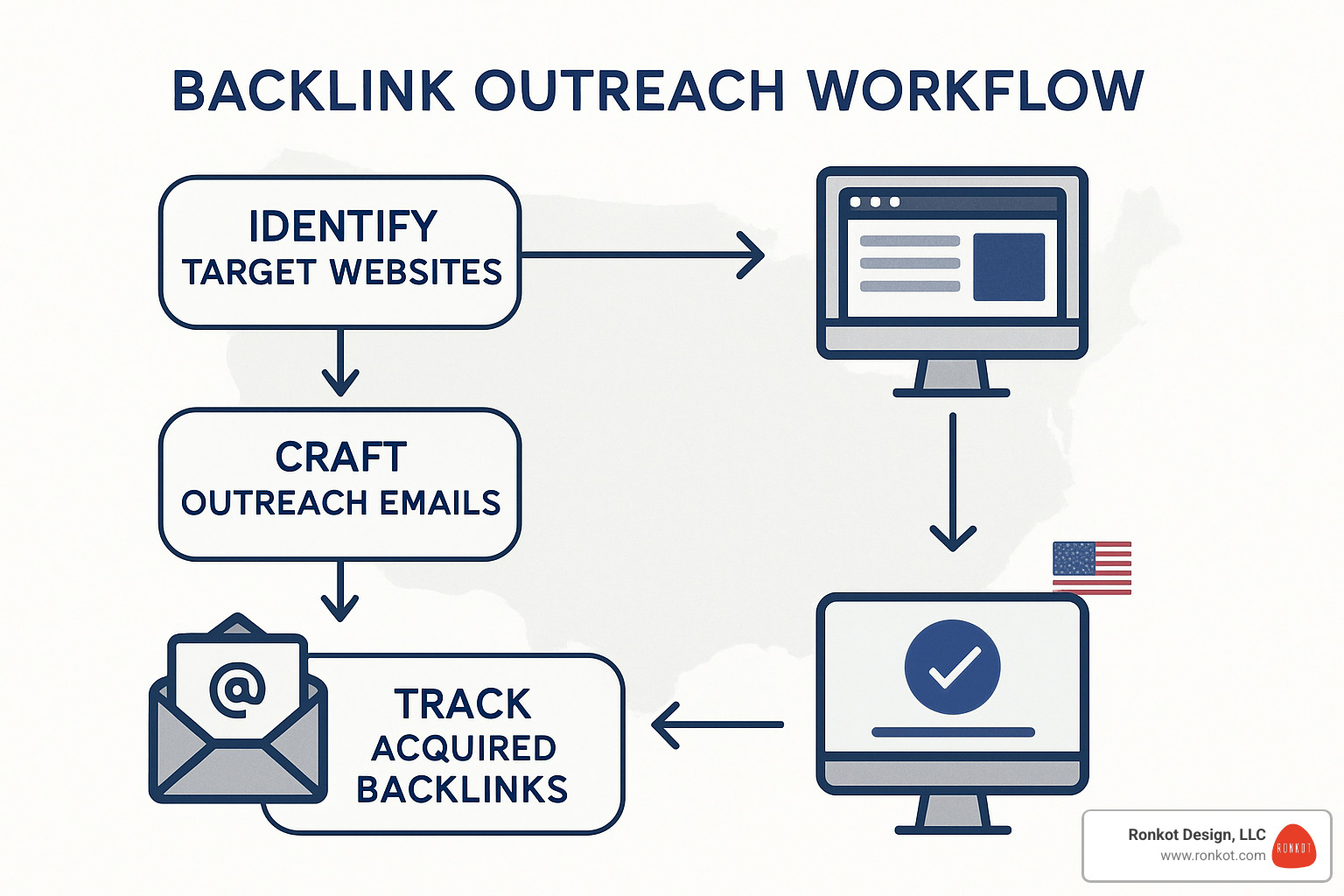
Think of backlinks as votes of confidence from other websites. When reputable sites link to yours, they’re essentially telling Google, “This contractor knows their stuff!” Quality trumps quantity every time—a single link from a respected industry association can be worth more than dozens of random directory listings.
Building Local & Industry Backlinks
For contractors, the most valuable backlinks come from sources that reinforce your local presence and industry expertise.
Your suppliers and manufacturers can be goldmines for quality backlinks. If you’re a certified installer or regular purchaser, ask to be featured on their “where to buy” or “certified contractors” pages. These industry-relevant links carry significant weight with search engines.
Local connections matter tremendously in contractor SEO. Your chamber of commerce, Better Business Bureau membership, and local business associations all provide opportunities for authoritative local links. Similarly, sponsoring community events, youth sports teams, or charity initiatives not only builds goodwill but often includes a backlink on sponsor pages.
I’ve seen remarkable results when contractors leverage their existing relationships. One of our Dallas clients reached out to their suppliers and local organizations they were already involved with, securing eight high-quality backlinks in just two weeks. Their domain authority jumped three points almost immediately.
Industry associations also offer powerful backlink opportunities. Your memberships in professional organizations not only build credibility with potential customers but signal expertise to search engines through their authoritative links.
Link Building Strategies for Professional Services Business
Demonstrating E-A-T & Winning Snippets
Google’s E-A-T principles—Expertise, Authoritativeness, Trustworthiness—are particularly crucial for contractors. When homeowners search for someone to remodel their kitchen or repair their roof, they need to trust that you know what you’re doing.
Showcase your credentials prominently across your digital presence. Your licenses, certifications, and professional affiliations should be easy to find, not buried on an obscure page. Create detailed team bios that highlight your experience and specialized training. You’re not just trying to impress Google—you’re building confidence with potential customers.
Case studies with before-and-after photos tell compelling stories about your work quality. They also create opportunities to rank for specific search queries related to the projects you showcase.
When it comes to winning those coveted featured snippets (the answer boxes at the top of search results), structure matters. Organize content in clear question-and-answer formats that directly address common customer queries. Keep your answers concise—about 40-60 words is ideal—and factual.
One roofing contractor we work with created a comprehensive FAQ section addressing common questions about roof replacement timing. Their direct, concise answers now appear as featured snippets for multiple related searches, dramatically increasing their visibility and establishing them as the local authority.
Metrics, Costs & Common Pitfalls
Measuring contractor SEO success requires tracking the right metrics. Focus on these key performance indicators:
Keyword rankings tell you where you stand for specific search terms, while organic traffic shows how many visitors are finding you through search engines. Conversion metrics like phone calls and form submissions reveal whether that traffic is turning into actual leads. Your backlink profile and local visibility in map results round out the essential metrics to monitor.
I like to explain SEO timing using a cruise ship analogy: Like a massive vessel, SEO takes time to build momentum. You can’t turn on a dime, but once you’re moving in the right direction, you have tremendous power behind you. Most contractors begin seeing initial results within 3-6 months, with significant improvements taking 6-12 months to materialize. Full maturity of your SEO campaign might take 12-24 months, but the long-term benefits far outweigh the initial patience required.
Budget-wise, most successful contractors allocate approximately 3% of their revenue to SEO efforts. This investment typically delivers an excellent return as your organic visibility grows and cost per lead decreases over time.
Watch out for common pitfalls that can derail your contractor SEO efforts. Keyword stuffing—cramming too many keywords into your content—makes your website read like a robot wrote it and can trigger Google penalties. Neglecting mobile optimization is particularly damaging for contractors, as most emergency service searches happen on smartphones. Poor user experience with complicated navigation or slow loading times will send potential customers straight to your competitors.
Frequently Asked Questions About Contractor SEO
How long until I see results?
Contractor SEO is definitely a marathon, not a sprint. Some improvements—like Google Business Profile optimization—might show results within weeks. However, meaningful ranking changes typically take 3-6 months, with full results developing over 6-12 months.
Your timeline depends on several factors: your starting point (established website vs. brand new), how competitive your local market is, how quickly you implement recommendations, your domain’s history, and your budget allocation.
The good news? Unlike paid advertising that stops working the moment you stop paying, SEO benefits compound over time. The work you do today continues delivering returns months and years later.
DIY vs hiring an agency—what’s best?
Both approaches have their merits, depending on your specific situation.
Taking the DIY route gives you complete control and keeps direct costs lower. You also bring intimate knowledge of your business to the table. However, the learning curve is steep, and the time investment is substantial. Most contractors I work with find they simply don’t have enough hours in the day to run their business and become SEO experts.
Working with an agency like Ronkot Design brings professional expertise and specialized tools to your business. We’ve already climbed the learning curve and stay updated on algorithm changes. Implementation happens faster, and results typically come sooner. The main drawback is higher direct costs, though these are often offset by better and faster results.
Many of our most successful clients take a hybrid approach—we handle the technical and strategic aspects while they stay involved in the content creation process, sharing their unique industry expertise.
What budget should I allocate for contractor SEO?
Industry standards suggest allocating approximately 3% of your annual revenue specifically to SEO efforts, within a total marketing budget of 8-12% of revenue.
For most contractors, this translates to:
* Small contractors ($500K-1M revenue): $1,500-2,500/month
* Mid-size contractors ($1M-5M revenue): $2,500-5,000/month
* Large contractors ($5M+ revenue): $5,000-10,000+/month
Contractor SEO is an investment that appreciates over time. As your organic visibility grows, your cost per lead typically decreases, improving your ROI substantially compared to always-on paid advertising.
A study on backlinks found that first-page Google results have an average of 3.8 times more backlinks than results on pages 2-10, underscoring just how important this aspect of SEO is for contractors looking to dominate their local markets.
Conclusion
In today’s digital landscape, contractor SEO isn’t just another marketing tactic—it’s the foundation for sustainable business growth. The most successful contractors have acceptd this reality, making comprehensive search optimization a cornerstone of their business strategy.
Think of the four pillars we’ve explored—local, on-page, off-page, and technical SEO—as the frame of your digital house. When built properly, this structure creates a lead generation system that gets stronger over time. Unlike traditional advertising that stops working the moment you stop paying, proper contractor SEO builds lasting equity in your business that continues paying dividends for years.
The journey to SEO success is more marathon than sprint. It requires patience, consistency, and expertise. While the initial investment might seem substantial, the long-term returns are undeniable. Contractors who secure those coveted top positions in search results enjoy a steady stream of high-intent leads who are actively searching for exactly what they offer. That’s a powerful competitive advantage that’s difficult for others to overcome.
We’ve seen this change at Ronkot Design. Contractors throughout Dallas, Colleyville, and across Texas have completely reshaped their businesses through our data-driven contractor SEO strategies. By combining technical expertise with a deep understanding of the construction industry, we’ve helped them achieve measurable growth and lasting digital visibility.
Ready to build your own contractor SEO success story? The online landscape is competitive, but with the right approach, your contracting business can thrive. The tools and strategies we’ve shared provide the blueprint—now it’s time to start building.