


Ronak Kothari is the founder of RONKOT, a full-service digital marketing agency.
Google Maps Ranking: Top Boost for 2026
Why Google Maps Ranking Matters for Your Business
Google maps ranking determines your visibility when customers search for local services. Your position is driven by:
- Relevance – How well your profile matches a search.
- Distance – Your proximity to the searcher.
- Prominence – How well-known your business is online.
The stakes are high: 46% of all Google searches have local intent, and 86% of consumers use Google Maps to find businesses. If you’re not visible in the “Local Pack” (the top three map results), you’re losing customers to competitors.
Most consumers find businesses on Google Maps through keyword searches, not by name. They are actively looking for what you offer, and Google Maps is their primary tool.
This guide breaks down how to improve your Google Maps ranking through proven strategies, from optimizing your Google Business Profile to outranking competitors.
I’m Ronak Kothari, CEO of Ronkot Design. With over a decade of experience in local SEO, I’ve seen how strategic optimization transforms businesses from invisible to indispensable. Let’s start with the fundamentals Google uses to rank local businesses.
Understanding the Core Google Maps Ranking Factors
When a customer searches for a local service, Google’s algorithm instantly decides which businesses to show based on three core pillars: Relevance, Distance, and Prominence. Mastering these factors is key to improving your google maps ranking. For a deeper dive, see our guide on Local SEO Ranking Factors.
Google’s algorithm is designed to be fair; you can’t pay for a better organic ranking. Instead, you must optimize your online presence to align with what Google values. The algorithm also evolves. The December 2021 Vicinity update, for example, significantly increased the importance of a searcher’s proximity to your business. Google’s official Tips to improve your local ranking on Google provide more insight into their goals.
Let’s break down each factor.
The Role of Relevance
Relevance answers the question: Does your business match the search? A complete and detailed Google Business Profile helps Google match you to relevant searches.
Business categories are your most powerful relevance signal. Choose a specific primary category (e.g., “Plumber” instead of “Contractor”) and add secondary categories for other services. Proper categorization is crucial for ranking.
Service descriptions should be clear and specific, incorporating terms customers use. For example, a roofer should list “roof repair” and “storm damage repair,” not just “roof work.”
If you sell products, add them to your profile with relevant keywords to help Google understand your inventory. This can get your products shown directly in search results.
The Impact of Distance
Distance is straightforward: How far is your business from the searcher? After the Vicinity update, proximity became a dominant factor. A business can appear in the Local Pack simply by being the closest option.
For physical storefronts, your address must be accurate and verified. For Service Area Businesses (SABs), like mobile mechanics or consultants, you hide your physical address and define your service areas by city or zip code. This tells Google where you operate without a public storefront.
While you can’t change your location, understanding its impact helps you focus on the factors you can control.
The Power of Prominence
Prominence is your business’s online reputation and authority. It’s how Google measures your trustworthiness.
- Online Authority: A well-optimized website with strong organic traffic signals authority to Google, which can boost your Local Pack position.
- Reviews: The quantity and quality of your Google reviews directly impact your google maps ranking. A listing with 4.8 stars and 200 reviews will outperform one with 3.2 stars and 15 reviews.
- Review Velocity: A steady stream of new reviews tells Google your business is active and maintaining quality.
- Backlinks: Links from reputable local websites act as votes of confidence, signaling that your business is an established part of the community.
- Local Citations: Mentions of your business name, address, and phone number on other sites reinforce your business information across the web, increasing Google’s trust in your data.
A Complete Guide to Optimizing Your Google Business Profile
Your Google Business Profile (GBP) is the foundation of your Google Maps ranking. It’s the first impression for potential customers and a powerful, free tool. A complete and accurate GBP is critical for local search visibility, yet many businesses neglect it. Our Google My Business Optimization Guide offers more detail, but here are the essentials.
Foundational Setup: Verification and Core Information
First, build a solid foundation for your profile.
- Claim and Verify: Claim ownership of your business listing on Google Maps. The Google verification process, typically done via a postcard mailed to your address, is non-negotiable for ranking.
- NAP Consistency: Your Name, Address, and Phone number (NAP) must be identical across all platforms—your GBP, website, and directories. Inconsistencies confuse Google and can lower your ranking.
- Categories: Your primary category should be the most specific option describing your core business (e.g., “Plumber,” not “Contractor”). Add up to nine secondary categories for other services.
- Business Description: Write a clear description of your business and what makes you unique. Include keywords naturally, but avoid stuffing them into your business name, as this violates Google’s guidelines.
- Business Hours: Keep your hours accurate, and use the special hours feature for holidays. Incorrect hours lead to frustrated customers and negative reviews, which can damage your Google Maps ranking.
Enhancing Your Profile for Maximum Engagement
Once the foundation is set, make your profile engaging.
- Photos and Videos: Businesses with 100+ high-quality images see more engagement. Upload professional photos of your storefront, products, and team. Consider geo-tagging images to reinforce your location. Short videos can also bring your business to life.
- Google Posts: Use these mini-updates to share news, offers, and events weekly. They keep your profile fresh and provide another opportunity to use relevant keywords.
- Q&A Feature: Monitor and answer questions customers ask on your profile. You can also proactively add common questions and answers yourself.
- Products and Services: Add your products and services with detailed descriptions and pricing. This gives Google and customers specific information about what you offer.
Mastering Online Reviews to Boost Your Google Maps Ranking
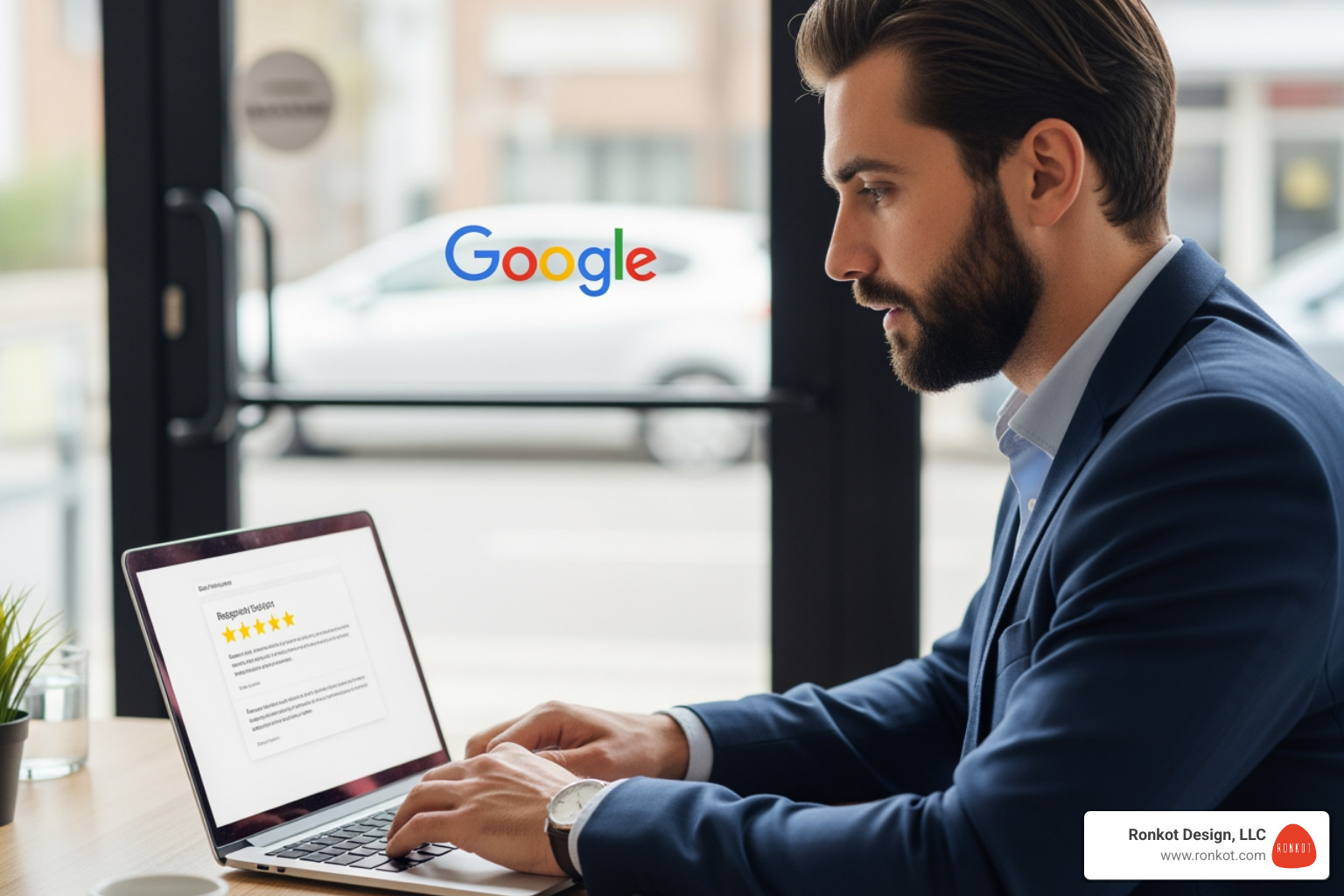
Reviews are a powerful factor in your Google Maps ranking. Listings with review stars get more clicks, and Google gives preference to businesses with positive feedback.
Generate reviews by asking satisfied customers. Make it easy with direct links or QR codes. Aim for a steady stream of positive ratings.
Respond to all reviews. For positive ones, thank the customer personally. For negative reviews, respond quickly and professionally, offering to resolve the issue offline. This demonstrates excellent customer service and can turn a negative situation into a positive one. Our guide on How to Respond to Negative Google Reviews (Templates Included) offers helpful templates.
When responding, you can naturally include keywords (e.g., “We’re glad you enjoyed our HVAC repair service in Colleyville”). This subtly reinforces your relevance to Google.
Beyond GBP: Off-Profile Strategies for a Higher Google Maps Ranking
A strong Google Maps ranking requires more than an optimized Google Business Profile. Your website and broader online presence provide the authority that supports your GBP. A strong correlation exists between organic website traffic and higher local pack positions, as Google sees a popular, valuable website as a signal of trustworthiness. Your off-profile strategy should focus on website authority, link building, and on-page SEO. Learn more in our guide on how to Optimize Website to Rank in Google’s Local Pack.
Building Local Authority with Citations and NAP Consistency
Local citations are mentions of your business’s Name, Address, and Phone number (NAP) on reputable online business directories and platforms. Consistent NAP information across these sites reinforces your business’s legitimacy to Google, building trust even without a direct link.
NAP consistency is critical. If your business is listed with different names or phone numbers across the web, it confuses Google and can hurt your google maps ranking. We often find these inconsistencies when auditing businesses in Dallas and Colleyville.
Auditing and cleaning up inconsistent data is a crucial task. While the direct ranking impact of citations has evolved, maintaining accurate listings on major platforms and local Texas directories remains a best practice. This foundational work supports your overall Local SEO for Small Business Growth.
Leveraging Your Website to Support Local SEO
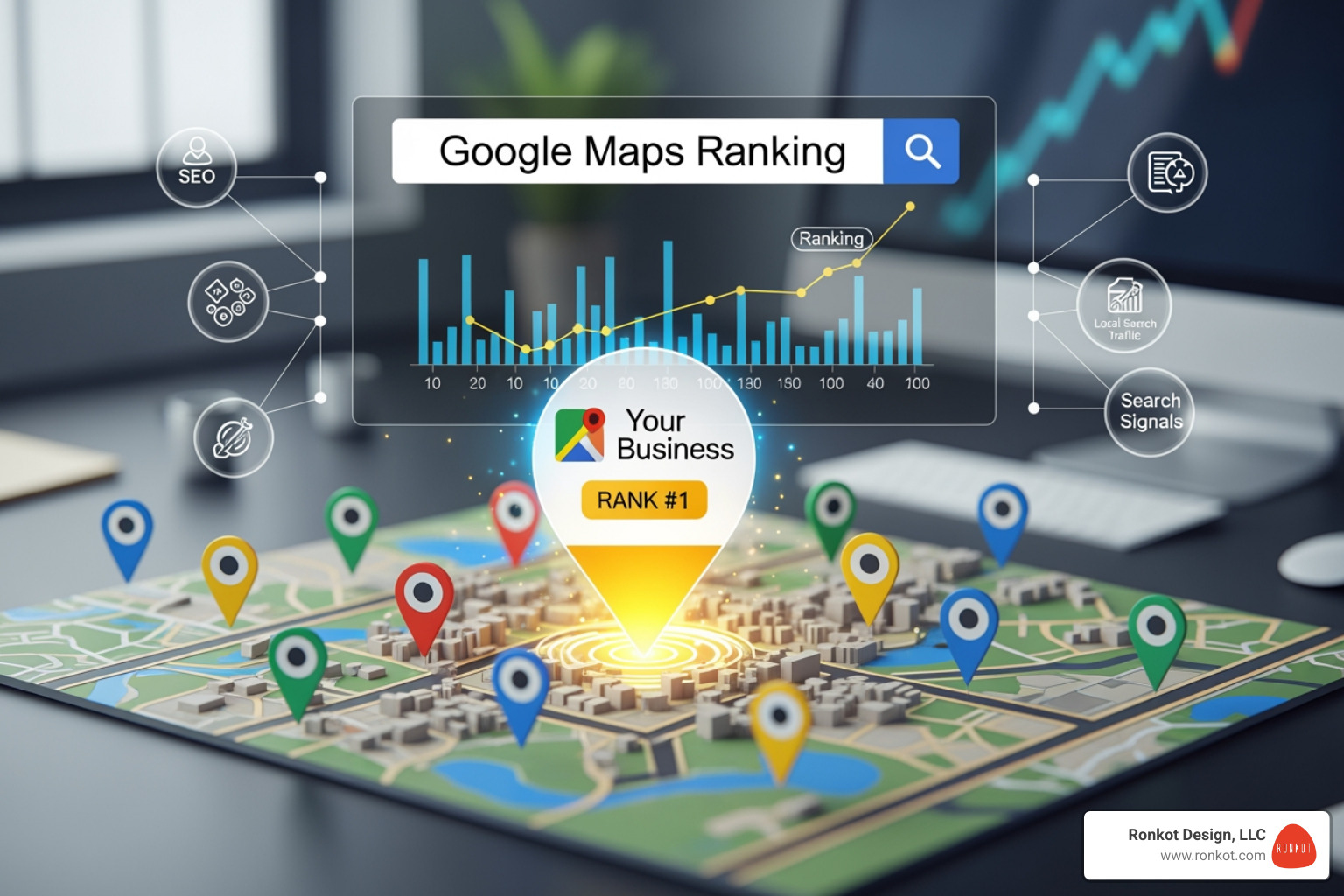
Your website is a powerful tool for boosting your Google Maps ranking. The user experience on your site matters.
- Mobile-Responsive Design: With nearly 60% of searches on mobile, a non-responsive website loses customers instantly. Google notices high bounce rates, which can negatively affect your rank.
- Local Landing Pages: For businesses serving multiple locations like Dallas and Colleyville, create dedicated local landing pages (e.g., “Plumber in Colleyville”). These pages should feature location-specific content to rank for targeted local searches.
- Local Keywords: Weave city names and “near me” keywords naturally into your website’s titles, headings, and content to signal your service areas to Google.
- Embedded Google Map: Add a Google Map to your contact page. It visually confirms your location for visitors and reinforces your physical presence to Google.
- Local Business Schema: Implement Schemas for local businesses on your website. This structured data acts as a cheat sheet for Google, helping it understand your address, hours, and services, which builds trust and improves your search presence.
Tracking, Competing, and Advanced Tactics
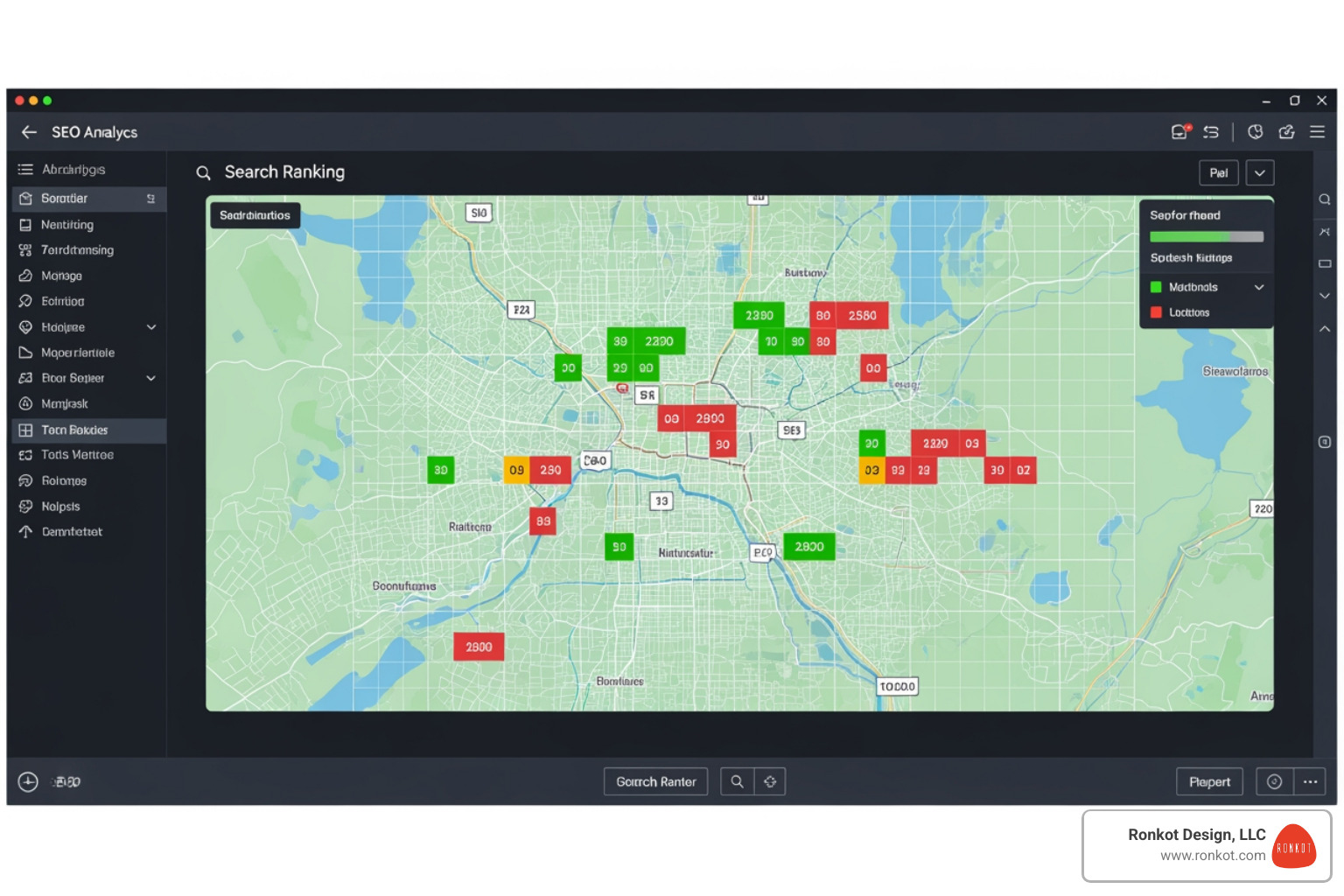
Improving your Google Maps ranking isn’t a one-time task; it requires ongoing monitoring and adjustment. Businesses that dominate local search in Texas consistently track performance, analyze competitors, and refine their approach. A Local SEO Audit can reveal key opportunities.
How to Track Your Google Maps Ranking Performance
You can’t improve what you don’t measure. Focus on tracking your local search performance.
- Local Rank Tracking: Use a local rank tracker, not a general one, to see your specific positions in Google Maps and the local pack for searches in areas like Colleyville and Dallas.
- Geo-Grid Tracking: Geo-grid tracking tools offer a visual map of your rankings across a city, simulating searches from different GPS coordinates to give you a precise understanding of your visibility in specific neighborhoods.
- GBP Insights: Your free Google Business Profile Insights dashboard shows how customers find you (direct vs. findy searches) and interact with your listing.
- Track Actions: Monitor calls, clicks, and direction requests to measure the real-world impact of your strategy. High engagement can be more valuable than the #1 rank.
Outranking Local Competitors on Google Maps
In competitive markets like Dallas, you need a smart strategy to get ahead.
- Analyze Competitors: Analyze competitor profiles that rank above you. Note their business categories, review quantity, photo types, and post frequency. This intelligence reveals patterns and opportunities.
- Identify Keywords: See what keywords your competitors are targeting in their descriptions and posts. Sometimes a more specific primary category or better keyword usage makes all the difference.
- Find Your Unique Value: Instead of just copying competitors, highlight what makes you different. Whether it’s 24/7 service or a unique specialization, your GBP and website should reinforce your unique value.
- Dominate a Niche: It can be more profitable to become the go-to expert for a niche service (e.g., “ceramic coating in Colleyville”) than to fight for broad terms. Niche dominance can lead to broader visibility over time. Learn more about how the Best Local SEO Company for Small Business can help you find a competitive edge.
Frequently Asked Questions about Google Maps Ranking
How important are photos for Google Maps ranking?
Photos play a significant role in engagement and credibility. Listings with consistent, high-quality images tend to receive more clicks, calls, and direction requests. Increased user engagement sends positive behavioral signals to Google, which can indirectly support stronger local rankings.
Does posting regularly on Google Business Profile improve ranking?
Yes, consistent Google Posts help keep your profile active and updated. While posts alone will not dramatically change rankings, regular updates contribute to relevance signals, increase engagement, and provide additional keyword context for your services.
How long does it take to rank higher on Google Maps?
The timeline varies by competition. In a less competitive Texas town, you could see results in 30 days. In a market like Dallas or Colleyville, it takes longer. With consistent optimization—updating your profile, gathering reviews, and building citations—most businesses see significant improvement within 30 to 90 days. Local SEO is a long-term strategy for sustainable visibility.
Do I need a physical storefront to rank on Google Maps?
No. Service Area Businesses (SABs), such as plumbers or consultants who travel to clients, can rank effectively. The key is to hide your physical address in your Google Business Profile and define your service areas (e.g., cities or zip codes in Texas). As long as you genuinely serve the local area, you are eligible to appear on Google Maps.
Can I pay Google to improve my Maps ranking?
No, you cannot pay for a better organic Google Maps ranking. The algorithm is based on relevance, distance, and prominence. However, you can use Google Ads to appear in labeled, sponsored positions on Google Maps. These paid ads provide immediate visibility but do not influence your organic ranking. Think of ads as a short-term boost, while organic optimization builds long-term, trusted authority.
Conclusion
You now have the playbook for improving your local search visibility. A better Google Maps ranking comes from consistent action: GBP optimization, review management, NAP consistency, and a strong website to prove your authority.
As we tell our clients in Colleyville and Dallas, local SEO is an ongoing commitment, not a one-time project. Google’s algorithm and your competition are always changing. The businesses that win are those that stay committed.
But you don’t have to do it alone. At Ronkot Design, LLC, we’ve spent over a decade perfecting local SEO strategies that drive real results. We use a data-driven approach custom to your business and market.
Ready to climb the local search ladder? Our expert Google Maps Optimization services can help you get the visibility your business deserves.
One often overlooked factor in improving your Google Maps ranking is behavioral engagement. Google measures how users interact with your listing, including clicks, calls, direction requests, photo views, and time spent engaging with your profile. A listing that consistently generates actions signals strong user satisfaction and relevance. This means your goal is not just to appear in the Local Pack, but to create a profile compelling enough to earn interaction. Clear service descriptions, attractive photos, frequent updates, competitive offers, and strong review responses all increase engagement signals that reinforce your ranking over time.
Ronak Kothari is the founder of RONKOT, a full-service digital marketing agency.