


Ronak Kothari is the founder of RONKOT, a full-service digital marketing agency.
Beauty Salon Marketing Strategies 2026: Unlock Growth
Why Beauty Salon Marketing Strategies Are Your Key to Success
Beauty salon marketing strategies are vital for success in a competitive market projected to reach $447.76 billion by 2032. With countless salons vying for clients, a strategic approach is what separates thriving businesses from those struggling to fill appointments.
Effective marketing balances digital outreach with traditional relationship-building. This means creating compelling online content while fostering genuine connections through personalized service. Key data points highlight this need: 97% of potential clients read online reviews before booking, and retaining existing customers is far more cost-effective than acquiring new ones.
Successful salon marketing requires a blend of visual storytelling, local SEO, and customer relationship management. I’m Ronak Kothari, CEO of Ronkot Design, and for over a decade, I’ve helped businesses grow with comprehensive digital marketing and branding. This guide distills that experience into actionable strategies for your salon.
Beauty salon marketing strategies word guide:
Laying the Foundation: Your Salon’s Marketing Blueprint
Before launching into social media ads or viral videos, you need a solid marketing blueprint. A well-crafted plan provides accountability, ensures wise spending, and clarifies which tactics attract clients. Without one, you’re likely wasting time, energy, and budget.
Your blueprint should analyze competitors, research local pricing, and define your ideal client. Set measurable goals, like increasing client retention by 25% or booking 10 new clients per month. To avoid feeling overwhelmed, focus on 90-day chunks, which allows for flexibility and makes goals more achievable.
Define Your Target Audience and Brand Identity
You can’t be everything to everyone. Success comes from identifying your ideal client. Are they busy professionals needing quick services, luxury seekers wanting pampering, or budget-conscious families? Understanding their needs and pain points allows you to craft marketing messages that resonate.
This clarity informs your brand identity—the consistent personality reflected in your salon’s ambiance, customer service, and social media tone. A consistent brand can increase revenue by 23 percent. Your brand voice should match your audience; a high-end spa’s language will differ from a trendy nail bar’s. Your Unique Selling Proposition (USP)—be it specialized curly hair expertise or eco-friendly products—must be prominent in every aspect of your brand identity.
Create a Realistic Marketing Budget
Finding the right marketing spend is crucial. The U.S. Small Business Administration (SBA) suggests businesses with revenues under $5 million invest 7-8% of their revenue in marketing. For B2C services like salons, this often rises to 12% to effectively attract and retain clients.
Your budget should also reflect your salon’s maturity. A new salon needs to invest more heavily in awareness, while an established one can focus on retention.
| Salon Maturity Stage | Recommended Marketing Spend (as % of total revenue) | Example Allocation |
|---|---|---|
| Early Stage | Up to 50% | Brand building, client acquisition, digital setup |
| Growing Stage | Around 20-30% | Expansion, retention, new service promotion |
| Mature Stage | As little as 5-10% | Loyalty, efficiency, niche optimization |
For example, a salon with $50,000 in annual revenue might allocate $4,000 (8%) for marketing. That’s $1,000 per quarter for ads, software, and promotions. As the SBA also notes, this budget should cover both brand development and ongoing promotion. The most important step is to track every dollar and measure what brings clients in, allowing you to optimize your spending.
Digital Domination: Winning Clients with Online Beauty Salon Marketing Strategies
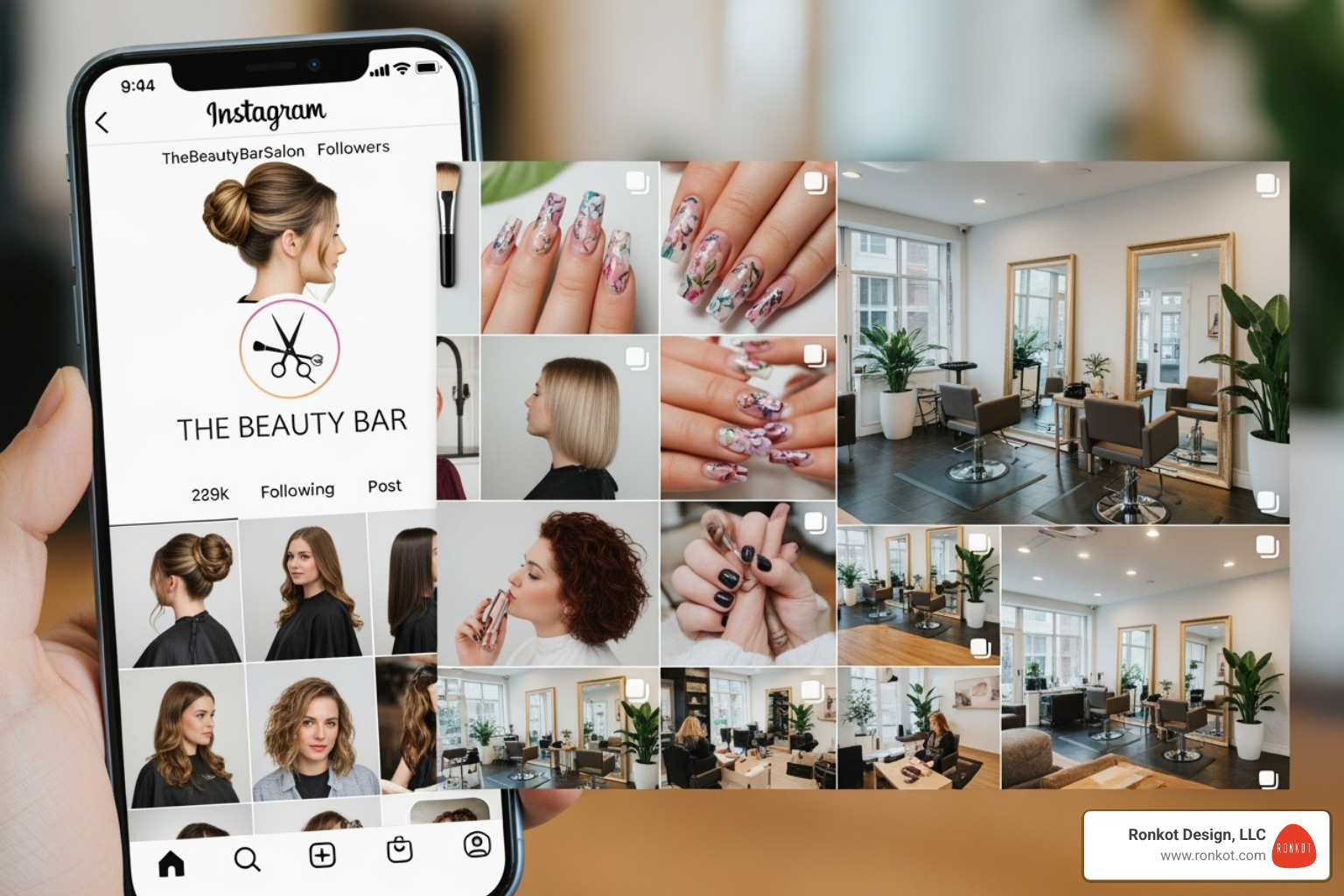
Your salon’s online presence is non-negotiable. Most clients now find salons through Google, social media, and online reviews. Digital marketing isn’t a luxury; it’s essential for showcasing your artistry, connecting with clients, and driving growth.
Optimize Your Digital Storefront: The Salon Website
Your website is your 24/7 receptionist, booking appointments and answering questions while you sleep. A professional, functional site builds immediate trust. It must be mobile-optimized, as over half of all web traffic comes from mobile devices.
The most critical feature is online booking integration. Research shows 70% of beauty salon customers prefer to book online for convenience. Make the process seamless. Your site must also feature high-quality photos, a clear service menu with pricing, and prominent “Book Now” buttons. For more tips, see these Beauty Salon Website Design Tips with Examples.
Master Local SEO and Google Business Profile
To appear at the top when someone searches “hair salon near me,” you need to master local SEO and optimize your Google Business Profile. This free profile is often a potential client’s first impression of your business. You can set it up via Google Business Profile here (it’s free).
Consistency is key for local SEO. Your business name, address, and phone number (NAP) must be identical across all online platforms. Use local keywords like “balayage specialist in Dallas” to attract nearby clients who are ready to book. The Importance of Keyword Research can help you find the right terms. Finally, encourage and respond to all reviews, as they heavily influence both rankings and client trust. Learn more about how to Optimize Salon Google Business Profile for Leads.
Leverage Social Media: Instagram, TikTok, and Facebook
Social media is where your salon’s artistry comes to life. Instagram and TikTok are perfect for visual content like before-and-after changes, which often go viral. Short-form video (Reels and TikToks) showing processes or behind-the-scenes moments can reach thousands.
Facebook is excellent for building community and running highly targeted ads. Use social media to share client testimonials, staff spotlights, and educational tips. Your hashtag strategy should mix broad tags (#hairgoals), niche tags (#balayagespecialist), and local tags (#DallasHairSalon) to maximize reach. While the principles apply broadly, you can find more social media insights in our guide to Social Media Marketing for Contractors.
Implement Paid Advertising and Email Marketing
While organic reach is valuable, paid advertising guarantees visibility. Google Ads are powerful because they capture users with high intent—people actively searching for your services. You can learn how to make sure you’re coming up first in Google. Facebook and Instagram ads offer sophisticated targeting based on demographics and interests, reaching potential clients who aren’t actively searching. See Facebook advertising for more.
Email marketing is your direct line to clients for sharing offers, reminders, and helpful content. For time-sensitive messages, SMS marketing is a secret weapon, boasting a 98% open rate. Strategically combining these channels is key, and you can explore The Importance of Email Marketing and Automation for deeper insights.
From First-Time Client to Loyal Fan: Retention & Referral Tactics
True salon success lies in retention; it costs fewer marketing dollars to get a sale from an existing customer than to attract a new one. While ads bring people in, the real goal is to turn first-time visitors into loyal fans who become walking advertisements for your brand.
This is achieved by building genuine relationships and making every client feel valued. When someone feels pampered and appreciated, they are naturally inclined to return and recommend your services.
The Power of Customer Reviews and Testimonials
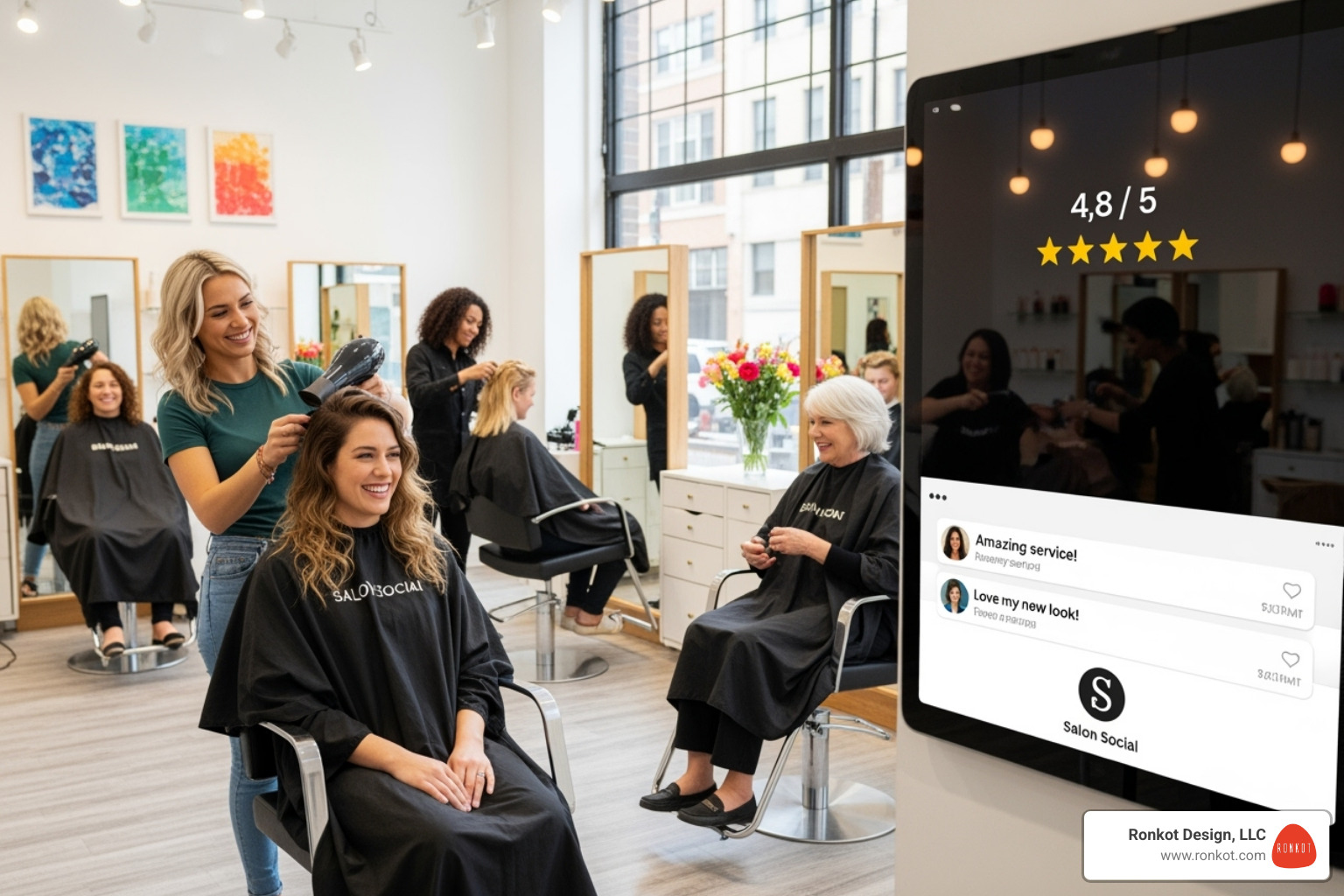
Online reviews are the new word-of-mouth. Since 97% of customers read online reviews when researching a business, every happy client is a marketing opportunity. Ask for reviews during checkout by saying, “If you loved your service, we’d appreciate you sharing that on Google—it helps others find us.”
Make the process easy with direct links in follow-up emails or QR codes in the salon. Offering a small incentive can also help. Crucially, respond to every review, both positive and negative, to show you value customer feedback. Showcase your best testimonials on your website and social media to build trust with potential clients.
Building a Client Loyalty Program
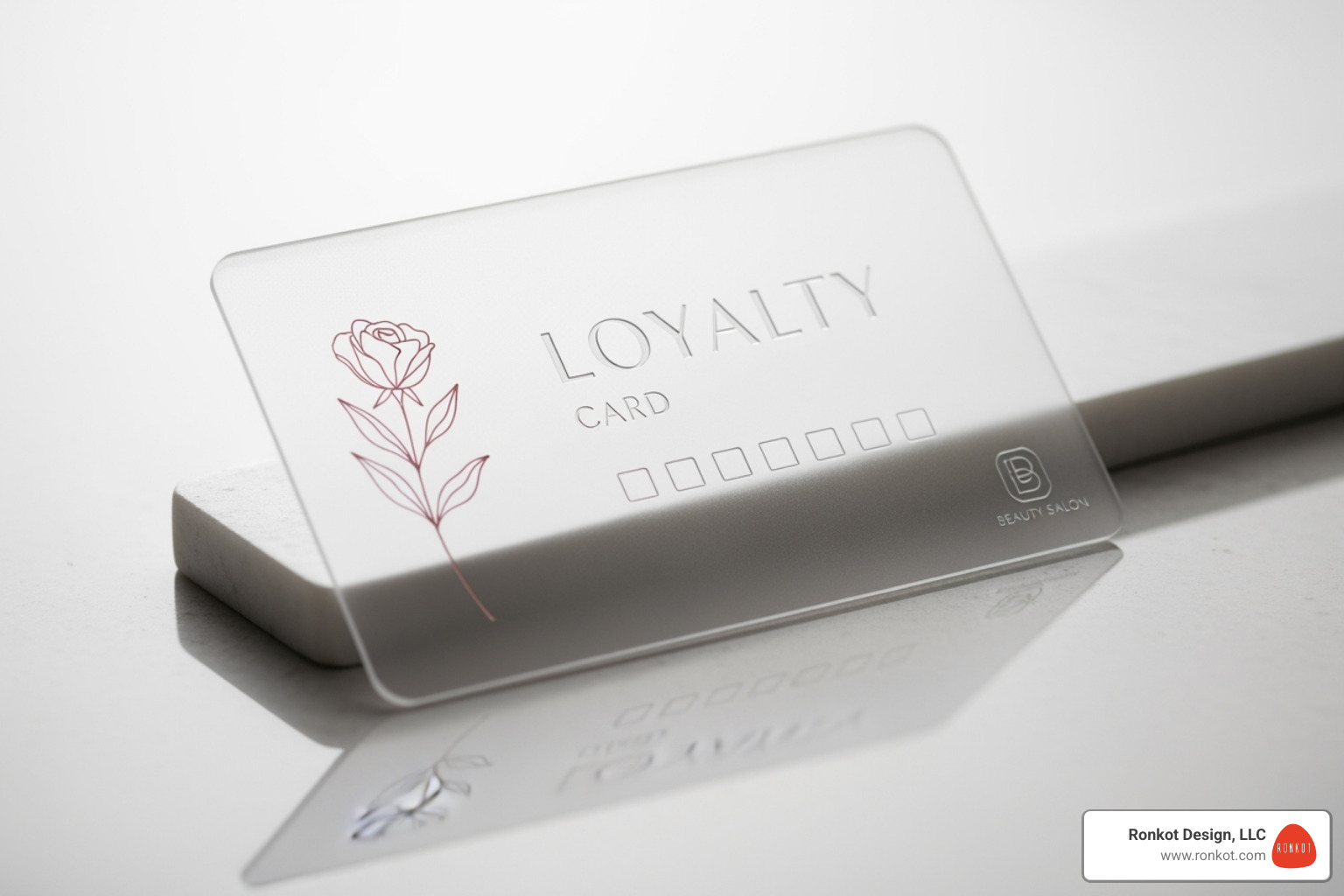
Loyalty programs are essential for encouraging repeat business. Points-based systems, where clients earn points per dollar spent, are effective and simple. Tiered rewards (e.g., silver, gold, platinum) add an element of exclusivity, offering perks like priority booking or complimentary birthday treatments.
Even a simple punch card can work well. The key is to offer exclusive perks that build an emotional connection, such as invitations to special events or personalized product recommendations. A well-designed loyalty program can dramatically increase client lifetime value.
Designing an Effective Referral Program
Word-of-mouth is powerful: people are 4 times more likely to book when referred by a friend, and research shows 92% of consumers trust referrals from people they know. However, while 83% of happy clients are willing to refer, only 29% do. A referral program bridges this gap.
Dual incentives work best, such as “Refer a friend and you both get 20% off.” This rewards both the existing client and the new one. Keep the system simple and promote it everywhere—in the salon, on social media, and in emails. Most importantly, track referrals carefully and deliver rewards promptly to maintain trust. When you design a referral program thoughtfully, you turn clients into active promoters.
Thinking Outside the Salon: Creative & Offline Strategies
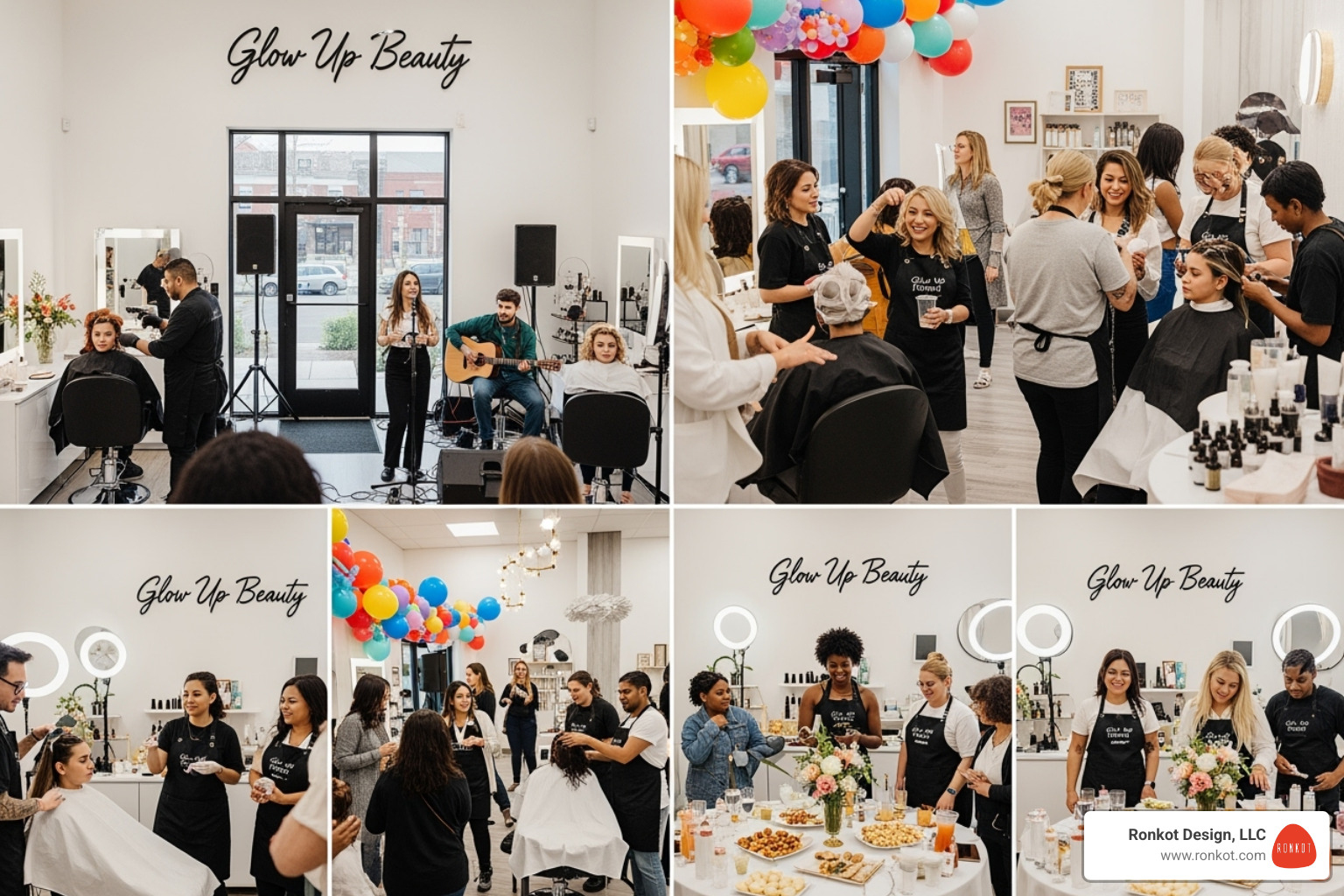
Successful beauty salon marketing strategies blend digital tactics with creative offline approaches. Engaging with your local community builds genuine relationships and reaches clients who might not find you online. Face-to-face connections create lasting loyalty.
Effective Offline Beauty Salon Marketing Strategies
- Local Partnerships: Collaborate with complementary businesses like boutiques, gyms, or wedding planners. Simple cross-promotions, like offering a discount at a nearby shop with a salon receipt, create a win-win.
- Events and Workshops: Hosting an event can be highly effective for personal engagement. Launch a new service with a preview party, host a makeup workshop, or participate in a community fundraiser to showcase your salon’s values.
- In-Salon Marketing: Use your physical space as a tool. Eye-catching window displays, branded merchandise, and product samples at the front desk can boost sales and brand recognition.
- Direct Mail: In a digital world, a personalized postcard with a special offer can stand out. 54% of consumers prefer direct mail, and it can be effective for targeting specific neighborhoods.
The Role of Influencer Marketing for Salons
Partnering with local micro-influencers (those with smaller, highly engaged followings) can be affordable and effective. Their authentic connection with their audience provides a powerful endorsement. Find local influencers whose followers match your target clientele.
Offer complimentary services in exchange for authentic content like before-and-afters or video testimonials. Give them creative freedom to ensure their endorsement feels genuine. Track which partnerships drive bookings and build long-term relationships with those who deliver results.
Measure, Adapt, and Grow: Tracking Your Marketing Success
The most successful salons don’t just implement beauty salon marketing strategies – they track, measure, and continuously improve them. Marketing analytics act as your salon’s GPS, showing you what’s working and what’s wasting money. A data-driven approach is essential for staying competitive.
Key Metrics to Track
Focusing on the right key performance indicators (KPIs) will guide your decisions.
- Client Acquisition Cost (CAC): Divide your total marketing spend by the number of new clients gained. This shows which channels are most cost-effective.
- Customer Lifetime Value (CLV): The total revenue you expect from a client over time. When your CLV is much higher than your CAC, your marketing is profitable.
- Website Traffic & Sources: Use Google Analytics to see how many people visit your site and where they come from (e.g., Google search, social media, ads).
- Social Media Engagement: Look beyond follower counts to likes, comments, and shares to see what content resonates with your audience.
- Booking Sources: Simply ask every new client, “How did you hear about us?” This is often the most direct way to see which efforts are paying off.
- Return on Investment (ROI): The ultimate measure of success, calculating the profit generated from your marketing spend.
Adapting Strategies for Your Salon’s Maturity
Your marketing needs evolve as your business grows. Strategies must adapt to your salon’s current stage.
- Early Stage: Focus on brand awareness and client acquisition. Invest heavily (up to 50% of revenue) in local SEO, Google Business Profile optimization, targeted ads, and collecting initial reviews.
- Growing Stage: Balance acquisition with retention (20-30% of revenue). Implement loyalty programs, referral incentives, and email marketing to build deeper relationships with your steady clientele.
- Mature Stage: With a loyal client base, focus on efficiency and maximizing profit (5-10% of revenue). Prioritize VIP programs, exclusive events, and upselling luxury services to justify premium pricing.
Recognize which stage you’re in and stay flexible. Market changes or expansion plans might require a temporary shift in strategy. Successful owners adapt based on performance data.
Frequently Asked Questions about Beauty Salon Marketing
How long does it take to see results from beauty salon marketing strategies?
Results depend on the channels used. Paid advertising can generate bookings within days, while local SEO and organic social media growth typically take 3 to 6 months to show consistent traction. Retention strategies such as loyalty programs can increase repeat bookings within the first 60 to 90 days if implemented properly.
What marketing mistakes do beauty salons commonly make?
Common mistakes include inconsistent branding, neglecting online reviews, failing to track return on investment, relying solely on social media without optimizing Google presence, and offering excessive discounts that weaken brand value. A structured marketing plan with measurable goals prevents these issues.
How much should a salon spend on marketing?
The SBA suggests businesses with under $5 million in revenue allocate 7-8% of their gross revenue to marketing. For consumer-facing salons, this can climb to 12%. However, your salon’s maturity is a key factor. A new salon may need to invest up to 50% of revenue initially to build a client base, while an established salon with a loyal following might only need 5-10% to focus on retention. The most important thing is to track your spending to ensure a positive return on investment.
What is the most effective marketing for a beauty salon?
Effective marketing is a blend of strategies. The most critical elements are:
- A Strong Digital Foundation: A professional, mobile-friendly website with online booking and an optimized Google Business Profile are essential.
- Visual Social Media: Use platforms like Instagram and TikTok to showcase your work. High-quality before-and-after photos are proven to attract premium-paying clients.
- Customer Reviews: Since 97% of potential clients read reviews, actively encouraging and managing them is crucial for building trust.
- Retention Strategies: Loyalty and referral programs are cost-effective ways to secure repeat business and generate word-of-mouth marketing.
Combining a strong digital presence with genuine relationship-building yields the best results.
How can I attract high-paying clients to my salon?
Attracting a premium clientele requires strategic positioning and a superior experience.
- Define a Premium Niche: Become the go-to expert for a specialized service, like advanced color correction or luxury extensions.
- Lift Your Brand: Invest in professional photography, a sophisticated website, and high-end salon decor. Your visual identity must communicate quality.
- Deliver a Luxury Experience: The entire client journey, from consultation to follow-up, must feel personalized and special.
- Targeted Advertising: Use Facebook and Google Ads to reach affluent demographics in your area who are interested in luxury beauty services.
- Strategic Partnerships: Collaborate with other high-end local businesses, such as boutiques or spas, for mutual referrals.
Conclusion
Success in the modern beauty industry hinges on strategic marketing. We’ve covered the essential beauty salon marketing strategies to transform your business, from building a solid foundational plan to mastering your digital presence.
Acquiring clients is just the start. The real growth comes from turning them into loyal advocates through exceptional service, review management, and smart retention programs. By blending online tactics with offline community engagement, you create a comprehensive approach that builds lasting relationships.
The most successful salons consistently measure their marketing efforts and adapt based on data. Whether you’re a new salon or an established brand, tracking metrics like client acquisition cost and ROI ensures every marketing dollar is working for you.
At Ronkot Design, we specialize in a data-driven, customer-centric approach to digital marketing. We understand that your salon is unique, and your strategy should be too. By implementing these proven strategies, you can set a new standard for excellence in your market.
Ready to lift your salon’s online presence? Let us help you lift your salon’s online presence with a professional web design that captures your vision and attracts your ideal clients.
In a saturated beauty market, differentiation is more important than visibility alone. Many salons compete on price, but long-term growth comes from positioning your salon as a specialist rather than a general provider. Whether you focus on lived-in color, luxury scalp treatments, bridal styling, or eco-conscious services, niche authority allows you to command higher prices and attract more loyal clients. When your messaging, visuals, service descriptions, and advertising consistently reinforce this specialization, you shift from competing for attention to becoming the obvious choice for a specific audience segment.
Ronak Kothari is the founder of RONKOT, a full-service digital marketing agency.